Qatar Is Opening Its Submarine Cable Gateways to More Competition
New access rules for Qatar's cable landing stations aim to make international connectivity fairer and more predictable, strengthening the foundation for cloud and data-center growth.
Outspoken Digest Gulf Technology Desk
Saturday, August 1, 2026/2 min read
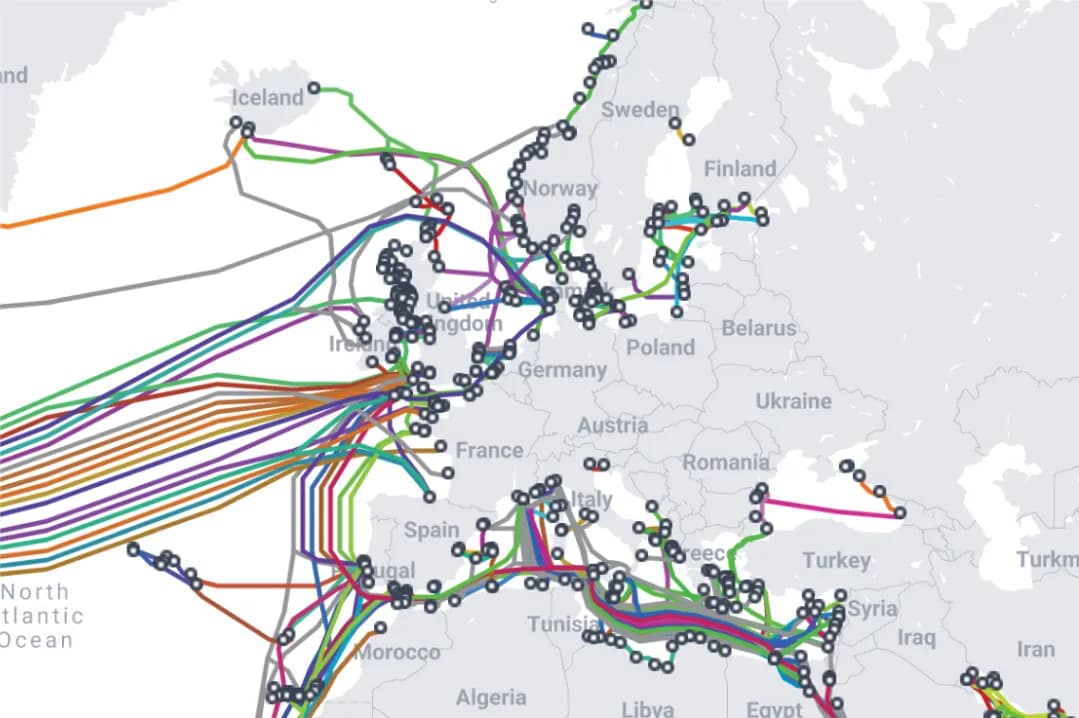
The internet feels wireless at the point of use, but international connectivity still depends heavily on physical cables laid across the seabed. Qatar's new rules for access to submarine cable landing stations address this hidden layer, where a small number of gateways can shape price, resilience and competition across the digital economy.
The Communications Regulatory Authority issued Decision No. 12 of 2026 covering offers of access to international connectivity services at submarine cable landing stations. According to the Qatar News Agency summary, licensed station operators must prepare access offers and submit them to the regulator for approval within defined timelines.
Why landing stations matter
Submarine cables carry most intercontinental data traffic. A landing station is where an undersea system reaches land and connects to domestic networks. Access conditions influence whether telecom providers, cloud platforms and data centers can obtain international capacity on transparent terms.
If access is unclear or discriminatory, new entrants may face delays and high costs. If it is predictable, providers can plan investment and compete on service. Regulation cannot create unlimited physical capacity, but it can make the available infrastructure easier to use fairly.
The cloud depends on cables
Cloud services are often described as locationless. In practice, performance depends on fiber routes, data centers, exchange points and power. Latency increases with distance and inefficient routing. Reliable landing-station access can help data travel along more direct paths and support local hosting.
That matters for AI applications, financial services, media, gaming and government platforms. A data center is only as useful as its ability to exchange traffic quickly and survive a route failure.
Competition and resilience can reinforce each other
More service providers using common infrastructure can increase commercial competition. Diverse cables and landing arrangements can also improve resilience when one route is damaged by an anchor, equipment failure or natural event. The two goals are related but not identical.
Operators still need physical security, cybersecurity, repair plans and sufficient redundancy. Access rules should preserve technical standards and prevent one user's equipment or behavior from creating risk for others.
What transparent offers should clarify
Useful access documents explain products, technical interfaces, service levels, pricing principles, delivery times and dispute procedures. They should distinguish real capacity constraints from unnecessary delay. The Communications Regulatory Authority will need to monitor not only the written offer but how it works in practice.
Customers should be able to compare terms without exposing commercially sensitive network information. A clear escalation route matters when negotiations stall, especially for smaller providers with less bargaining power.
A foundation rather than a flashy service
Consumers may never see a cable landing station, but they experience its consequences through video quality, cloud reliability, business costs and service choice. Qatar's wider ambitions in data centers, research and digital services require strong international links beneath every application.
The regulation is therefore important precisely because it is technical. Digital economies are built on quiet infrastructure and dependable rules. By making access more transparent and predictable, Qatar is strengthening the layer that every visible technology product ultimately relies on.
Published in The Outspoken Digest
Editorial desk
Outspoken Digest Gulf Technology DeskSoftware, hardware, artificial intelligence and what they change for everyone else.
Newsletter
The Digest, in your inbox
One edition, sent when it is ready. No noise, and your address is never passed on.
Read Next
More Technology →
Webb Caught a Probable Supernova From the Early Universe Only Days After It Exploded
Oct 18, 2026/2 min read
Webb Maps an Exoplanet's Atmosphere as Egg-Shaped, With a Puffed-Up Evening Side Hotter Than Its Morning Edge
Oct 18, 2026/2 min read
A Hole in a 75,000-Year-Old Shoulder Blade Points to a Wooden Spear, and Perhaps to Neanderthal Care
Oct 18, 2026/2 min read

Anthropic's Own Staff Data: Junior Technical Hires Fell From 27 to 9 Percent as Its AI Agents Outworked Humans
Oct 18, 2026/2 min read