An Amateur Astronomer Scouting a Quebec Campsite Led Scientists to a 390-Million-Year-Old Impact Crater
Joel Lapointe spotted an odd circular feature on satellite maps while planning a trip near Lake Marsal in 2024, and the tip led researchers to confirm a 25-kilometre impact structure now named Uhackatik.
Tuesday, September 29, 2026/2 min read
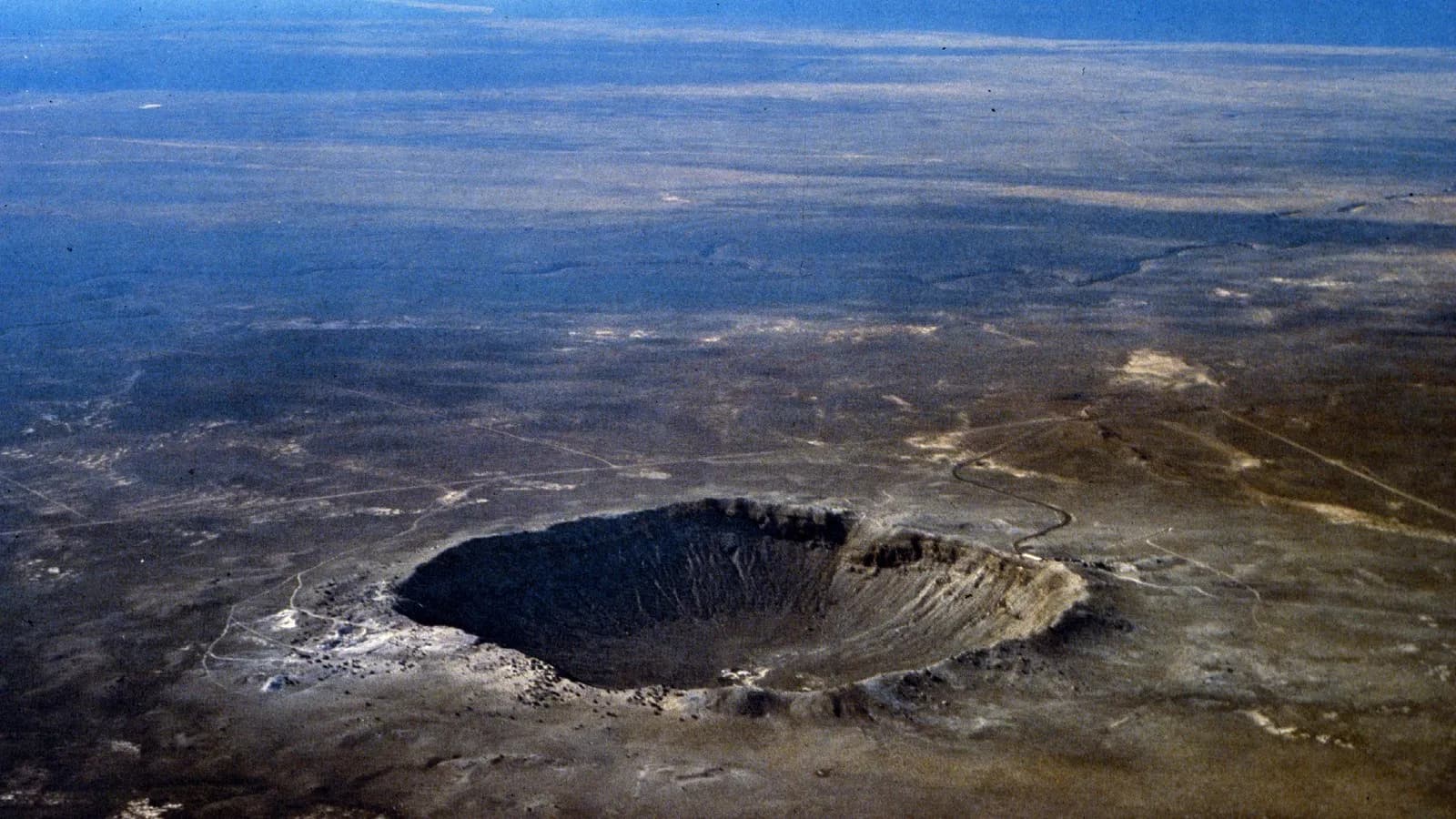
A circular scar in Quebec's remote Cote-Nord region that had puzzled mapmakers for decades has been confirmed as a 25-kilometre-wide impact crater roughly 390 million years old, after an amateur astronomer scouting a campsite noticed the shape on satellite imagery and flagged it to professional researchers. NASA's Earth Observatory featured the find as its image of the day, and the confirmation was also covered by ScienceDaily.
A campsite search that turned into a scientific tip
Joel Lapointe was using online satellite imagery in 2024 to scout a possible campsite near Lake Marsal when he noticed a nearly perfect circular feature carved into the landscape, unlike anything he expected from ordinary erosion or glacial scouring. Rather than dismiss it, Lapointe contacted researchers in Europe and North America with his observation, a tip that eventually reached French scientists who presented the Lake Marsal area as a candidate impact structure at a 2024 Meteoritical Society meeting.
What fieldwork found on the ground
Follow-up expeditions to the site identified the telltale signatures geologists look for when confirming an impact origin rather than a volcanic or purely erosional one: a central uplift, where compressed rock rebounded upward in the moments after collision, and cliffs displaying columnar jointing consistent with rock that was violently shocked and reshaped. Those findings shifted the scientific interpretation away from an earlier assumption that the roughly circular basin was volcanic, and toward the conclusion that it was gouged out by a large asteroid or comet impact.
Naming the crater and its age
Researchers have named the confirmed structure Uhackatik after consulting with the Innu Council of Ekuanitshit, whose traditional territory includes the site, and current dating places the impact at approximately 390 million years ago, during the Devonian period, long before anything resembling the modern Quebec landscape existed. At 25 kilometres across, Uhackatik ranks among the larger confirmed impact structures in eastern Canada, a region already known for several ancient craters preserved in its old, stable bedrock.
Why craters this old are hard to find
Impact craters on Earth erode, get buried under sediment, or are torn apart by plate tectonics far more readily than craters on an airless world like the Moon, which is why a structure has to be unusually well preserved, or unusually lucky in its geological history, to survive recognisably for hundreds of millions of years. Quebec's Canadian Shield, one of the oldest and most stable pieces of continental crust on the planet, has proven a productive hunting ground for exactly this kind of ancient scar, and Uhackatik now joins that list thanks to a chain of events that began with someone planning a camping trip rather than searching for one.
An unusual route from hobbyist to header credit
Professional impact-crater identification typically proceeds from targeted geological surveys or gravity and magnetic anomaly mapping, not from a member of the public browsing satellite tiles for recreational purposes, which is part of why NASA's Earth Observatory chose to highlight the story rather than simply file it as another crater confirmation. The case illustrates a narrow but real role for citizen observation in a field otherwise dominated by specialised remote sensing, provided the tip reaches researchers equipped to follow up and the site itself has preserved enough physical evidence to confirm or rule out an impact origin.
Published in The Outspoken Digest
Editorial desk
Outspoken Digest Science DeskReports for The Outspoken Digest across Technology, Latest Trends, Health.
Newsletter
The Digest, in your inbox
One edition, sent when it is ready. No noise, and your address is never passed on.
Read Next
More Technology →
Webb Caught a Probable Supernova From the Early Universe Only Days After It Exploded
Oct 18, 2026/2 min read
Webb Maps an Exoplanet's Atmosphere as Egg-Shaped, With a Puffed-Up Evening Side Hotter Than Its Morning Edge
Oct 18, 2026/2 min read
A Hole in a 75,000-Year-Old Shoulder Blade Points to a Wooden Spear, and Perhaps to Neanderthal Care
Oct 18, 2026/2 min read

Anthropic's Own Staff Data: Junior Technical Hires Fell From 27 to 9 Percent as Its AI Agents Outworked Humans
Oct 18, 2026/2 min read