An AI-Designed Lung Drug Made Six Ageing Clocks Run Backwards in a Small Trial. That Is Not the Same as Reversing Ageing
Rentosertib was built to treat pulmonary fibrosis. In 42 patients, blood proteins read by six independent clocks came out three to four years younger after a month. Independent doctors say a younger score is not a younger person.
Tuesday, September 15, 2026/3 min read
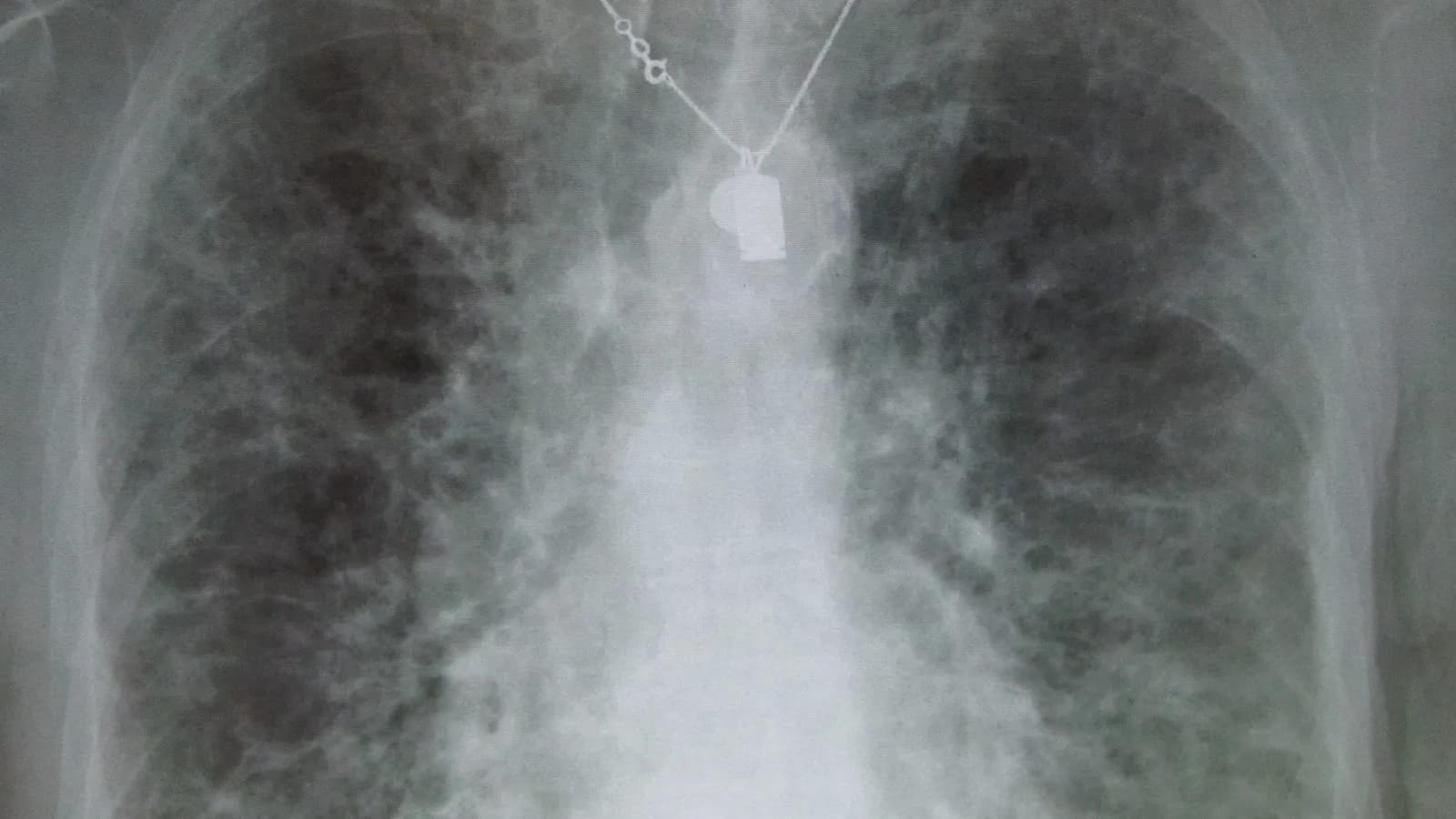
The claim that a drug reverses ageing has been made so often, and so badly, that the correct response to it is to reach for the paper. In this case the paper is in Nature Biotechnology, published on 7 September and widely reported over the weekend, and it is more careful than the headlines it produced. What it shows is real and narrow, and the gap between the two is the story.
The drug
Rentosertib is an inhibitor of an enzyme called TNIK, designed by Insilico Medicine's AI platform, which chose both the target and the molecule, and developed for idiopathic pulmonary fibrosis, a progressive scarring of the lungs that kills most patients within five years of diagnosis. Its phase 2a trial, run mainly in China, gave 30 milligrams twice a day, 60 milligrams once a day or placebo for twelve weeks. The lung result, reported earlier, was a mean gain of 98 millilitres in forced vital capacity on the higher dose against a loss of 20 on placebo, in a disease where the number only ever goes down. That is what the drug is for.
The clocks
The new paper takes blood from 42 of those patients, measures 2,841 proteins in it, and runs the results through six proteomic ageing clocks: models built by different academic groups, on different data, that estimate biological age from the pattern of proteins in the blood. The six are ProtAge, two variants of OrganAge, PAC, PAOPAC and Insilico's own ipfP3GPT. All six moved the same way. At week four on the twice-daily dose, the treated patients' predicted biological age had fallen by three to four years, and by up to six on one clock, relative to placebo. "Six proteomic clocks from six groups all reported younger biological age in treated arms," said Alex Zhavoronkov, Insilico's founder. Michael Levitt, the 2013 chemistry Nobel laureate and a co-author, put the case for taking it seriously: "What convinces me is not the size of the effect but the agreement, because these models share neither features nor training data."
The caveats, which are the authors' own
The paper says plainly that it cannot separate slower ageing from treated lung disease. Pulmonary fibrosis is an inflammatory condition, and inflammation is a large part of what ageing clocks measure; a drug that quiets the disease will make the blood look younger whether or not it does anything to ageing. The dose that moved the clocks most, twice-daily 30 milligrams, was not the dose that improved lung function most, which the authors read as a hint of separate mechanisms and a sceptic could read as noise in a sample of 42. The effect peaked at four weeks and the paper covers twelve. And the population is sick, elderly and Chinese, which is three reasons the result may not travel. Medical News Today asked independent physicians, and their verdict was the right one. "This does not prove that the drug reverses human aging," said Dung Trinh; the changes "may reflect improvement in the underlying disease". Zeeshan Khan: "A younger score on an aging clock is not the same as proving we have reversed aging."
What is actually new
Two things, and they are enough. First, ageing clocks have been used inside a registered drug trial as an endpoint, with pre-specified models from outside groups, rather than bolted on afterwards by the company that made the drug. That is a methodological precedent other trials will follow. Second, an AI-designed molecule has produced a consistent biological signal across six independent measures in human beings, which is more than most of the longevity industry has managed with anything. The authors' own recommendation, a trial in healthy volunteers where there is no disease to confound the clocks, is the only way to find out whether the signal is ageing or fibrosis. Until then, the honest summary is that a promising lung drug has made an interesting set of numbers move, and that the people who made it are, to their credit, saying exactly that.
Published in The Outspoken Digest
Editorial desk
Outspoken Digest Health DeskMedicine, public health and the research behind the headlines, read carefully.
Newsletter
The Digest, in your inbox
One edition, sent when it is ready. No noise, and your address is never passed on.
Read Next
More Health →
FDA Approves Hibsago, the First Antisense Drug for Chronic Hepatitis B, With a Boxed Warning
Oct 22, 2026/2 min read

A Night-Owl Subtype of Depression Appears to Start Earlier, Hit Harder and Respond Worse to Common Antidepressants
Oct 21, 2026/2 min read

CDC and FDA Link Salmonella Illnesses in 12 States to Raw Oysters From Virginia's Little Wicomico River
Oct 20, 2026/2 min read

FDA Approves Dostarlimab for dMMR Rectal Cancer, an Option That May Spare Some Patients Surgery
Oct 19, 2026/2 min read