Scuba Divers Find Two New Sea Spider Species in the Salish Sea, the First Described There in Almost a Century
University of British Columbia researchers combined dive surveys with genetic analysis to describe a red-eyed, three-lipped species that grooms itself with comb-like legs, and a second with an hourglass abdomen and black eyes.
Saturday, September 26, 2026/2 min read
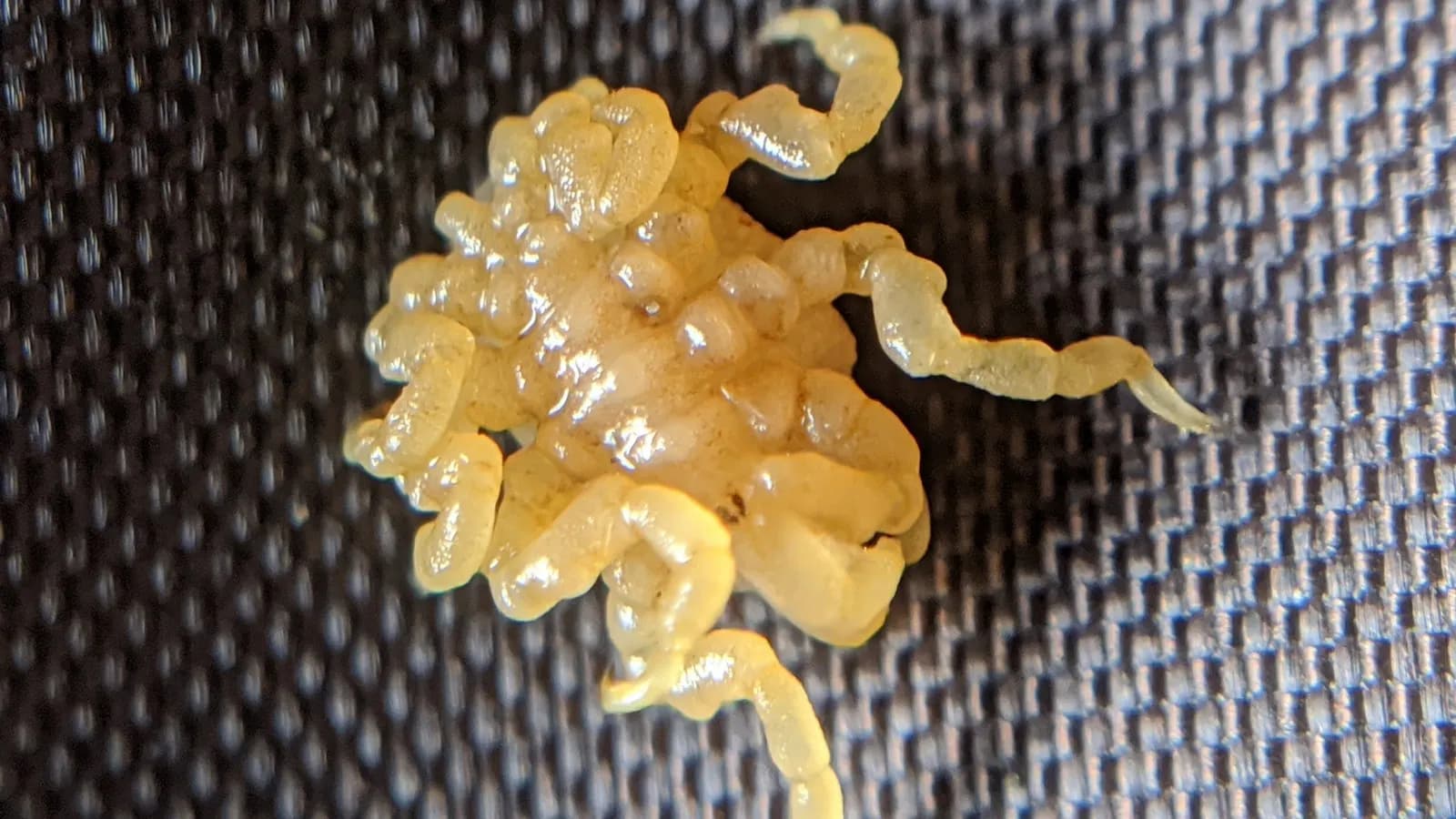
Researchers at the University of British Columbia have formally described two sea spider species new to science after finding them during scuba dives in the Salish Sea, the first new species from this stretch of water to be named in nearly a hundred years. The study, led by Cormac Toler-Scott and published in Organisms Diversity and Evolution, is detailed in UBC's own announcement and summarised in ScienceDaily's coverage, both published this week.
What the divers actually found
Sea spiders, or pycnogonids, are marine arthropods that only superficially resemble the land spiders they are named after; they are a distinct lineage with a body plan reduced almost entirely to legs, a long proboscis for feeding, and in some species a set of specialised appendages used for grooming rather than movement. The first of the two new species has a slender trunk, red eyes and three lips arranged around the opening of a triangular mouth, along with hairy, comb-like legs that the animal appears to use to clean itself, an unusually elaborate self-maintenance behaviour for a group of animals not typically associated with grooming at all. The second species is more understated, distinguished by an hourglass-shaped abdomen, plain black eyes and knob-like claws rather than the more ornamented features of the first.
Why divers found them and trawls had not
Pycnogonids in general are difficult to survey using standard dredging or trawling methods because many species are small, cryptic and easily damaged or lost in a net sample, which is part of why researchers increasingly rely on scuba divers conducting targeted visual searches of the seafloor to find and carefully collect specimens intact. Combining that fieldwork with genetic sequencing let Toler-Scott's team confirm that both animals were genuinely distinct species rather than unusual individual variants of species already known from the region, a distinction that morphology alone can struggle to settle definitively in a group with as much natural variation as sea spiders show.
What a century-long gap tells you
The Salish Sea, the network of coastal waterways between Washington State and British Columbia, is one of the more heavily studied marine environments in North America, which makes the near-century gap since the last newly described sea spider species from the region notable in its own right. It suggests either that pycnogonid diversity here has been consistently under-sampled relative to better-studied groups like fish and larger invertebrates, or that a body of water this well known to marine biologists can still hold species that simply had not been looked for with the right method, in this case sustained diver-led searches rather than boat-based sampling.
What comes next for the two species
Formal description in a peer-reviewed journal is the first step toward the two species being recognised in broader marine biodiversity databases and conservation assessments, though neither has yet been evaluated for conservation status, and researchers do not yet know how widespread either species is beyond the specific dive sites where they were collected. Toler-Scott's team has indicated the discovery strengthens the case for further targeted diving surveys across the Salish Sea, on the reasoning that if two new species turned up during one project's dives, the region's smaller and less conspicuous marine life may still be more thoroughly under-catalogued than its status as a well-studied waterway would suggest.
Published in The Outspoken Digest
Editorial desk
Outspoken Digest Diving DeskCovers freediving, recreational and technical diving, dive medicine and the incidents the sport learns from.
Newsletter
The Digest, in your inbox
One edition, sent when it is ready. No noise, and your address is never passed on.
Read Next
More Diving →
Bleached Corals Recovered After Touching a Healthy Clone, Stanford Lab Study Finds
Oct 15, 2026/2 min read
Black Swallower Filmed With a Hugely Swollen Belly 1,259 Metres Down Off Trinidad and Tobago
Oct 13, 2026/2 min read
Playing Recordings of a Healthy Reef Drew More Coral and Fish Larvae to Artificial Structures Off Hawaii
Oct 9, 2026/3 min read
Blacktip Sharks Can Hear a Sound From Nearly 250 Feet Away and Swim Straight Toward or Away From It
Oct 1, 2026/2 min read