Kitchari: The Sattvic One-Pot That Ayurveda Treats as Medicine
Rice, mung dal and ghee, cooked soft and spiced gently. In the pranic and sattvic traditions it is the reset meal, and the reasoning behind it is more practical than mystical.
Tuesday, August 11, 2026/4 min read
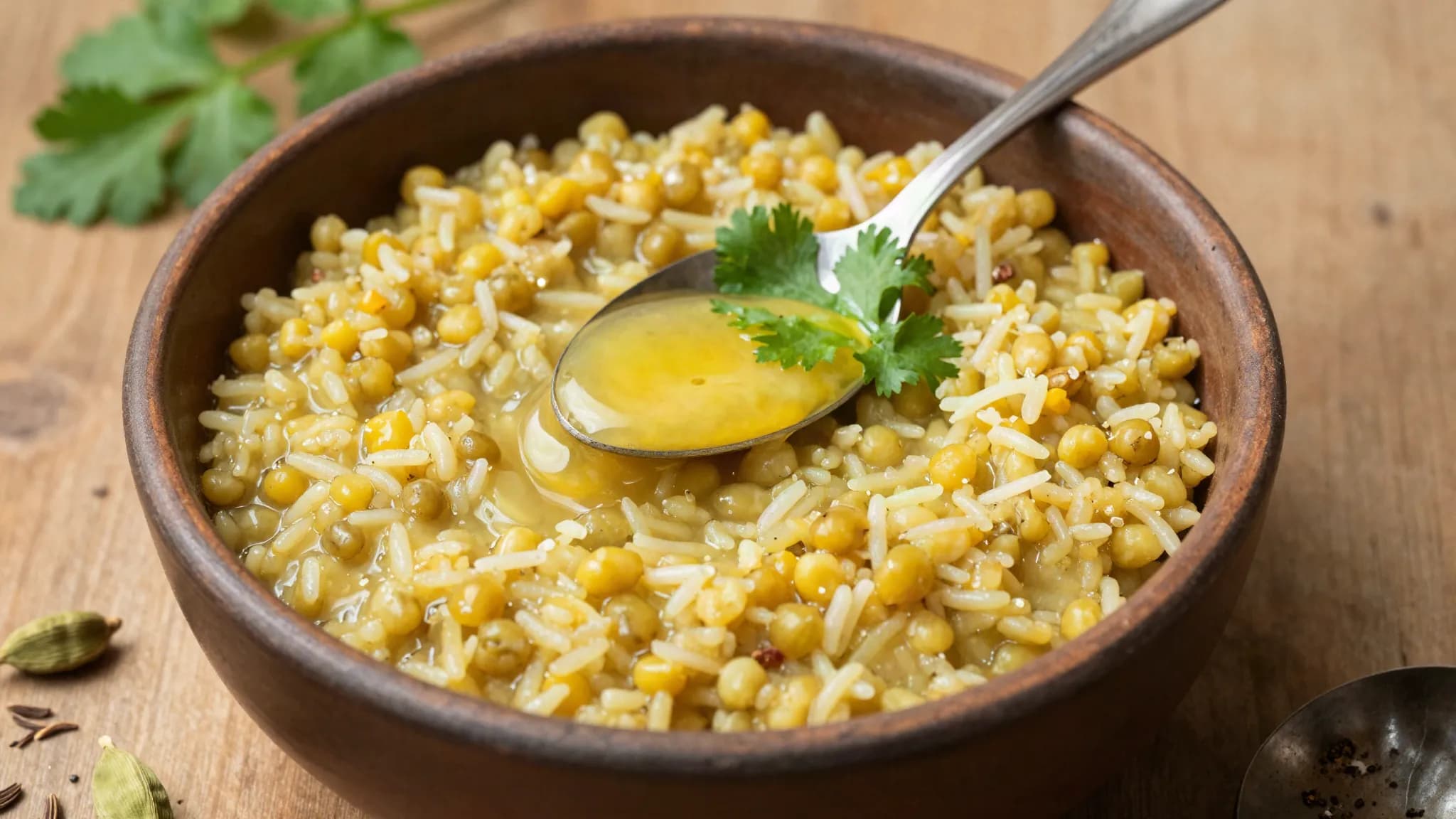
In yogic and ayurvedic cooking, food is sorted into three qualities. Sattvic food is held to be light and clarifying. Rajasic food, heavy on chilli, onion, garlic and stimulants, is said to agitate. Tamasic food, meaning stale, fermented, heavily processed or reheated many times, is said to dull.
Pranic eating sits alongside this and emphasises prana, life force, which in practice means food eaten fresh and close to its whole state rather than long-stored or industrially processed.
You do not have to accept the metaphysics to notice that the resulting food is fresh, plant-forward, gently spiced and easy to digest. Kitchari is its central dish, and it is genuinely one of the most useful things to know how to cook.
Why this specific combination
Rice and split mung dal together supply a full range of amino acids, which is the same logic behind rice and lentils in a dozen other cuisines.
Split yellow mung is the crucial choice. It is the most easily digested of the pulses because the skin has been removed, which is why it is given to people who are unwell, recovering or fasting. Whole green mung will not behave the same way.
Cooked long and soft with plenty of water, the dish asks very little of the gut. That is the actual mechanism behind its reputation as a reset food.
Ingredients
Serves four.
- 150 g split yellow mung dal
- 150 g white basmati rice
- 1.5 litres water, plus more as needed
- 3 tablespoons ghee (or coconut oil to keep it vegan)
- 1 teaspoon cumin seeds
- 1 teaspoon coriander seeds, lightly crushed
- Half a teaspoon fennel seeds
- Quarter teaspoon ajwain seeds, optional and good for digestion
- 1 teaspoon ground turmeric
- 1 thumb fresh ginger, grated
- 1 small cinnamon stick
- 1 teaspoon salt, or to taste
- 2 handfuls seasonal vegetables, diced small: courgette, carrot, green beans, spinach
- Fresh coriander and a squeeze of lime to finish
No onion and no garlic. Both are considered rajasic and are traditionally left out. If you are cooking this simply as a light supper rather than within the tradition, they are fine, but the dish is notably clean without them and this is one of the few recipes where their absence is not a loss.
Method
1. Rinse properly
Rinse the dal and rice together in several changes of water until it runs clear, then soak for at least thirty minutes. Soaking shortens the cook and, by most accounts in the tradition, makes it easier to digest.
2. Bloom the spices
Warm the ghee in a heavy pot over a medium heat. Add the cumin, coriander, fennel and ajwain and wait until they crackle and smell nutty, about forty seconds.
This is the only step with any timing risk. Whole spices go from fragrant to acrid quickly, so keep the heat moderate and your nose near the pot.
Add the ginger, turmeric and cinnamon stick and stir for another twenty seconds.
3. Cook it down
Drain the rice and dal, add to the pot and stir to coat. Pour in the water and bring to a boil, then reduce to a low simmer.
Cook uncovered or partly covered for 30 to 40 minutes, stirring now and then, until the dal has completely broken down and the whole thing is soft and loose. Add hot water whenever it tightens. The finished texture should be pourable rather than fluffy: closer to a thick soup than to a pilaf.
4. Vegetables and finish
Add firmer vegetables like carrot for the last 15 minutes, softer ones like courgette for the last 8, and leaves like spinach in the final minute.
Season with salt at the end. Finish with coriander, a squeeze of lime and, if you like, another spoon of ghee.
Notes
It thickens considerably as it cools and will need loosening with hot water when reheated. Within the tradition, food reheated repeatedly is considered tamasic, so this is a dish to make in the quantity you will eat over a day rather than batch-cooking for the week.
It is naturally gluten free. To keep it fully vegan, use coconut oil rather than ghee, though ghee is traditional and the flavour is different.
One sensible caution. Kitchari is often promoted as part of a multi-day cleanse or mono-diet. As a light, easily digested meal it is excellent. As an extended sole food it is a restrictive diet like any other, and the rapid results people report from such regimes tell you about restriction rather than about the theory attached: we set out why that is. If you have digestive symptoms that keep returning, the useful step is a proper diagnosis rather than a cleanse, and a structured elimination protocol is the evidence-based version of the same instinct.
Published in The Outspoken Digest
Editorial desk
Outspoken Digest Food DeskCooking, ingredients, restaurants and the economics of what ends up on the table.
Newsletter
The Digest, in your inbox
One edition, sent when it is ready. No noise, and your address is never passed on.
Read Next
More Recipes →
Swangy Tamarind Glazed Chicken Wings for the Flavour Replacing Swicy on Fast Food Menus
Sep 29, 2026/3 min read

Baked Apple Cider Doughnuts for a Cider Season That Peaked Earlier Than the Calendar Says
Sep 29, 2026/3 min read
An Obatzda Bavarian Beer Cheese Dip for the Final Stretch of Oktoberfest 2026
Sep 29, 2026/3 min read