Spanish Seafood Paella: Saffron and the Sea
A coastal Spanish classic: saffron-kissed rice with shrimp, mussels, and clams, cooked in one pan until the bottom crisps to golden.
Sunday, September 29, 2024/3 min read
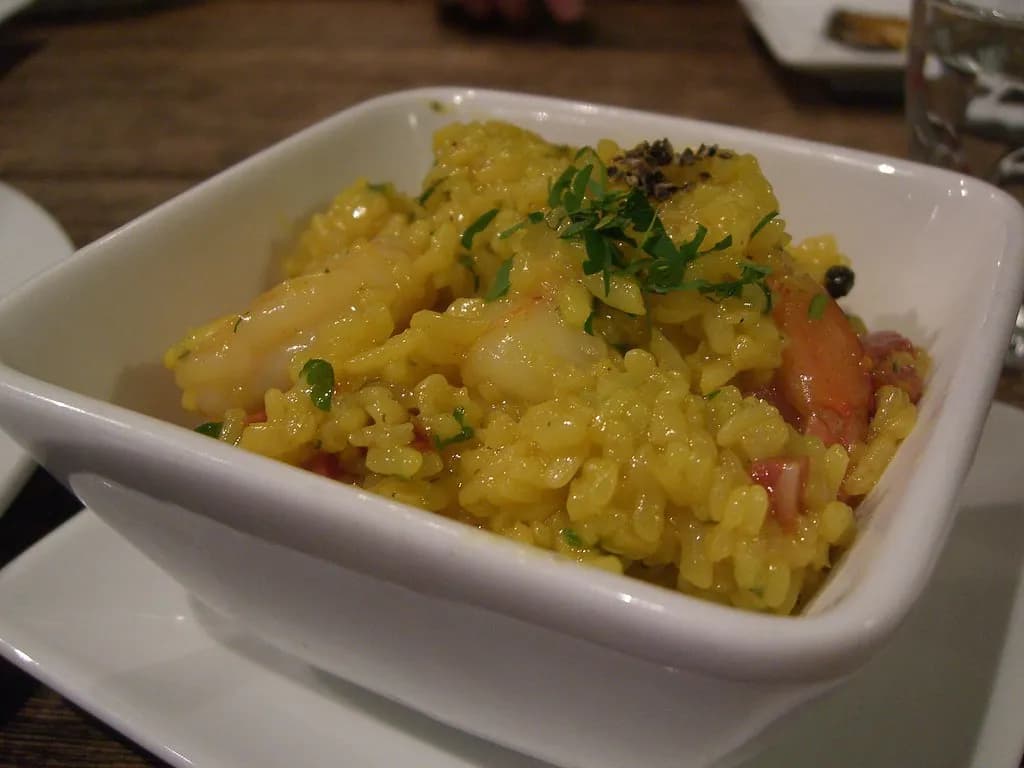
Paella began not as grand banquet food but as a farmer's lunch. Rice farmers in the lagoons surrounding Valencia, in the 14th and 15th centuries, would gather at midday to cook over open fires whatever they had at hand: rice from the paddies, snails from the water, wild birds, green beans. The dish was built to feed many from little, to transform humble ingredients into something complete. Over centuries, as paella traveled from rural fields to city tables, it gathered new components: seafood crept in along the coast, saffron and wine made it ceremonial.
The Valencian paella, in its truest form, contains no seafood at all, but rather chicken and rabbit paired with beans. Yet along the coast and in the Balearic Islands, the recipe evolved to include fish and shellfish, reflecting the geography and what the sea offered. The socarrat, the crispy caramelized rice at the bottom of the pan, is essential to authentic paella, a textural element that separates the dish from ordinary risotto.
Paella is a dish built for sharing. It demands a wide, shallow pan, a wood fire if you can manage it, and people gathered around. This is not dinner as solitary consumption but as ceremony.
Ingredients
Serves 6. Total time: 1 hour 15 minutes.
- 400 g short-grain paella rice (bomba or arborio)
- 400 g medium shrimp, peeled and deveined
- 500 g mussels, cleaned and debearded
- 300 g littleneck clams (or other hard-shell clams)
- 1 liter seafood or chicken stock, kept warm
- 0.5 g saffron threads
- 60 ml dry white wine
- 80 ml olive oil
- 1 large onion, finely diced
- 6 cloves garlic, minced
- 1 red bell pepper, cut into thin strips
- 1 yellow bell pepper, cut into thin strips
- 200 g frozen peas
- 2 large tomatoes, grated or finely chopped
- 1 teaspoon smoked paprika
- 1 bay leaf
- Salt and pepper
- Lemon wedges and fresh parsley for garnish
Method
- Steep the saffron threads in 100 ml of the warm stock for at least 10 minutes to bloom and release their color and flavor.
- Heat the olive oil in a paella pan (or large shallow pan, 35-40 cm diameter) over medium heat. Add the shrimp and cook for 2-3 minutes per side just until pink, then remove to a plate.
- In the same pan, add the diced onion and cook for 5-6 minutes until softened and translucent. Add the garlic and cook for 1 minute until fragrant.
- Add the bell peppers and cook for 3-4 minutes, stirring occasionally, until they begin to soften.
- Stir in the rice, coating it well with oil, and cook for 2-3 minutes, stirring constantly. The grains should look slightly translucent at the edges but remain opaque at the center.
- Pour in the white wine and stir until almost completely absorbed, about 1-2 minutes. Add the grated tomatoes and smoked paprika, stirring well.
- Pour in the saffron-infused stock and the remaining warm stock. Do not stir after this point; shaking the pan gently is acceptable, but stirring will cause the rice to release starch and become creamy (which is not the goal for paella). Add the bay leaf and season with salt and pepper.
- Bring to a simmer and cook undisturbed for 18-20 minutes, until most of the liquid has been absorbed and the rice is just tender. Listen for a gentle crackling sound from the bottom of the pan (the socarrat forming), which indicates the rice is beginning to caramelize.
- Scatter the mussels and clams over the rice, nestling them into the grains. Return the cooked shrimp to the pan. Cover loosely with aluminum foil and cook for another 5-7 minutes until the mussels and clams have opened. Discard any that do not open.
- Remove from heat and let rest, covered, for 5 minutes. Taste and adjust seasoning. Garnish with fresh parsley and serve with lemon wedges on the side.
Variations and Tips
Paella is endlessly flexible: try Spanish chorizo added with the onions, or squid as an additional protein. Some cooks add a pinch of Spanish smoked paprika to the stock itself. The socarrat should be golden and crispy, not burned; listen for a gentle crackling, not harsh burning sounds. If using a paella pan on a home stove, make a diffuser (a flat ring placed under the pan) to distribute heat evenly. Seafood paella is best eaten immediately, though leftover rice can be fried the next day with a beaten egg for paella arrocito (rice cake).
Paella teaches that cooking for a table of people is not a solitary craft but a public performance, something to be done with intention and pride. This is why it endures.
Published in The Outspoken Digest
Editorial desk
Outspoken Digest Food DeskCooking, ingredients, restaurants and the economics of what ends up on the table.
Newsletter
The Digest, in your inbox
One edition, sent when it is ready. No noise, and your address is never passed on.
Read Next
More Recipes →
Swangy Tamarind Glazed Chicken Wings for the Flavour Replacing Swicy on Fast Food Menus
Sep 29, 2026/3 min read

Baked Apple Cider Doughnuts for a Cider Season That Peaked Earlier Than the Calendar Says
Sep 29, 2026/3 min read
An Obatzda Bavarian Beer Cheese Dip for the Final Stretch of Oktoberfest 2026
Sep 29, 2026/3 min read