The SEC Has Asked 27 Questions About the Next Generation of Crypto Funds, and You Have Until 31 August to Answer
A proceeding opened on 30 June is deciding what exchange traded funds holding unusual assets may look like. Two designs dominate it: funds that earn staking rewards, and funds tracking small altcoins. The comment period closes in days.
Outspoken Digest Crypto Policy Desk
Monday, August 24, 2026/4 min read

On 30 June the Securities and Exchange Commission opened a proceeding to decide what the next generation of crypto exchange traded funds should look like. It put 27 questions on the table about the conditions under which funds holding unusual assets should be allowed to reach the market.
Anyone can file a comment until 31 August, from anywhere. That is a week away, and almost nobody outside the industry has noticed.
What is actually being decided?
Two fund designs, both awkward for rules written decades before either existed.
Funds that earn staking rewards. A conventional fund holds an asset. A staking fund holds an asset and puts it to work validating a blockchain, which produces a yield. That sounds like an improvement and it changes the nature of the product.
Funds tracking smaller altcoins. The questions here are about liquidity, custody and pricing in assets that trade thinly compared with bitcoin.
Why is staking genuinely difficult?
Because it turns a passive holder into an operator.
Staked assets are usually locked for a period, which sits badly with an exchange traded fund's obligation to meet redemptions daily. If a large number of investors want out on the same day and the underlying is committed to a validator queue, the fund has a liquidity mismatch of exactly the kind regulators exist to prevent.
Staking also carries slashing risk. A validator that misbehaves or goes offline can have part of its stake destroyed by the protocol. That is not market risk, which investors accept, but operational risk created by the fund's own conduct.
And there is a question about who the reward belongs to. Staking yield is generated by the fund's activity rather than by the asset simply existing, which raises whether the manager may keep a share, how it is disclosed, and how it is taxed.
None of these is a reason to prohibit the product. All of them are reasons the answer needs to be written down before a hundred of them launch.
How many funds are we talking about?
A great many, and that is the pressure behind the proceeding.
Bitwise has projected more than 100 new crypto exchange traded funds launching in the United States across the year. Bloomberg analysts have put roughly 95 per cent approval odds on Litecoin, Solana and XRP filings, and around 90 per cent on Dogecoin, Cardano, HBAR and Avalanche. The Commission has already approved Grayscale's GDLC, which tracks an index spanning bitcoin, ether, XRP, Solana and Cardano.
Faster approval timelines and a more receptive administration have compressed the path from filing to launch. The proceeding is, in effect, the regulator trying to set general rules before the queue clears rather than deciding each application on its own.
Should a reader care about a comment period?
More than the coverage suggests.
Comment files are one of the few points at which financial rules are genuinely open to argument from outside the industry, and they are overwhelmingly used by the industry, because everyone else assumes it is not for them. A rule shaped only by the firms it governs is not a conspiracy. It is what happens when only one side turns up.
The 27 questions are specific enough to answer without being a lawyer: whether redemption terms should be constrained, what disclosure a retail buyer needs about slashing, whether index inclusion rules should have minimum liquidity thresholds.
What does this mean for the assets themselves?
Less than the enthusiasm implies, and it is worth being clear about why.
An exchange traded fund does not create demand. It removes friction for demand that already exists, by letting an investor hold an asset in an ordinary brokerage account without managing keys or using an exchange. That is a genuine and significant change in access, and it is not the same as new buyers appearing.
The lesson from this month is instructive. Bitcoin's largest weekly move in three years was driven by a Treasury decision about government bonds and a wave of forced liquidations, not by fund flows, which we set out in the four sessions that moved the price. Structure matters over years. Macro moves prices over days.
What to watch after 31 August
How long the Commission takes, and whether it answers generally or case by case.
A general framework would be the better outcome for everyone, including issuers, because it turns a queue of individual negotiations into a published standard. Deciding fund by fund produces inconsistency and rewards whoever files with the best lawyers.
It is also the second American digital asset deadline this summer to carry real consequences, alongside the stablecoin rulebook that missed its own. Whether this one is met will say a good deal about how quickly the framework promised in the Clarity Act can actually be built.
Published in The Outspoken Digest
Newsletter
The Digest, in your inbox
One edition, sent when it is ready. No noise, and your address is never passed on.
Read Next
More Crypto →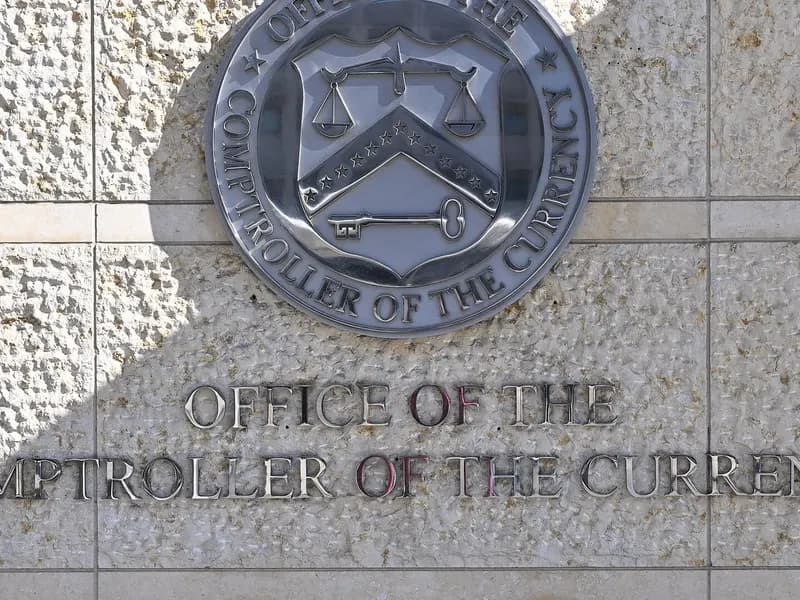
JPMorgan Publishes Its First Ten-Year Bitcoin Forecast: 10 Percent a Year, With a Bear Case of a 9.7 Percent Loss
Oct 21, 2026/2 min read

Nine Crypto Firms Form a Quantum Alliance Because About 6 Million Bitcoin Sit Exposed to a Future Attack
Oct 18, 2026/2 min read

Bitcoin Slips Toward $80,000 After Hot US Inflation and an Asian Tech Rout, With Long Positions Hit Hardest
Oct 15, 2026/2 min read