Shish Tawook in the Oven, Without Pretending It Is Grilled
You can make very good shish tawook without a grill. What you cannot do is get the same thing, so the method changes: high heat, a rack, and a hard finish under the element.
Friday, August 14, 2026/4 min read
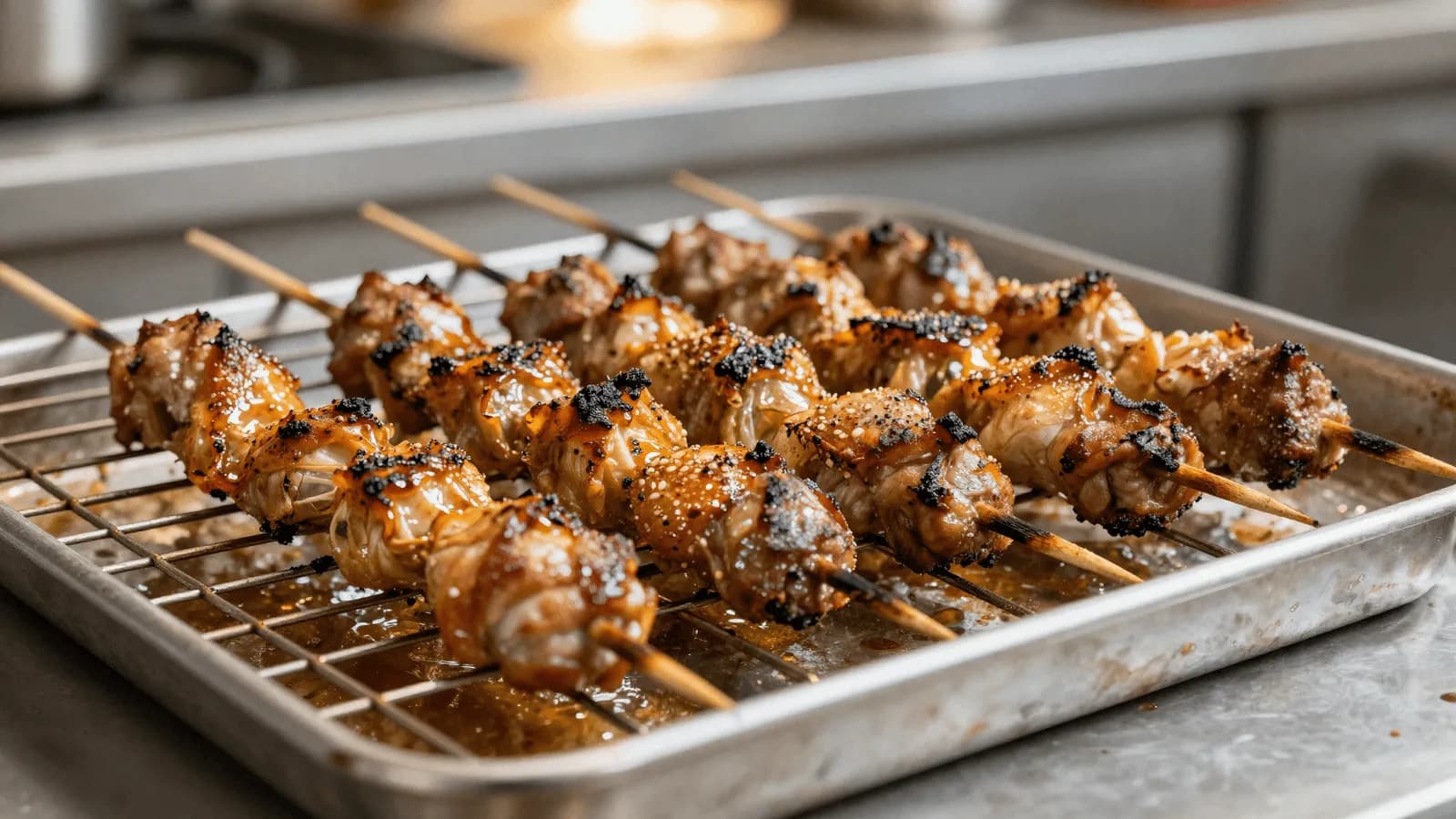
Shish tawook in the oven works at 220C on a rack over a tray for 18 to 20 minutes, finished under a hot grill element for two to three minutes to get the colour. That last step is not optional, and it is the one most oven recipes leave out.
Be clear about what you are making. Charcoal does two things an oven cannot: it applies intense radiant heat to one side at a time, and it drips fat onto coals that return as smoke. Without those you get excellent roasted marinated chicken. It is a good dish. It is not the same dish.
Why the rack matters more than the temperature
Chicken in a yogurt marinade sheds a surprising amount of liquid. Sitting flat in a tray, the skewers sit in that liquid, and the underside poaches instead of roasting. You end up with pale, slightly rubbery bottoms and browned tops.
A wire rack lifts the meat so air circulates underneath and the liquid falls away. This single change makes more difference to the result than anything else in this article.
If you have no rack, use a sheet of scrunched foil to make ridges and sit the skewers across those. It is inelegant and it works.
The method
1. Heat properly
220C, conventional. If you have a fan setting, use 200C fan. Give it a full fifteen minutes past the point the light says it is ready, because most domestic ovens announce temperature well before the walls are actually at it, and radiant heat from hot walls is doing real work here.
2. Wipe the skewers
Take the chicken out of the marinade and wipe off the excess so what remains is a coating rather than a layer. Excess marinade will not caramelise in an oven the way it does on a grill; it will steam and turn into a pale sludge.
3. Thread with gaps
A few millimetres between cubes. Pieces touching each other steam at the join.
4. Roast
18 to 20 minutes for breast, 20 to 22 for thigh, turning once halfway. Internal temperature 74C at the thickest point.
5. Finish under the element
Move the shelf to the top, switch to the grill element at maximum, and give it two to three minutes. Watch it the whole time. The difference between blistered and burnt at this stage is about forty seconds.
6. Rest
Three minutes. Then eat.
Do you need to soak wooden skewers?
For the oven, yes, and for longer than you think: thirty minutes minimum, an hour is better. The oven's dry heat will scorch dry wood, and the exposed ends will char and can smoke.
Metal skewers are better here for a reason beyond durability. They conduct heat into the middle of each cube, which cooks the interior slightly faster and lets you take the chicken out sooner, which means less moisture lost. Flat metal skewers are better than round, which allow the meat to spin when you turn them.
Can you use an air fryer?
Yes, and for small quantities it is arguably better than the oven, because an air fryer is a small convection oven with an aggressive fan and it browns well.
Cook at 200C for 12 to 14 minutes, turning once. Do not crowd the basket: chicken packed in will steam, which is the same failure as a crowded tray. Cut skewers to fit or cook the cubes loose and thread them afterwards for serving, which nobody will notice.
What about a griddle pan?
If you own a ridged cast iron griddle, this is the best indoor option and it beats the oven.
Get it very hot, oil the chicken rather than the pan, and lay the skewers down without moving them for three minutes so the ridges mark them. Turn, three minutes more, then lower the heat and continue turning until cooked through, about ten to twelve minutes total.
You get real char marks and real caramelisation. What you do not get is the smoke, and your kitchen will smell of cooking for some hours. Open a window before you start rather than after.
Does the marinade change for the oven?
Slightly, and one adjustment genuinely helps: add a teaspoon of tomato paste beyond the usual quantity, or half a teaspoon of pomegranate molasses. Both add sugars that brown under the element, compensating for the caramelisation the charcoal would have provided.
Everything else stays the same, including the timing rules. Eight to twelve hours, never beyond eighteen. The full marinade breakdown is in our piece on why the yogurt does the work, and the grilled version with the complete ingredient list is in the main recipe.
Serving
Exactly as you would the grilled version: toum, pickled turnip, warm flatbread, and something sharp and fresh alongside such as fattoush. The oven version benefits slightly more from the garlic sauce, because it has less char of its own to carry the plate.
Published in The Outspoken Digest
Editorial desk
Outspoken Digest Food DeskCooking, ingredients, restaurants and the economics of what ends up on the table.
Newsletter
The Digest, in your inbox
One edition, sent when it is ready. No noise, and your address is never passed on.
Read Next
More Recipes →
Swangy Tamarind Glazed Chicken Wings for the Flavour Replacing Swicy on Fast Food Menus
Sep 29, 2026/3 min read

Baked Apple Cider Doughnuts for a Cider Season That Peaked Earlier Than the Calendar Says
Sep 29, 2026/3 min read
An Obatzda Bavarian Beer Cheese Dip for the Final Stretch of Oktoberfest 2026
Sep 29, 2026/3 min read