The sneaker market cools: what streetwear's reset means
Resale margins are collapsing and collector demand is evaporating. After a decade of speculation and hype, the sneaker market is experiencing a fundamental reset.
Sunday, December 15, 2024/3 min read
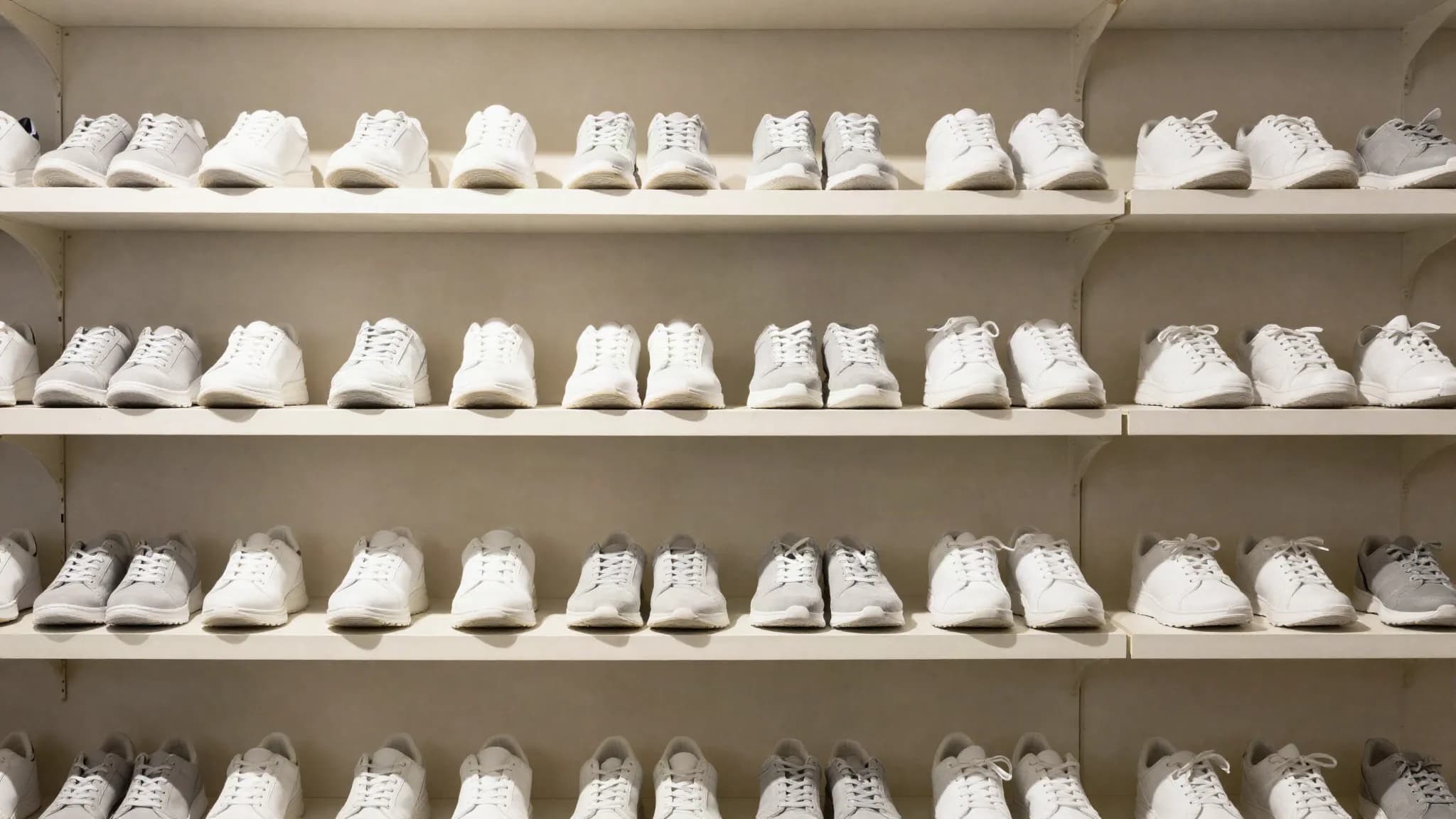
The sneaker bubble was always going to pop. For the past fifteen years, limited releases and collector speculation transformed athletic shoes into financial instruments. People waited overnight in line for shoes they'd never wear, flipped them on resale markets for triple the retail price, and treated Nike drops like stock trades. That era is definitively over. The data is brutal and unambiguous.
According to StockX's latest resale analytics, only 47 percent of sneaker releases in 2024 traded above retail value, compared to 58 percent in 2020. That's not a trend shift; it's a market collapse. The average resale multiple that once hovered near 100 percent profit is now compressed to 10 to 25 percent. Specific models tell even grimmer stories: the Nike Dunk, once a financial staple for resellers, is down 41 percent year-over-year. The Jordan 1, the sneaker world's blue-chip investment, is down 18 percent in average price.
Sneaker culture isn't dead. What's dead is the speculation.
Nike's market share meltdown
Nike's dominance in the culture is eroding faster than the company's own leadership probably expected. NSS Magazine's market analysis documents Nike's overall resale share dropping 11 percent year-over-year, with the Jordan brand specifically declining 12 percent. That's happening while other brands are surging: Asics is up 589 percent in resale volume, Adidas is up 88 percent, and even Yeezy maintained 23 percent growth despite Kanye West's well-documented collapse as a cultural figure.
The irony is sharp. Nike owned the hype machine. The company's scarcity strategy was genius marketing: make shoes hard to get, let demand build, release limited quantities, watch the aftermarket explode. That machine worked for years. Now it's working in reverse. Oversupply, changing consumer preferences, and shifting demographic interest have hollowed out the model.
What killed the flip game
Three forces converged to crash the market. First, supply reality: brands realized they were leaving money on the table by underproviding stock. They started releasing more shoes. More supply means lower resale premiums. The math is elementary but its implications devastated reseller margins.
Second, generational taste is shifting toward comfort and casualization over hype. Younger consumers care less about owning limited releases and more about wearing shoes that work. The sneaker obsessive who camps out for drops is no longer the cultural arbiter; the person buying one pair of Adidas New Balance for daily wear is.
Third, the rise of alternative brands. Asics, New Balance, and Salomon have captured mindshare by leaning into comfort and design instead of artificial scarcity. Their growth isn't speculative; it's built on actual wearability. New Balance, once the shoe of your dad, is now seen by younger consumers as a design leader. Asics, barely visible in Western streetwear five years ago, is now legitimate in ways Nike can't manufacture.
Resale, but not as investment
The resale market hasn't disappeared; it's transformed. Resale is now functional, not speculative. People are selling shoes because they wore them out or changed their minds, not because they're waiting for a buyer willing to pay triple retail. Margins have compressed so severely that the economic incentive to flip is gone. Resellers are becoming liquidators of wardrobes rather than financial traders.
Platforms like StockX and Grailed still exist, but their value proposition has changed. They're not making people rich anymore; they're just moving inventory.
What this means for collectors and brands
For genuine collectors who buy sneakers to wear and display, this is actually healthy. Prices are becoming rational again. A shoe's value is driven by actual demand and design merit rather than artificial scarcity. For brands, the implications are more complex. Manufacturers need to recalibrate their release strategies entirely. Scarcity still drives some demand, but overshooting into irrelevance is now a real risk.
The brands winning are those pivoting to design differentiation and comfort innovation instead of dropping scarcity play. Asics' success isn't because they're rare; it's because their silhouettes are visually interesting and their cushioning technology is legitimately good. That's a different business model than what Nike built, and it's proving more durable.
The reset is permanent
This isn't a temporary dip. The conditions that created a speculation bubble (artificial scarcity, hype marketing, youth demographic willing to wait overnight) aren't coming back. The sneaker market will stabilize at a new baseline where volume matters more than rarity, where functionality and design drive demand more than brand logo mythology, and where resale is just what it always should have been: a way to move shoes you're done wearing, not a get-rich-quick scheme in rubber and canvas.
Published in The Outspoken Digest
Editorial desk
Outspoken Digest Style DeskReports for The Outspoken Digest across Fashion, Design, Lifestyle.
Newsletter
The Digest, in your inbox
One edition, sent when it is ready. No noise, and your address is never passed on.
Read Next
More Fashion →
Anthony Vaccarello Is Leaving Saint Laurent After a Decade, and Kering Has Not Yet Named His Successor
Oct 9, 2026/2 min read

Louis Vuitton Closes Paris Fashion Week With Hovering Cars, Paper-Light Dresses and a Louvre Courtyard Cityscape
Oct 7, 2026/2 min read

Celine Dion Made a Surprise Return to the Catwalk to Close L'Oreal's Paris Fashion Week Opening Show
Sep 29, 2026/2 min read
Louise Trotter Doubled Down on Colour and Oversized Bags for Her Latest Bottega Veneta Show in Milan
Sep 27, 2026/2 min read