Ancient Iron Meteorites Show the Solar System Sorted Its Building Blocks by Fire From the Very Start
Analysis of iron meteorites found their parent bodies were built almost entirely from heat-forged chondrules rather than water-rich dust, pushing selective planet-building back to the Solar System's first million years.
Tuesday, September 29, 2026/2 min read
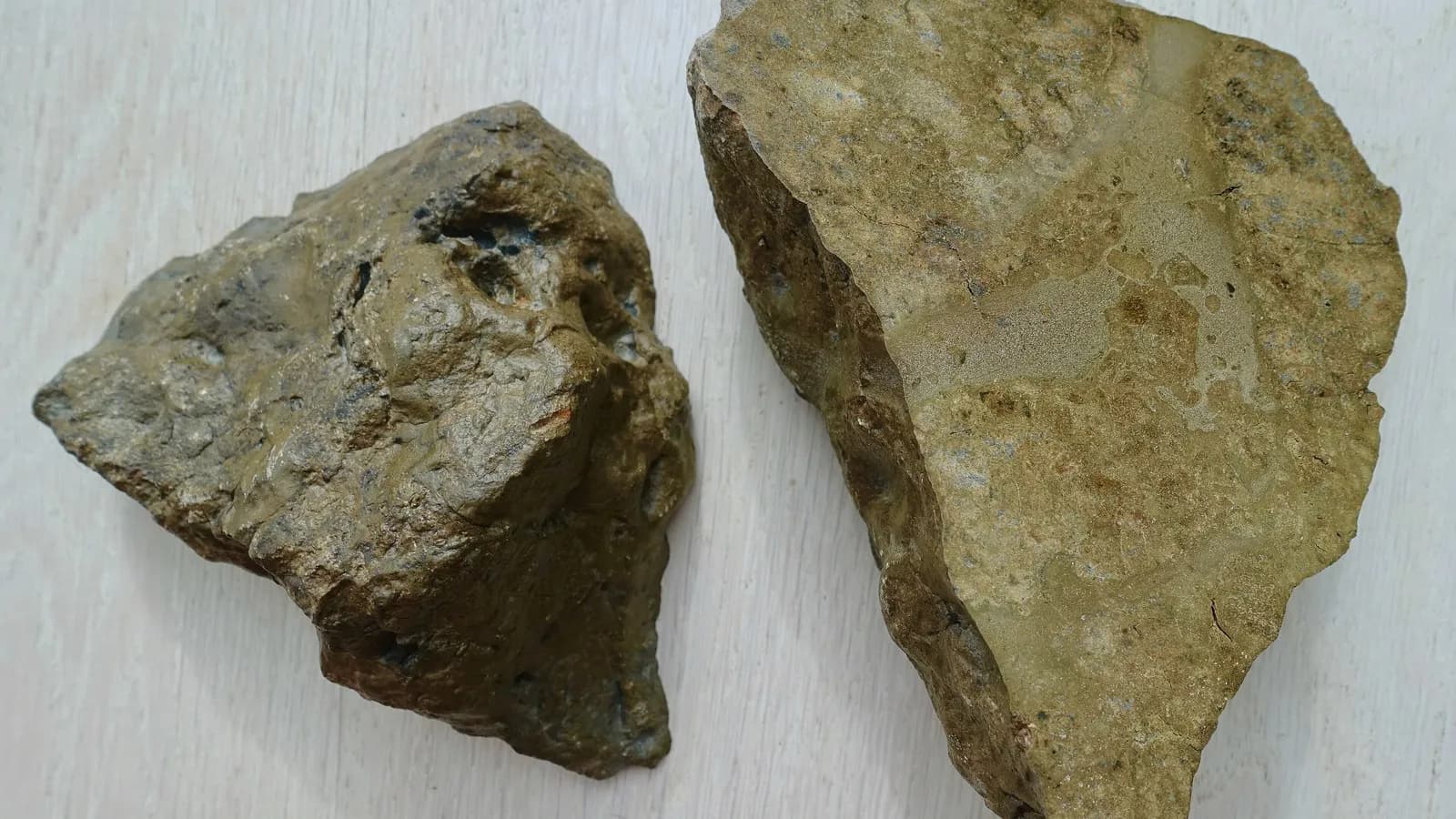
A new analysis of ancient iron meteorites has found that some of the Solar System's very first solid bodies were built almost entirely from tiny heat-forged rock beads called chondrules, actively excluding the water-rich dust that made up much of the material available at the time. The study, led by Damanveer Grewal, Zhongtian Zhang and Joanna Drazkowska and published in Nature Astronomy, is summarised in ScienceDaily's coverage, with the full paper available directly from Nature Astronomy.
What chondrules actually are
Chondrules are millimetre-scale spherical grains of rock that formed when clumps of dust in the early Solar System were briefly heated to melting temperatures, then cooled and solidified quickly enough to freeze into small, glassy beads, a process that leaves them chemically and texturally distinct from the cooler, water-bearing dust that never underwent that heating. Most rocky meteorites, called chondrites, contain both chondrules and a surrounding matrix of that unheated dust in varying proportions, and studying those proportions is one of the main ways planetary scientists reconstruct what raw material went into building the earliest solid bodies.
What made this particular set of meteorites unusual
The research team examined iron meteorites, fragments of the metallic cores of ancient planetesimals that broke apart long ago, and calculated that the original rocky bodies these iron cores came from contained only 8 to 17 per cent matrix material, the unheated, water-rich dust component. That is a notably lower proportion than has been found in any known chondrite, indicating that whatever process assembled these particular planetesimals was unusually selective about excluding matrix material compared with the bodies that eventually became today's stony meteorites.
Why the exclusion looks deliberate rather than accidental
A planetesimal that simply swept up whatever material happened to be nearby, without any sorting mechanism, would be expected to end up with a matrix content roughly proportional to how much matrix was present in the surrounding dust and gas cloud, not consistently and sharply lower than that background level. Finding matrix proportions this depleted across the sampled iron meteorites points instead to an active aerodynamic sorting process, one that preferentially gathered the denser, more compact chondrules while leaving lighter, fluffier matrix dust behind as the earliest planetesimals accreted.
Pushing the timeline back to the very beginning
Because iron meteorites come from planetesimals that differentiated early, meaning they grew hot enough, quickly enough, to separate into a metallic core and rocky mantle, their formation has to have happened extremely early in Solar System history, within roughly the first million years after the Sun itself formed. That timing means the selective, chondrule-favouring sorting process identified in this study was already operating at the very outset of planet formation, not emerging later once the protoplanetary disk had settled into a calmer, more mature state.
What this changes about the standard planet-formation story
Models of how planets assemble often treat the earliest stage of planetesimal growth as comparatively indiscriminate, with more selective, composition-dependent processes assumed to matter more at later stages as bodies grew larger and more differentiated. This result complicates that picture by showing that at least some of the very first planetesimals were already being built from a compositionally filtered subset of the available material, meaning the story of what determined a planet's eventual composition may need to start earlier than researchers had generally assumed.
Published in The Outspoken Digest
Editorial desk
Outspoken Digest Science DeskReports for The Outspoken Digest across Technology, Latest Trends, Health.
Newsletter
The Digest, in your inbox
One edition, sent when it is ready. No noise, and your address is never passed on.
Read Next
More Technology →
Webb Caught a Probable Supernova From the Early Universe Only Days After It Exploded
Oct 18, 2026/2 min read
Webb Maps an Exoplanet's Atmosphere as Egg-Shaped, With a Puffed-Up Evening Side Hotter Than Its Morning Edge
Oct 18, 2026/2 min read
A Hole in a 75,000-Year-Old Shoulder Blade Points to a Wooden Spear, and Perhaps to Neanderthal Care
Oct 18, 2026/2 min read

Anthropic's Own Staff Data: Junior Technical Hires Fell From 27 to 9 Percent as Its AI Agents Outworked Humans
Oct 18, 2026/2 min read