SpaceX Launches a Spy Satellite Mission From Vandenberg 32 Hours After the Last, a New Pad Turnaround Record
A classified National Reconnaissance Office payload flew on Sunday from the same California pad that had launched another Falcon 9 a day and a half earlier, beating the old record by almost 13 hours.
Outspoken Digest Technology Desk
Monday, November 23, 2026/2 min read
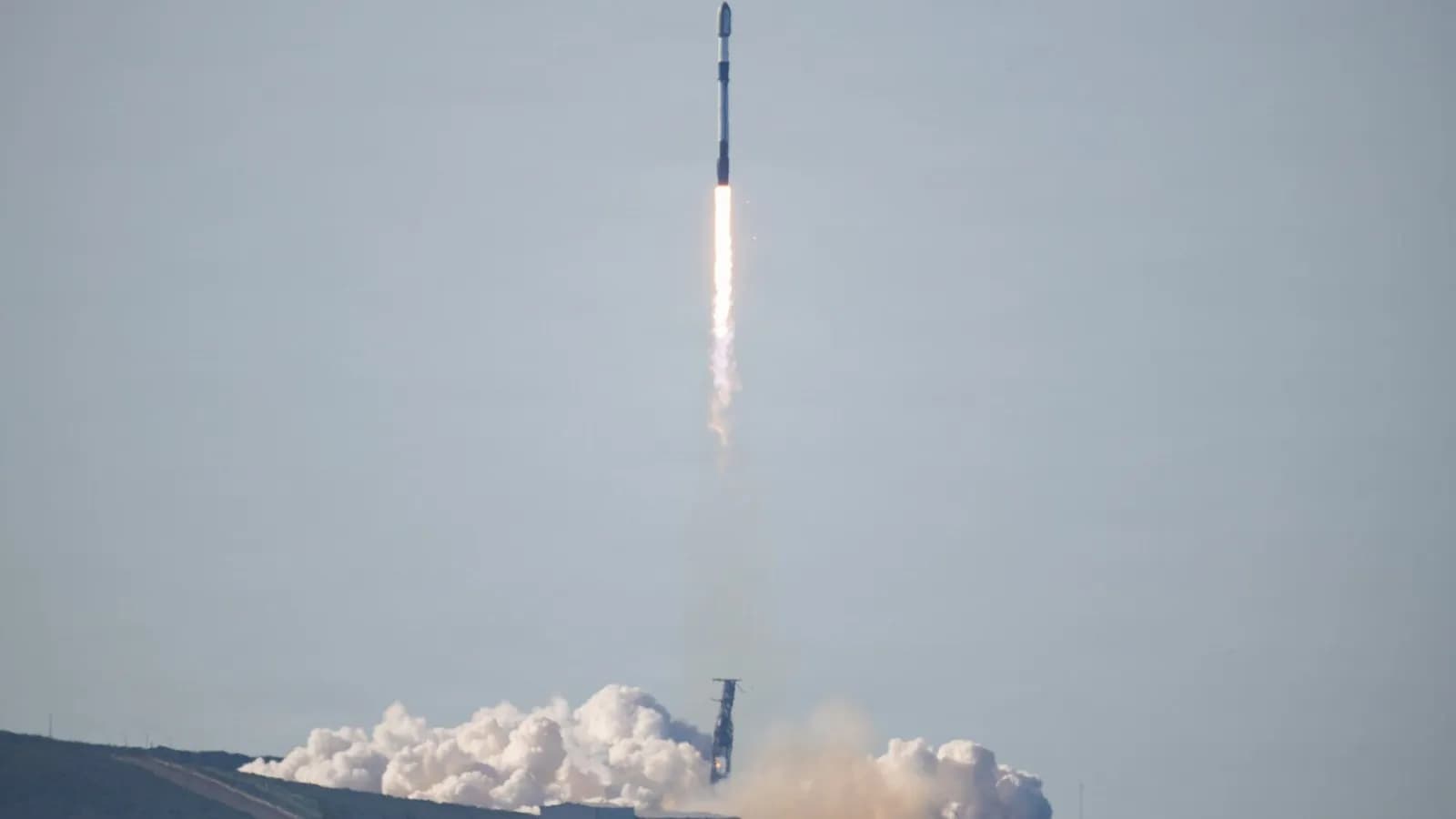
SpaceX has set a new record for how quickly one launch pad can fly twice. A Falcon 9 carrying a classified spy-satellite payload for the National Reconnaissance Office left Vandenberg Space Force Base in California early on Sunday, 32 hours and three minutes after the previous rocket left the same pad.
The mission, NROL-136, lifted off at 12:23 UTC on 22 November (4:23 a.m. local time), Space.com reports. The first stage landed back at Vandenberg about seven and a half minutes later.
How fast was the Vandenberg pad turnaround?
The gap between launches from Space Launch Complex 4E was 32 hours, 3 minutes and 21 seconds, according to Space.com. The previous record was 45 hours, set at Pad 40 at Cape Canaveral in Florida, so the new mark beats it by almost 13 hours. SpaceX's vice president of launch, Kiko Dontchev, announced the record on X and said the team "got there with several hours of margin."
The earlier launch was USSF-317 on 20 November, local time, the MLQ report says. Counting back 32 hours and three minutes from 12:23 UTC puts the USSF-317 liftoff at about 04:20 UTC on Saturday 21 November, which is the evening of the 20th on the California coast. A pre-launch story from KEYT had set a window of 4:16 to 4:46 a.m. Pacific time for Sunday, with a backup on Monday that was not needed. MLQ says the actual liftoff came about seven minutes after the original target.
What did NROL-136 launch?
The payload is classified. The National Reconnaissance Office has not said how many satellites flew or what they carry, and Space.com notes that it does not disclose that for these missions. What is known is where NROL-136 fits: it was the 15th launch for the NRO's proliferated architecture, a constellation of reconnaissance satellites built with SpaceX and Northrop Grumman that began with NROL-146 in May 2024.
It was also the NRO's sixth launch of 2026, all of them on Falcon 9. The previous proliferated mission, NROL-179, flew on 19 June, MLQ says.
Which booster flew it?
Booster B1097 made its 14th flight on the mission, and KEYT's pre-launch story lists Twilight and Transporter-17 among its earlier jobs. Space.com lists earlier assignments that include NASA's Sentinel-6B, NROL-172, USSF-259 and eight Starlink launches. The landing at Landing Zone 4 completed another recovery for a vehicle that has now flown more than a dozen times.
The record is a statement about ground operations as much as the rocket: clearing the pad, stacking, fuelling and launching again inside a day and a half. SpaceX has not said whether it will try to shorten the gap further, and the answer will come launch by launch from a pad that has just proved it can fly twice in 32 hours.
Published in The Outspoken Digest
Editorial desk
Outspoken Digest Technology DeskSoftware, hardware, artificial intelligence and what they change for everyone else.
Newsletter
The Digest, in your inbox
One edition, sent when it is ready. No noise, and your address is never passed on.
Read Next
More Technology →
OpenAI Says Database Maintenance Took Out Both Authentication Replicas, Failing Up to 75% of ChatGPT Requests
Nov 22, 2026/2 min read
Voyager 1 Passes One Light-Day From Earth While Its Science Data Stays Silent
Nov 19, 2026/2 min read
OpenAI Launches ChatGPT for Accounting With Seven Finance Partners and Human Sign-Off
Nov 19, 2026/2 min read

Google Launches Gemini 4 Neon at $3 per Million Input Tokens, Between Carbon and Hydrogen
Nov 18, 2026/2 min read