SS United States Reef Sinking Targeted for November: What Divers Should Know
Okaloosa County says the 990-foot liner will go down off the Florida Panhandle in the second week of November. The upper decks sit in recreational range, the hull does not.
Friday, October 16, 2026/2 min read
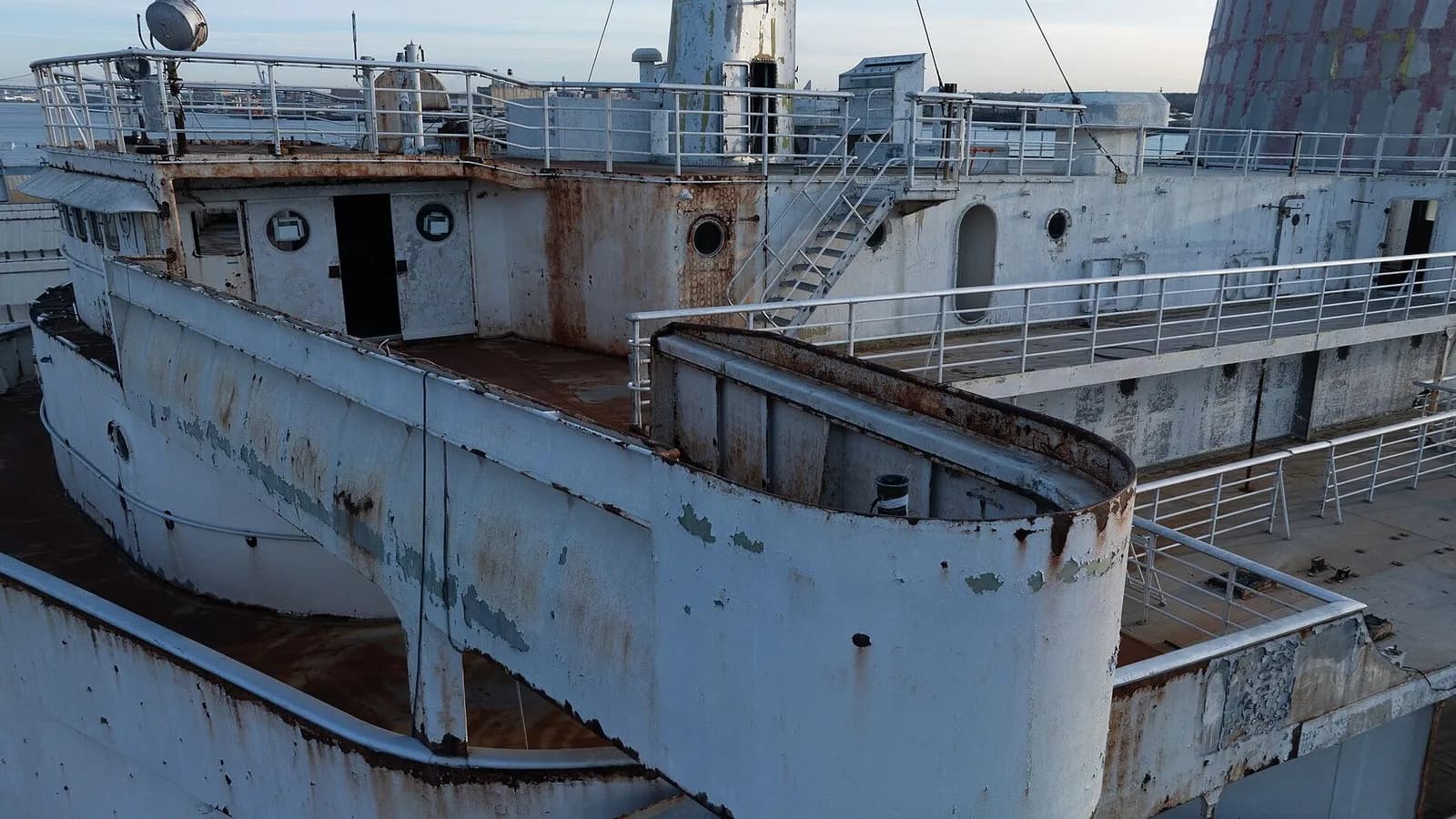
The SS United States, the 990-foot ocean liner that has spent decades as a rusting hulk, is due to become the largest artificial reef in the world. Okaloosa County, which bought the ship in 2024, says it expects to sink her in the second week of November in the Gulf of Mexico, about 22 nautical miles southwest of Destin-Fort Walton Beach, as reported by The Philadelphia Inquirer on 12 October.
The exact day has not been announced and depends on weather and logistics. The Scuba News reports that the county confirmed the November window on 15 October and says it is a target, not a guarantee.
How deep will the SS United States sit?
The county's published plans put the seabed at roughly 180 feet (about 55 metres), according to The Scuba News. SDI and TDI, which cover the story for divers, say the ship is meant to settle upright, with her upper deck about 55 to 60 feet (17 to 18 metres) below the surface. They note that one interview cites about 50 feet, so the figure may shift once she is on the bottom. The ship is about 47,000 tons and more than 100 feet longer than the Titanic.
The Inquirer says officials cleared the vessel of non-metal items and cut holes through the hull, and that the sinking will use no explosives. SDI adds that the funnels and main mast went to a land-based museum in Destin-Fort Walton Beach.
What training does the wreck call for?
That depends on where you go. The upper deck is within recreational range, and the county is planning for divers of every level, according to SDI. The hull and lower decks, down to about 180 feet, mean deep diving, and SDI says the deepest sections call for decompression and trimix training. Going inside is another step: SDI's Wreck Diver course covers non-penetration and limited penetration near an entry point and expects a Deep Diver certification or proven experience below 60 feet, while TDI's Advanced Wreck Diver course covers full penetration.
The Scuba News stresses that dive profiles are provisional until the wreck is on the bottom, surveyed and assessed, and that depth, current and overhead environments will decide what a diver needs. The same site notes that the county refers to final approvals from the US Army Corps of Engineers and the EPA, which the outlet could not independently confirm.
What else is nearby?
SDI says the site is about 12 nautical miles from the USS Oriskany, the aircraft carrier sunk as a reef off Pensacola in 2006, so the current record holder and the proposed new one would be a short boat run apart.
For now, the sensible move for divers planning a trip is to wait for the county's schedule and for the first survey reports, which should arrive in the weeks after the sinking. The county has said more details are coming. This is journalism, not instruction, and wreck training belongs with a certified instructor and agency.
Published in The Outspoken Digest
Editorial desk
Outspoken Digest Diving DeskCovers freediving, recreational and technical diving, dive medicine and the incidents the sport learns from.
Newsletter
The Digest, in your inbox
One edition, sent when it is ready. No noise, and your address is never passed on.
Read Next
More Diving →
Breathless and Coughing Pink Froth After a Dive: Immersion Pulmonary Edema Explained
Oct 17, 2026/3 min read
Your Gas Consumption Is Not One Number: Why Depth, Cold and Nerves Change It
Oct 16, 2026/3 min read
Divers Excavating Off Kekova Find a Wreck Believed to Be the World's Oldest, Turkey Says
Oct 15, 2026/2 min read
Bleached Corals Recovered After Touching a Healthy Clone, Stanford Lab Study Finds
Oct 15, 2026/2 min read