Strength Training for Longevity: Muscle as an Organ of Healthspan
New mortality data pinpoints how much weekly strength training lowers death risk, and shows more is not always better.
Thursday, April 10, 2025/4 min read
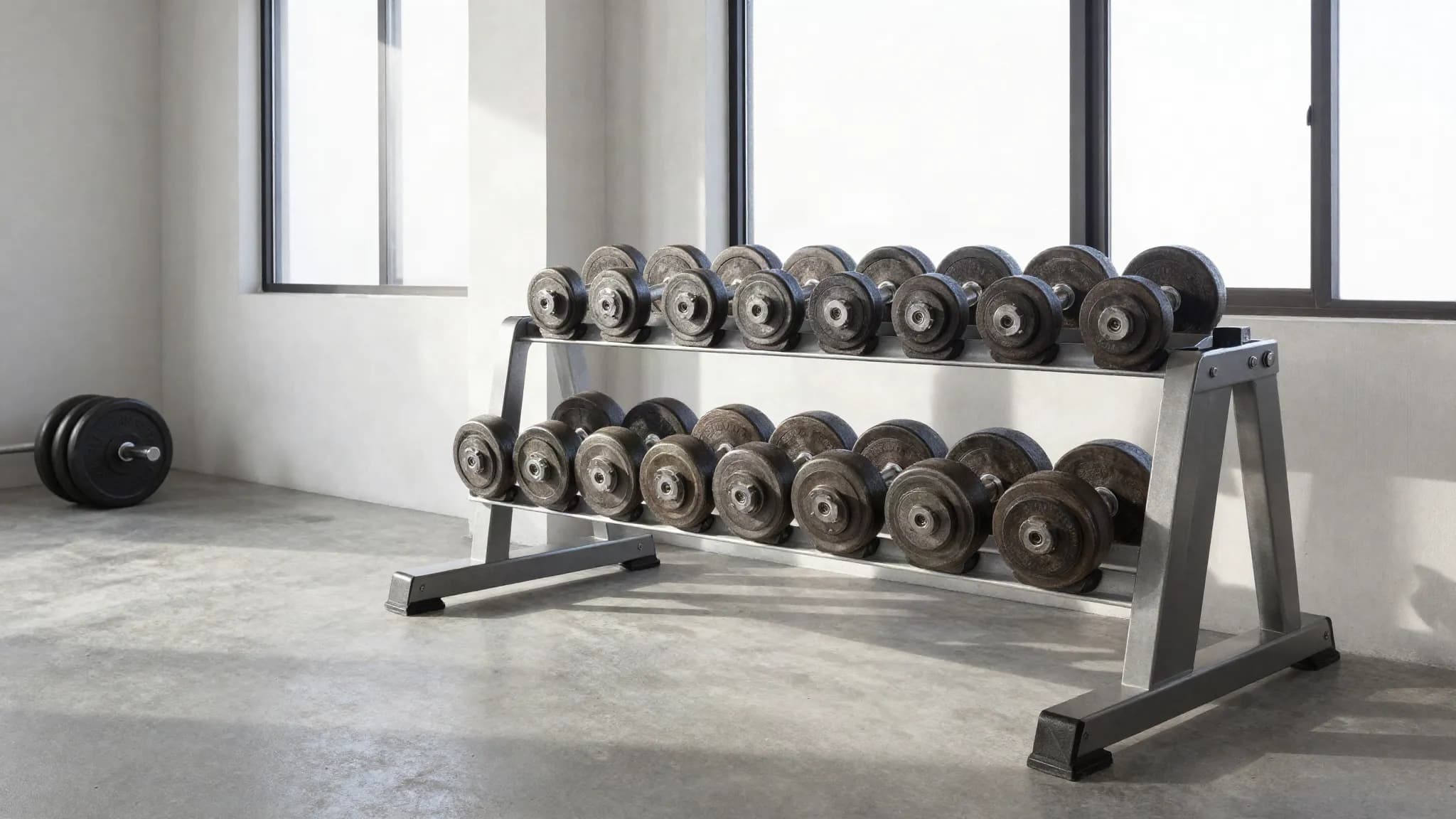
For years, longevity advice defaulted to cardio: run more, walk more, keep the heart rate up. Muscle was the vanity metric, cardio was the health metric. A growing body of long-running cohort research is quietly overturning that hierarchy, treating skeletal muscle less like decoration and more like an organ with its own direct line to how long, and how well, people live. The numbers behind that shift are specific enough to actually plan a week around, which is rarer than most exercise advice manages to be.
How much strength training actually lowers mortality risk
A large analysis of roughly 30 years of cohort data found that higher long-term levels of weekly strength training were associated with lower all-cause mortality, with people doing 90 to 119 minutes of strength training per week showing a 13 percent lower risk of death from any cause compared with those doing none, according to findings covered by ScienceDaily. Notably, the same analysis found no additional mortality benefit above 120 minutes per week, a genuine sweet spot rather than a simple more-is-better relationship.
Specific causes of death, not just the average
The benefit was not uniform across causes of death. That 90 to 119 minute range was linked to a 19 percent lower risk of cardiovascular death and a 27 percent lower risk of neurological disease death. Cancer mortality showed a different pattern entirely, with even a small amount of strength training, as little as 1 to 29 minutes per week, associated with a 21 percent lower risk of cancer death, suggesting the dose-response curve is not identical across every disease category.
Combining strength and cardio beats either alone
The lowest mortality risk in the same body of research was seen in people who combined substantial aerobic activity, roughly 30 to 44 MET-hours per week, with 60 to 119 minutes of strength training, a combination associated with a 45 percent lower risk of death compared with largely sedentary peers. That figure argues against treating strength training and cardio as competing choices; the data points toward both, in specific ranges, rather than an either-or.
Power, not just strength, may matter even more
A study covered in Mayo Clinic Proceedings found that relative muscle power, how quickly force can be generated, not just how much force a muscle can eventually produce, was a stronger predictor of mortality than relative strength alone in middle-aged and older men and women. A companion piece in the same journal, The Need for Speed: Improving Muscle Power for Longevity, argues this has practical training implications: exercises performed with intentional speed on the concentric (lifting) phase, not just heavy slow grinding, may deserve more attention in programs designed for older adults.
It is trainable even very late in life
A 2024 study following the oldest-old adults across 28 countries, published in the Journal of Cachexia, Sarcopenia and Muscle, found muscle strength was associated with all-cause mortality even in this very elderly population, and separate research in the same field indicates muscle strength and power remain responsive to training well into people's eighties and nineties, meaning starting late is not the same as starting too late.
What this means in practice
The practical read is not complicated: two to three strength sessions a week landing somewhere in the 90 to 120 minute weekly range, built around compound movements performed with reasonable effort and some intentional speed on lifts, alongside regular aerobic activity, sits squarely inside the range associated with the largest mortality benefit in this research. Going well beyond that range has not shown additional benefit in this data, which is a useful permission slip for people worried they are not doing enough.
What counts as strength training in this research
The cohort data behind these figures generally captures resistance-type activity broadly, weightlifting, resistance bands, bodyweight exercises and similar strength-focused movement, rather than any single prescribed program. That matters for how the finding translates into practice: the mortality benefit is tied to the category of activity and the accumulated weekly time doing it, not to a specific branded workout, machine or gym membership, which makes the sweet spot accessible without specialized equipment for most people.
Where caution is still warranted
Cohort studies like these show association, not proof of direct cause, since people who strength train may differ from those who do not in other health-relevant ways the analysis cannot fully strip out. Randomized trials with mortality as the endpoint are logistically difficult to run over decades, so this kind of large observational data, while genuinely useful, is not the same tier of evidence as a drug trial. Individualized programming, especially for people with existing joint issues, osteoporosis or cardiovascular disease, should come from a clinician or qualified trainer familiar with that person's history, and form matters enough that a few sessions of professional coaching early on tends to pay for itself in reduced injury risk.
This article is reporting on exercise research, not individualized medical or training advice. Anyone starting resistance training, particularly older adults or people with existing health conditions, should get guidance suited to their specific situation.
Muscle used to be treated as the accessory to a cardio-first idea of health. The data increasingly treats it as core infrastructure, the kind that keeps showing its value the longer researchers track people who kept building it, and the sweet spot identified in the largest cohort studies means the goal is a sustainable weekly habit, not a grinding daily commitment.
Published in The Outspoken Digest
Editorial desk
Outspoken Digest Health DeskMedicine, public health and the research behind the headlines, read carefully.
Newsletter
The Digest, in your inbox
One edition, sent when it is ready. No noise, and your address is never passed on.
Read Next
More Health →
Two Days After the Nobel for Optogenetics, a Small NEJM Trial Shows It Helped Some Blind Patients Detect Objects
Oct 9, 2026/3 min read
WHO Launches a Global Roadmap on Pre-Eclampsia and Pregnancy Hypertension, Tied to 42,000 Maternal Deaths a Year
Oct 8, 2026/3 min read
WHO Says Diet and Exercise Come First and Children Under 10 Should Not Get Weight-Loss Drugs or Surgery
Oct 7, 2026/3 min read

Kenya Confirms Its First Ebola Case, a Man Who Flew In From Uganda After Years in Congo and Died in Nairobi
Oct 6, 2026/3 min read