Tesla Sold More Cars, Then Spent the Profit on Its Future
Record vehicle deliveries lifted Tesla’s revenue, but a surge in research spending shows how aggressively the carmaker is funding robotaxis, AI and Optimus.
Outspoken Digest Business Desk
Thursday, July 23, 2026/4 min read
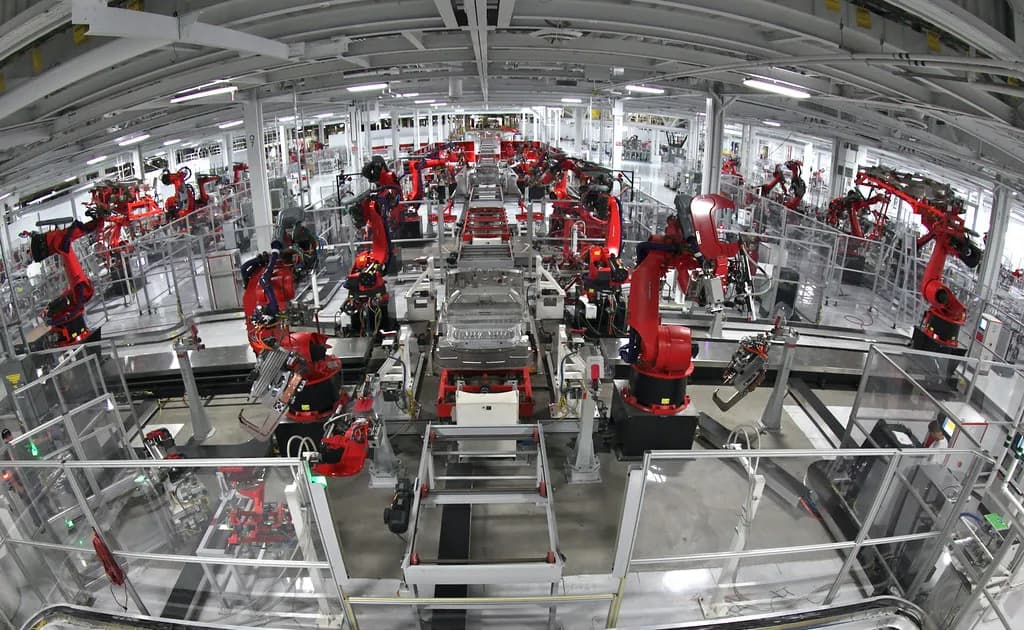
Tesla delivered more vehicles, collected more revenue and made less profit. That combination is the cleanest picture yet of the company Elon Musk says it is becoming.
The second quarter was strong for the car business by several conventional measures. Deliveries reached a record, revenue beat expectations and the energy-storage division grew. Then research and development spending absorbed much of the gain as Tesla poured money into robotaxis, artificial intelligence infrastructure and the Optimus humanoid robot.
What Tesla’s second-quarter numbers show
Tesla reported quarterly revenue of $28.24 billion, up 26 percent from a year earlier, and net income of $1.11 billion. The Associated Press reported that adjusted earnings fell short of analyst expectations even as revenue exceeded them.
Research and development spending climbed roughly 49 percent to $2.37 billion. That increase helps explain why higher sales did not translate into higher profit. It is also consistent with management’s warning that capital and operating expenses will remain elevated as Tesla expands computing, robotics and manufacturing capacity.
The delivery foundation was substantial. Tesla’s production update recorded 480,126 vehicles delivered against 451,758 produced. Model 3 and Model Y accounted for the overwhelming majority, while energy-storage deployments reached 13.5 gigawatt-hours.
Why Tesla is spending beyond electric cars
Musk has argued for years that Tesla’s value will eventually rest more on autonomy and robotics than on selling vehicles. The current investment cycle is an attempt to build that future before margins in the established business can no longer finance it.
Robotaxis require far more than a driving model. They need data centers, fleet operations, maintenance, remote support, insurance and a regulatory framework city by city. Optimus requires new actuators, factories and software capable of reliable work around people. Neither becomes a large business simply because a prototype performs well on stage.
Axios described the push as costly, highlighting the gap between rising revenue and weaker operating profit. Investors are effectively being asked to accept lower near-term returns in exchange for exposure to businesses that remain less proven than Tesla’s vehicle operation.
The energy business is becoming harder to ignore
Electric cars still dominate Tesla’s revenue, but battery storage is becoming a serious second engine. Energy generation and storage revenue reached $3.14 billion, up 13 percent from the comparable period, according to the AP account.
That business benefits from a different demand curve. Utilities and data-center operators need large batteries to balance grids, absorb renewable generation and cover peak demand. The AI buildout that raises Tesla’s own computing costs may also create customers for its energy products.
Storage does not remove the risk of automotive competition, pricing pressure or product delays. It does give Tesla a growing industrial business that is connected to electrification without depending on a consumer choosing one car brand over another.
More volume does not settle the margin question
Record deliveries can be achieved through stronger demand, improved supply or lower prices. The quality of the growth appears in margins and cash flow. If discounts and cheaper models drive volume while research spending rises, the company can become busier without becoming more profitable.
Tesla’s financial-results notice directs investors to the full shareholder update and webcast, where management laid out an investment cycle expected to last several years. The company has made its priority clear. It will protect the autonomy and robotics timetable even if current earnings look less comfortable.
This creates a different kind of execution test from the one Tesla mastered with the Model 3. Scaling a factory is difficult but measurable. Building a safe autonomous service and a useful general-purpose robot involves uncertain technical thresholds, regulators and human behavior.
Tesla is asking to be valued as two companies
One Tesla manufactures cars and batteries, businesses with factories, deliveries, margins and competitors that can be counted. The other is a wager on physical AI, where the addressable market is enormous and the timeline keeps moving.
For now, the first company is paying for the second. The quarter demonstrates both why that is possible and why it is risky. A healthy increase in vehicle revenue provides resources, while falling profit narrows the room for delays.
Three clocks are running at once
Tesla’s strategy now depends on timelines that do not naturally align. The vehicle business is judged every quarter on deliveries, pricing and margin. Factories and computing infrastructure require multiyear commitments. Autonomous services and humanoid robots carry technical and regulatory uncertainty that can stretch much longer. Cash generated by the first clock must keep funding the other two without weakening the product customers can buy today.
That balance deserves more disclosure as spending rises. Investors need milestones that separate useful progress from theatrical prototypes: deployment scale, intervention rates, unit economics, manufacturing yield and the capital still required before a service becomes self-supporting. The same discipline should apply to the core business, where record volume means less if discounts and costs erode each sale.
Tesla has often benefited from asking markets to look beyond an ordinary automaker’s horizon. The second-quarter results keep that story alive, but they also make the trade visible. Ambition is not free, and the company’s strongest evidence for its future will be a present business sturdy enough to finance it without permanent exceptions.
The headline is not that Tesla’s car business disappeared. It just delivered more vehicles than ever. The headline is that management treated those results as fuel for another destination, and shareholders must decide how long they are willing to finance the drive before the promised future begins paying its own way.
Published in The Outspoken Digest
Editorial desk
Outspoken Digest Business DeskCompanies, markets and the money moving through the region.
Newsletter
The Digest, in your inbox
One edition, sent when it is ready. No noise, and your address is never passed on.
Read Next
More Business →
Nasdaq Falls 1.25% as the FT Puts OpenAI's Annualized Revenue Near $50 Billion, Not $70 Billion
Oct 9, 2026/2 min read
Treasury Yields Hit a 24-Year High, Waller Says More Fed Rises Are Coming, and the 30-Year Auction Clears at 5.618%
Oct 9, 2026/2 min read
Samsung's 107 Trillion Won Quarter Outearned Nvidia, and Its Shares Fell 2.4 Per Cent Anyway
Oct 8, 2026/3 min read
McKesson and CD&R Agree to Take Option Care Health Private in a $5.8 Billion Home Infusion Deal
Oct 7, 2026/2 min read