Twelve Days That Closed the Gulf's Skies
Israel's strikes on Iran and the retaliation that followed grounded Gulf carriers and shut down entire national airspaces within hours.
Thursday, June 26, 2025/4 min read
On June 13, Israel struck more than a hundred sites inside Iran, hitting nuclear and military facilities and killing senior commanders in a single opening barrage. Iran answered with waves of drones and missiles aimed at Israeli territory. Within hours, the war had a second front nobody had budgeted for: the sky over the Gulf.
By the following week, at least eight countries across the region had shut their airspace, some fully, some in staggered layers, as militaries tracked munitions crossing borders that airlines had spent decades treating as reliably open. What followed was twelve days in which the world's busiest long-haul transit hub effectively stopped functioning as one.
Which airspaces closed, and when
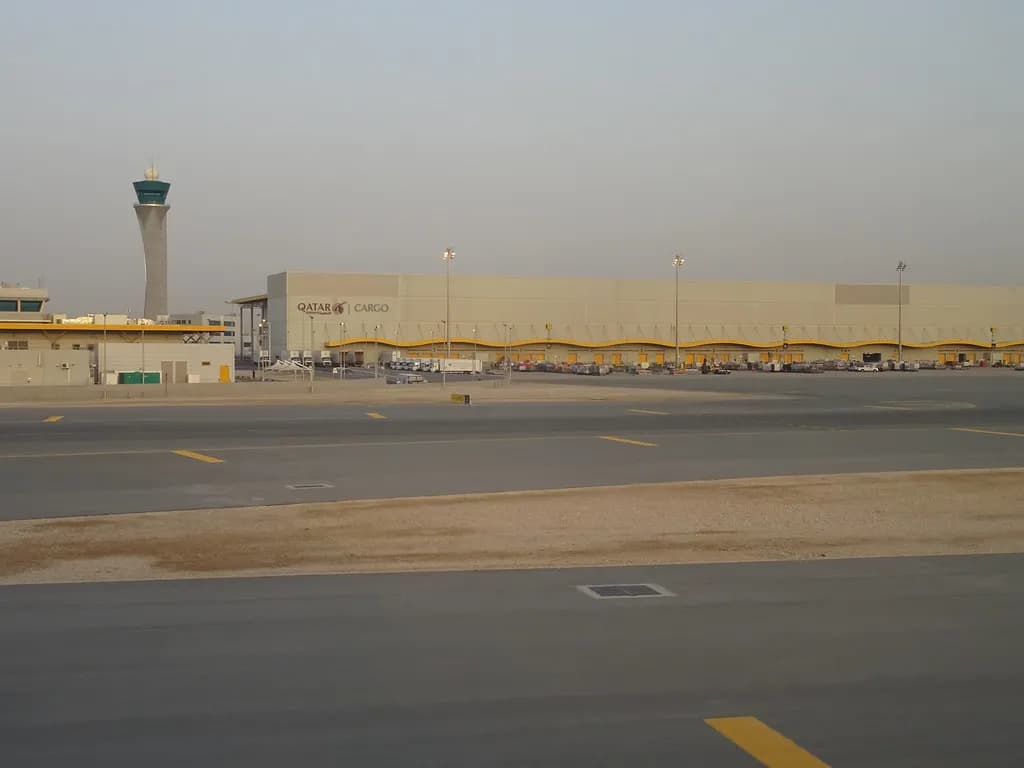
Qatar's closure was the most dramatic single event of the conflict for Gulf aviation. On June 23, Iran fired missiles at Al Udeid Air Base, the largest US military installation in the Middle East, sitting on Qatari soil southwest of Doha. Qatar shut its entire airspace in response, according to Al Jazeera, grounding Hamad International Airport, one of the busiest connecting points on the planet, for the better part of a day.
Iran's own airspace stayed closed until further notice for the duration, a precaution any airline flying Gulf to Europe or Gulf to North America over Iranian territory had to route around immediately. Israel's Ben Gurion Airport closed too, and stayed shut for most of the conflict's length, per coverage from Asharq Al-Awsat.
How badly did Gulf carriers get hit
Emirates cancelled 38 percent of its scheduled flights and Etihad cancelled 30 percent at the height of the disruption, a scale of grounding neither carrier has faced outside of the pandemic, according to figures reported by Gulf News. Qatar Airways suspended all flights out of Doha entirely for a stretch, a total shutdown of its hub operation rather than a partial one.
Non-Gulf carriers pulled back too. Air France, British Airways, Air India, Turkish Airlines and Lufthansa all cancelled or rerouted services through the region during the worst of the fighting, reshaping transatlantic and Asia-Europe routings that normally cut straight across Gulf and Iranian airspace.
The reopening, route by route
The turning point came after a ceasefire took hold in the conflict's final days. In the early hours of June 24, flights resumed from Hamad International, with Saudi budget carrier Flynas operating the first take-off out of Doha once the all-clear came through, a detail that made the Gulf aviation trade press almost as much as the strikes themselves had. Emirates and Etihad began restoring cancelled routes in stages over the following two days rather than resuming a full schedule overnight, wary of a ceasefire that had already shown signs of fragility.
What this exposes about Gulf aviation's exposure
- Doha and Dubai's entire commercial model depends on connecting traffic through airspace that a regional war can shut in hours.
- Insurance and overflight risk assessments now price in a scenario that, a month ago, most airline planners treated as remote.
- Passengers mid-itinerary were stranded across multiple hubs simultaneously, a stress test for rebooking systems the industry had never run at this scale in the Gulf specifically.
The ceasefire is holding for now, and Gulf carriers are rebuilding their June schedules route by route. But the twelve days have left something behind that a resumed timetable can't fully paper over: proof that the region's aviation superhighway, built on the promise of always-open skies, can be switched off within a single news cycle.
What happened to passengers caught mid-journey
The closures did not politely wait for travellers to finish their trips. Thousands of passengers were stranded mid-itinerary across Doha, Dubai and Abu Dhabi simultaneously, some on outbound legs, some on connections, with no reliable timeline for when a resumption might come. Airlines scrambled to house crews and passengers in hotels already stretched thin by the sudden surge in unplanned overnight stays, while call centres and app-based rebooking tools buckled under a volume of changes the Gulf's carriers had never had to process at this scale in such a short window.
Travel insurers and corporate travel managers spent the twelve days working from incomplete information, relying on real-time airspace trackers rather than airline statements to figure out which routes were actually flyable hour to hour. That gap between official guidance and operational reality became its own story inside the crisis, one that airlines are now reviewing internally as they update contingency protocols for the next disruption.
The economic bill behind the grounded aircraft
Every cancelled flight carries a cost beyond the ticket refund: crew rotations thrown off, aircraft out of position for days afterward, cargo contracts breached, connecting passengers rebooked onto competitors' networks entirely. For carriers whose business model depends on connecting traffic funnelling through a single hub, a closure of the scale Doha experienced does not just cost a day of revenue. It costs weeks of network recovery, as aircraft and crews slowly work their way back into position across a global schedule.
Regional aviation analysts have been blunt that the bill from this single conflict, even a resolved one, will show up in Gulf carriers' financial results for the rest of the year, a cost far larger than the twelve days of grounded aircraft alone would suggest.
Published in The Outspoken Digest
Editorial desk
Outspoken Digest Travel DeskDestinations, airlines, borders and the practicalities of getting there.
Newsletter
The Digest, in your inbox
One edition, sent when it is ready. No noise, and your address is never passed on.
Read Next
More Travel →

Hurricane Isaias Closes Gulf Coast Airports and Clears Alabama's Beaches as Airlines Waive Change Fees
Oct 8, 2026/3 min read

Oktoberfest 2026 Ended With a Record 7.4 Million Visitors, Beating the Previous High by 200,000
Oct 4, 2026/2 min read

Hawaii's 90-Foot Hōlei Sea Arch, About 550 Years Old, Collapsed Into the Pacific During Storm Nolo
Oct 3, 2026/2 min read