Every Country Now Has a Seat at the AI Governance Table. What Happens Next Matters More
The UN's first Global Dialogue on AI Governance creates a shared forum for powerful and less-connected nations. Representation is progress; enforceable cooperation remains the test.
Outspoken Digest Technology Desk
Friday, July 31, 2026/2 min read
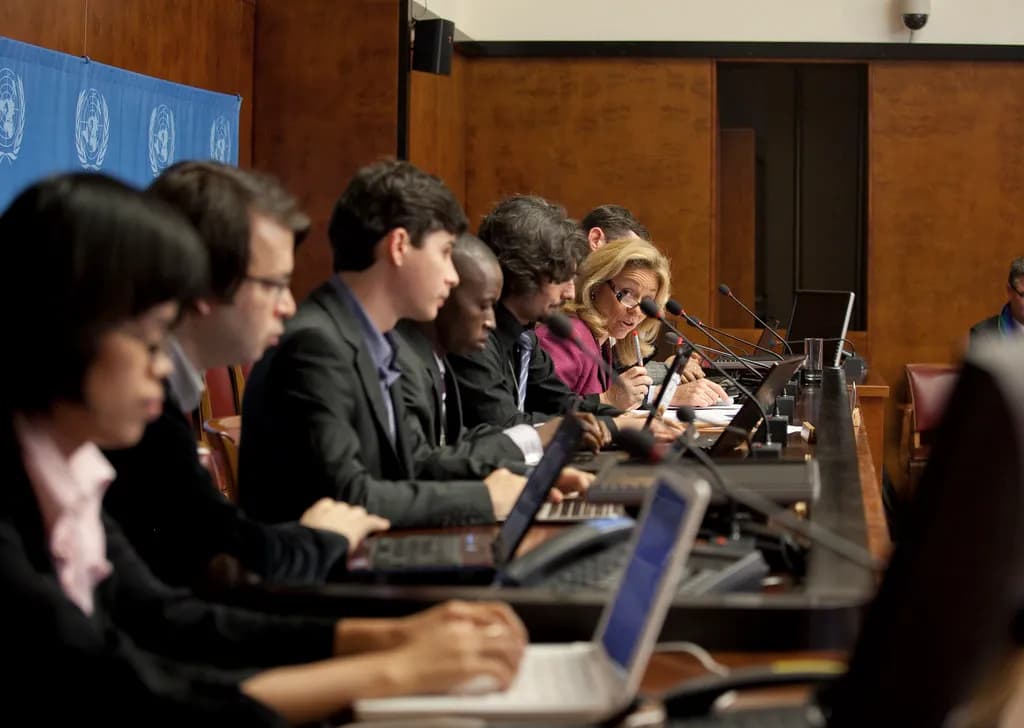
Artificial intelligence is global in its effects but highly concentrated in its development. A small number of countries and companies control much of the computing power, leading models and technical talent, while billions of people will experience decisions those systems influence. The United Nations' first Global Dialogue on AI Governance is an attempt to narrow that mismatch.
Opening the July meeting in Geneva, the UN Secretary-General argued that every country now has a seat at the table. That institutional inclusion matters. Countries should not need a frontier-model industry before they can shape rules affecting education, employment, elections, security and culture.
Why a global forum is necessary
AI services cross borders through cloud platforms, devices and open models. A system trained in one jurisdiction can be deployed in another where language, law and social conditions differ. National regulation remains essential, but gaps and contradictions create opportunities for risk to move toward the weakest oversight.
Global cooperation can establish shared terminology, evidence practices, incident reporting and minimum expectations. It can also help countries without large regulatory agencies gain access to expertise. The goal should not be one identical law for every society; it should be enough compatibility that safety does not disappear at a border.
The evidence problem is unusually difficult
The Independent International Scientific Panel on AI identifies a timing problem: policymakers need evidence to govern well, but by the time long-term evidence is conclusive, systems may already be deeply embedded. The panel considers advances, economic effects, security, the environment, human rights, democracy, child safety and reliability.
That breadth is appropriate because AI risk is not one thing. A biased benefit system, a deceptive political video, an insecure coding agent and the electricity demand of a data center require different expertise and remedies.
What developing countries need from the process
Representation must lead to practical capacity. Countries need computing access, local-language data, independent testing, skilled regulators and bargaining power with global vendors. Otherwise, inclusion may end at the conference microphone while technical dependence deepens.
Benefits also need deliberate distribution. AI can support crop advice, translation, education and healthcare, but only where electricity, connectivity, institutions and human professionals can use it responsibly. Deployment should strengthen local capability rather than extract data and leave a subscription bill.
What meaningful cooperation would produce
A credible dialogue should improve cross-border incident reporting, coordinate scientific evaluation and establish channels for urgent consultation when a system creates widespread harm. Procurement rules can require documentation and accountability from vendors. Shared support can help regulators examine models they could not test alone.
Military applications and autonomous weapons demand separate urgency because speed and secrecy increase the danger of escalation. Child protection, sexual deepfakes and manipulation also require faster cooperation than ordinary commercial standards.
The test comes after the summit
International dialogue can become ceremonial if governments announce principles without changing purchasing, enforcement or investment. The next measure of progress is whether countries fund the institutions, publish evidence and agree on mechanisms that survive political disagreement.
Giving every country a seat is an important correction to a technology debate often dominated by its builders. It is not the finish line. Governance becomes real when people far from the conference room can see safer systems, meaningful remedies and a fairer share of the benefits.
Published in The Outspoken Digest
Editorial desk
Outspoken Digest Technology DeskSoftware, hardware, artificial intelligence and what they change for everyone else.
Newsletter
The Digest, in your inbox
One edition, sent when it is ready. No noise, and your address is never passed on.
Read Next
More Technology →
Webb Caught a Probable Supernova From the Early Universe Only Days After It Exploded
Oct 18, 2026/2 min read

Webb Maps an Exoplanet's Atmosphere as Egg-Shaped, With a Puffed-Up Evening Side Hotter Than Its Morning Edge
Oct 18, 2026/2 min read

A Hole in a 75,000-Year-Old Shoulder Blade Points to a Wooden Spear, and Perhaps to Neanderthal Care
Oct 18, 2026/2 min read

Anthropic's Own Staff Data: Junior Technical Hires Fell From 27 to 9 Percent as Its AI Agents Outworked Humans
Oct 18, 2026/2 min read