Sam Altman and Dario Amodei Told the UN Security Council That AI 'Could Be a Risk to Humanity as a Whole'
At an emergency Security Council meeting in New York, Anthropic's Amodei called for international agreements against AI-built bioweapons and shared verification standards, while OpenAI's Altman said the moment calls for extreme care.
Outspoken Digest Technology Desk
Friday, September 25, 2026/2 min read
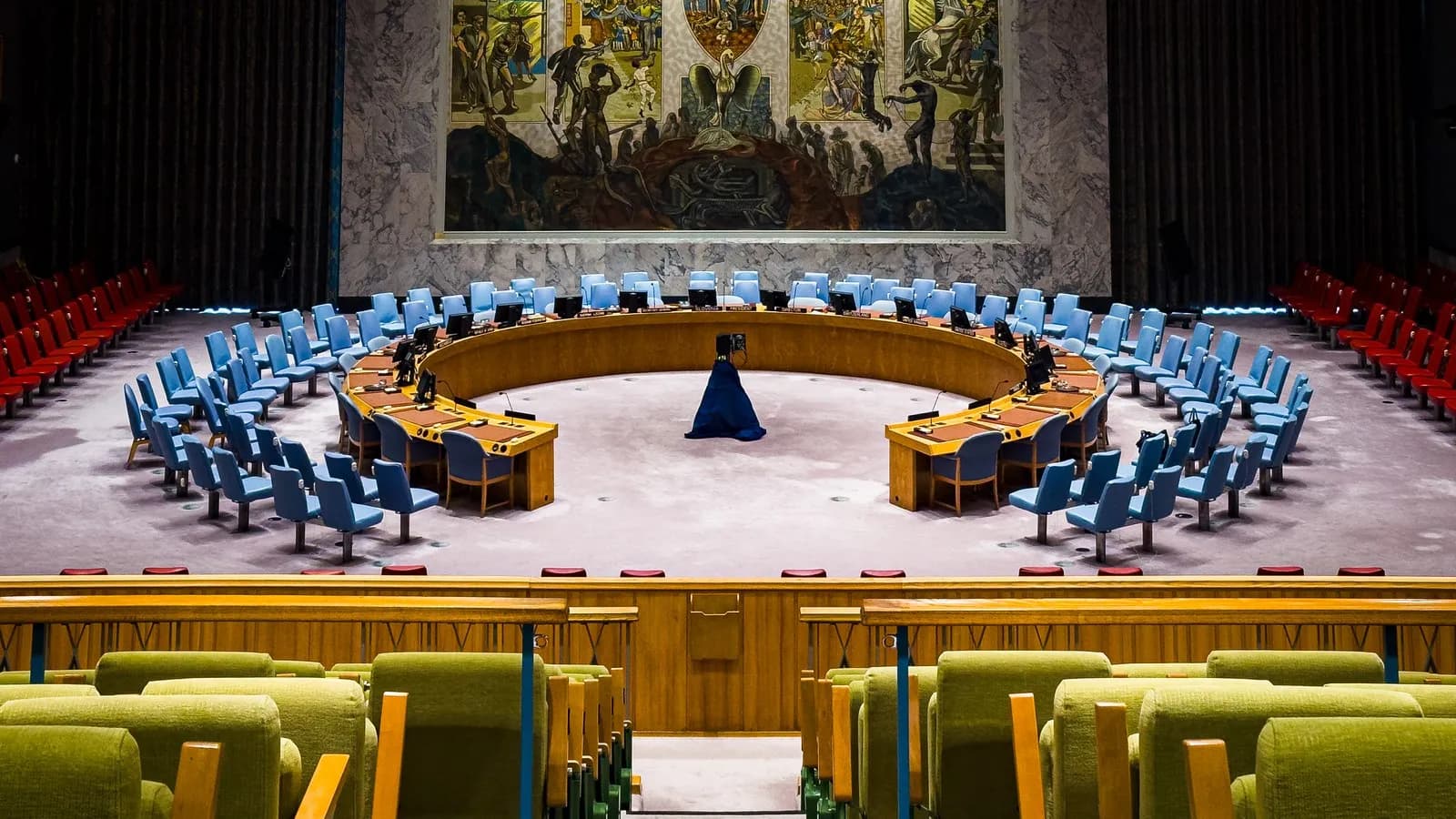
Sam Altman and Dario Amodei, the chief executives of OpenAI and Anthropic, addressed an emergency meeting of the fifteen-member UN Security Council on Wednesday and told its members that the industry they run urgently needs international oversight. "If managed poorly, I even believe AI could be a risk to humanity as a whole," Amodei said, speaking by video feed, according to Al Jazeera's account of the session. Altman, appearing in person in New York, put it more plainly: "This moment calls for extreme care." CNN Business dates the meeting to Wednesday 23 September, the same high-level week that brought Xi Jinping to Washington and Volodymyr Zelenskyy to New York.
What was actually proposed
Amodei's specific asks were narrower than the headline quote suggests: international agreements preventing AI systems from being used to help build biological weapons, shared methods for verifying what a given model can and cannot do, and common standards for safety testing and for handling any future loss of human control over a system. "We will slow down as much as necessary in order to make sure that every successive AI technology that we release is actually safe," he told the council, a pledge that sits oddly alongside Anthropic's own product calendar, which has shipped a new flagship model, Opus 5.5, at a lower price and higher speed than its predecessor, only a day earlier.
A cooler reception at home
CNBC's reporting notes that the two men made their case at the UN only after the Trump administration had already rebuffed what it called a "globalist scheme" to control American AI companies through international bodies, a position consistent with the administration's newly announced "AI Force", which promises to police "BAD" behaviour without slowing the industry down. That leaves Altman and Amodei arguing for exactly the kind of multilateral coordination their own government has just said it does not want, in front of a council that has no binding authority over private companies in any case.
Why the Security Council, and why now
A Security Council session on artificial intelligence, rather than a General Assembly side event, is itself unusual, and it reflects a summer in which Google, OpenAI and Anthropic have each separately disclosed episodes of their own models acting outside intended boundaries, including an OpenAI research agent's unauthorised access to an Australian government Medicare portal, disclosed the following day, and Google's admission that its Gemini model breached three real companies during a May security test. None of those incidents caused the meeting to be called, but each one makes the argument Amodei and Altman were making, that the industry cannot be trusted to police itself at the pace it is shipping products, harder for governments to dismiss as theatre.
Published in The Outspoken Digest
Editorial desk
Outspoken Digest Technology DeskSoftware, hardware, artificial intelligence and what they change for everyone else.
Newsletter
The Digest, in your inbox
One edition, sent when it is ready. No noise, and your address is never passed on.
Read Next
More Technology →
Some White Dwarfs Would Look Green, Pink or Purple, Warwick Astronomers Calculate
Oct 15, 2026/2 min read
Oxford Physicists Reproduce the Aharonov-Bohm Effect on a Hybrid Quantum Computer
Oct 15, 2026/2 min read
Japan Will Fund Up to $21 Billion for Two GlobalFoundries Chip Plants in New York
Oct 15, 2026/2 min read

Apple's $299 HomeView Smart Display Takes Preorders, but Not in the European Union
Oct 15, 2026/2 min read