The US Government Now Owes $40 Trillion, and Its Answer Was to Start Buying Back Its Own Bonds
Gross federal debt crossed forty trillion dollars on 18 August. Two days later the Treasury said it would more than double its repurchases of long-dated bonds. Yields fell, gold rose, bitcoin ran, and the underlying arithmetic did not change.
Outspoken Digest Global Markets Desk
Saturday, August 22, 2026/4 min read
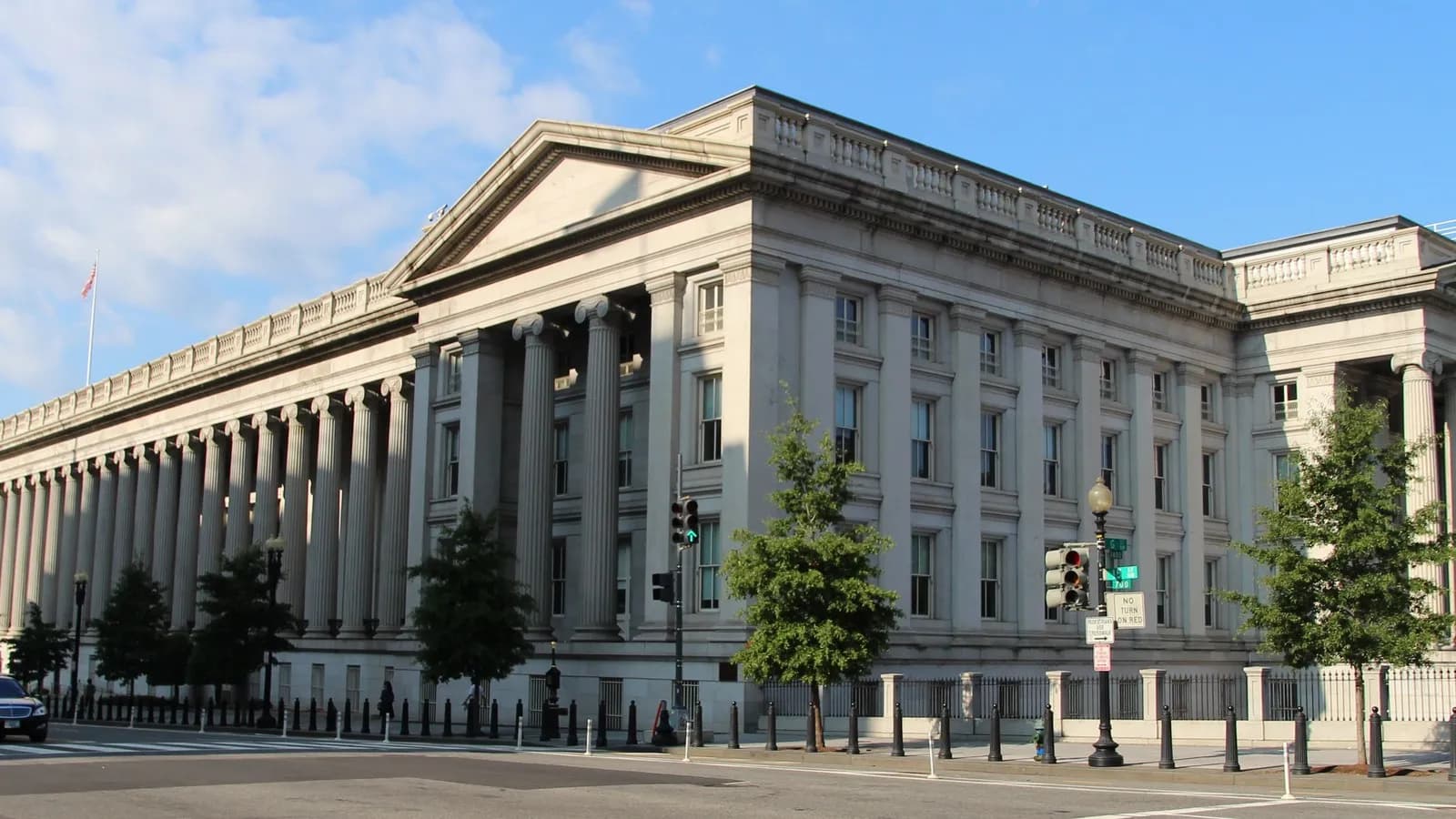
On 18 August the gross debt of the United States government was recorded at 40,047,425,768,420 dollars and 22 cents. It was the first time the figure had carried a four and thirteen digits behind it, and it arrived roughly four and a half years after the same measure first passed thirty trillion.
Two days later the Treasury announced that it would more than double the size of its bond repurchase operations. Understanding why those two events belong in the same paragraph is most of what a reader needs from this week.
What actually happened, in order?
The debt figure was a milestone rather than a decision. It is published routinely and it crossed a round number.
The decision came on the Wednesday. Treasury Secretary Scott Bessent's department said it would at least double the size of each buyback operation in securities maturing in ten to thirty years, taking them from about two billion dollars to at least four billion. The expanded operations are scheduled between 9 September and 4 November.
The context for that decision was the week before it. The thirty year Treasury yield had reached its highest level in nineteen years. When the announcement landed, the thirty year fell by roughly nine basis points and the ten year by about six, and equities rallied.
What is a bond buyback and why does it move yields?
The Treasury goes into the secondary market and buys back bonds it has already issued.
The mechanism is ordinary supply and demand. Long-dated government bonds are a product with a price, and their yield moves inversely to that price. If a large and entirely reliable buyer steps into the market for thirty year paper, the price of that paper rises and the yield falls. Investors who were holding bonds they could not easily sell now have somewhere to sell them.
Buybacks were reintroduced by the Treasury primarily as a liquidity tool, a way of tidying up older bonds that trade thinly. Using them to lean against a rising long yield is a different job from the one they were designed for, and that difference is why the reaction among analysts was cooler than the reaction in prices.
Is four billion dollars a large number here?
Against the thing it is meant to influence, no.
Four billion dollars per operation is a rounding error beside forty trillion of outstanding debt. It is not paying anything down. The Treasury still has to issue new bonds to fund the deficit, and buying back four billion while issuing far more does not reduce the stock of debt. It changes which bonds are outstanding and it signals that somebody is watching the long end.
That signal is the actual product. Markets moved on the message that the Treasury considers a nineteen year high in the thirty year yield to be a problem worth acting on, not on the four billion itself. Signals of that kind work until they are tested.
Why were long yields climbing in the first place?
Three pressures, and only one of them is under the Treasury's control.
The deficit itself. More borrowing means more bonds, and more bonds need more buyers. Buyers who are asked to absorb a rising supply generally want to be paid more for it.
Inflation that has not fully settled. Anyone lending money for thirty years has to guess what the currency will be worth at the end. Persistent uncertainty about that pushes the required yield up, and it is the same uncertainty running through the shifting odds on a September rate rise.
Competition from corporate borrowing. This is the newer pressure and the least discussed. The capital being raised to build artificial intelligence infrastructure is enormous, it is largely debt financed, and it competes for the same pool of savings that buys government bonds. That dynamic was the subject of our earlier look at why the thirty year has stayed elevated, and this week did nothing to weaken the argument.
What else moved because of it?
Two assets that are usually discussed by entirely separate groups of people, for the same reason.
Gold climbed hard into the end of the week, and bitcoin posted its strongest weekly gain in more than three years. Neither move was really about gold or about bitcoin. Both are assets that tend to do well when long-dated government debt looks less comfortable and the dollar softens, and both were responding to the same announcement.
When a single Treasury press release moves bullion, cryptocurrency and equities in the same direction on the same afternoon, that is a useful reminder that these are not independent markets making independent judgements. They are different expressions of one view about the currency.
What does this not fix?
The part that generated the headline.
Interest costs on the federal debt now exceed defence spending. That is the fact worth carrying away, because it is the one that compounds. Every increase in the average yield the government pays raises the cost of servicing the existing pile, which widens the deficit, which requires more issuance, which pushes on yields again.
A buyback programme can smooth that loop at the margin. It cannot break it. Breaking it requires either lower deficits, lower yields sustained for years, or growth fast enough to outrun both, and none of those is announced by press release. The honest reading of this week is that the Treasury bought itself some calm at the long end, and that calm is worth having, and it is not the same thing as a solution. The currency side of the same question is set out in our outlook on the dollar and the policy gap.
Published in The Outspoken Digest
Newsletter
The Digest, in your inbox
One edition, sent when it is ready. No noise, and your address is never passed on.
Read Next
More Business →
Jio Platforms Raises Rs 8,110 Crore From Anchors at the Top of Its Range as India's Biggest IPO Opens
Oct 21, 2026/2 min read
Netflix Beats on Profit, Then Slides After Hours as It Trims Its Ad Forecast and Guides Lower
Oct 21, 2026/2 min read
Wall Street Rebounds as AI Stocks Recover, With the Nasdaq Up 1.1% and the 10-Year Yield Above 5.15%
Oct 20, 2026/2 min read

CoreWeave Shares Fall 25 Percent in a Week as Its Bonds Flash Warning Signs for AI's Borrowers
Oct 18, 2026/2 min read