The US Sank Five Iranian Tankers, Iran Fired Twenty Missiles at a Base in Jordan, and Oil Closed Above a Hundred Dollars
CENTCOM named the five crude carriers it disabled after two missile attacks on one of its warships. Iran answered at Al-Azraq, where Jordan says it intercepted eighteen of twenty missiles, and claimed strikes on ten ships. Brent closed at 101 dollars.
Thursday, September 10, 2026/3 min read
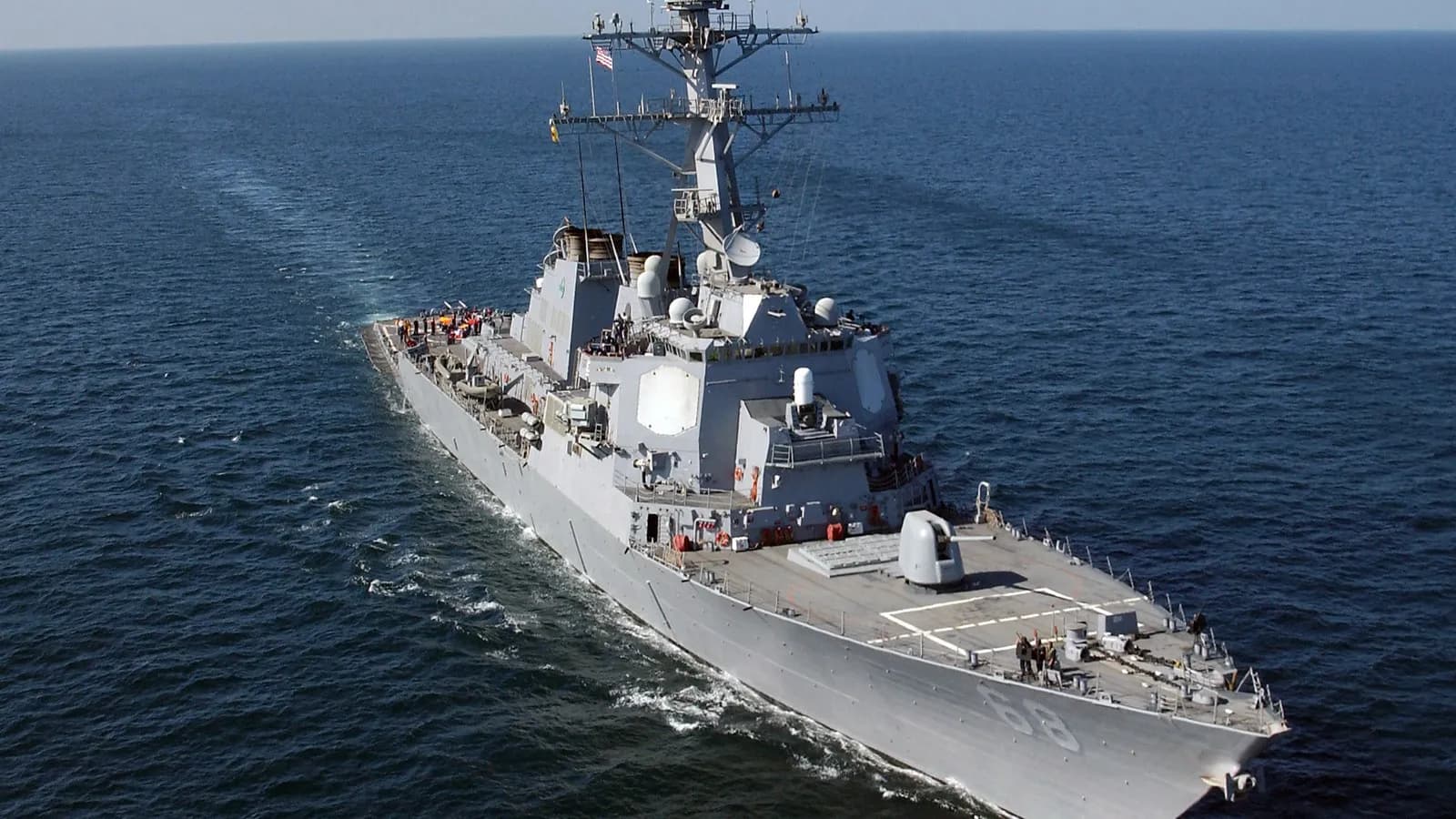
Two days after Iran announced a restricted zone beyond the Strait of Hormuz, the war moved from declarations to hulls. On Tuesday United States Central Command said its forces had destroyed five Iranian crude oil carriers after the Revolutionary Guard targeted an American warship with ballistic missiles twice in two days. Overnight Iran fired a salvo at a US base in Jordan and claimed attacks on ten ships. By Wednesday's close Brent crude was above a hundred dollars a barrel for the first time in this war.
The tankers
CENTCOM named them. Four were struck in the Gulf of Oman: the Kaviz, the Charminar, the Horizon 1 and the Riesco. The fifth, the Derya, was hit near Kharg Island, the terminal through which most of Iran's crude exports pass. According to the statement, as carried by Al Jazeera and US News, American forces directed the crews to abandon ship before the vessels were struck and rendered inoperable. The warship that had been targeted evaded both attacks and no American personnel were hurt.
It is the second such strike in a week. On Saturday three Iranian tankers were hit, one off Kharg; the pattern now is that each Iranian missile attack on a US ship costs Tehran tankers, a form of retaliation aimed at Iran's revenue rather than its territory. Iran's tanker fleet is finite and its ability to export crude depends on it.
Jordan
Iran's answer came in the small hours of Wednesday. The Revolutionary Guard said it had subjected the Al-Azraq base in eastern Jordan, which hosts American aircraft, to fierce missile strikes and claimed hangars used by US fighters were destroyed. Jordan's armed forces gave a different account: twenty ballistic missiles launched towards the kingdom, eighteen intercepted and destroyed by air defences, two falling in unpopulated areas, and no casualties. Jordan has now been on the receiving end of Iranian fire several times since July, each time as the address for a message meant for Washington.
Iran also claimed to have hit two US Navy destroyers, identified by hull numbers, and eight tankers in the region. None of the ship claims has been independently confirmed, and CENTCOM's account of the attacks on its warship is of missiles that missed.
The oil price
Brent crude for November delivery closed at 101.08 dollars on Wednesday, according to CNBC, with West Texas Intermediate at 96.15. The move above a hundred is the market pricing not a single strike but a sequence: a second attack on Aramco's Jizan refinery on Monday, a restricted zone nobody can yet map, a transit count in single figures some days, and now the physical destruction of tankers on both sides. Our account of the Monday announcements is in the report on Iran's restricted zone, and what a hundred-dollar barrel does to interest rates is in today's markets piece.
Where this leaves the Gulf
Nowhere new, which is the point. Jordan, Bahrain, Kuwait and Iraq have all been struck as hosts of American forces; the UAE's airlines are flying reduced schedules; Saudi refineries are being hit from Yemen. The states of the region did not choose this war and cannot end it, and the language from Abu Dhabi and Doha this week, examined in our earlier report, is the language of countries trying to keep their economies running through someone else's escalation. The week's one procedural date is the Federal Reserve's meeting next Tuesday and Wednesday, where the question of whether an oil shock becomes an interest rate shock will be answered, and where, for once, a decision in Washington about the Gulf will be made by economists rather than admirals.
Published in The Outspoken Digest
Editorial desk
Outspoken Digest News DeskReports for The Outspoken Digest across Latest Trends, Sports, Nutrition, Crypto.
Newsletter
The Digest, in your inbox
One edition, sent when it is ready. No noise, and your address is never passed on.
Read Next
More Latest Trends →
France Lines Up an Extra 200,000 Tonnes of Gulf Diesel a Month as Macron Tours the Gulf
Oct 21, 2026/2 min read

More Than 250,000 Have Fled Yemen's Fighting Since July as a Houthi Missile Strike Kills Dozens of Recruits
Oct 21, 2026/2 min read

King Charles Hosts Oman's Sultan at Windsor and Praises Muscat's Role in Reopening Hormuz
Oct 21, 2026/2 min read
NATO Sends More Patrol Planes to the Black Sea After a Run of Drone Strikes on Merchant Ships
Oct 21, 2026/2 min read