Vegan Pozole Rojo With Oyster Mushrooms: Mexico's Hominy Stew for World Vegan Month
Shredded oyster mushrooms take the place of pork in a guajillo and ancho broth thick with hominy. A big-pot stew from Mexico for the November vegan calendar, ready in about 80 minutes.
Tuesday, November 3, 2026/4 min read
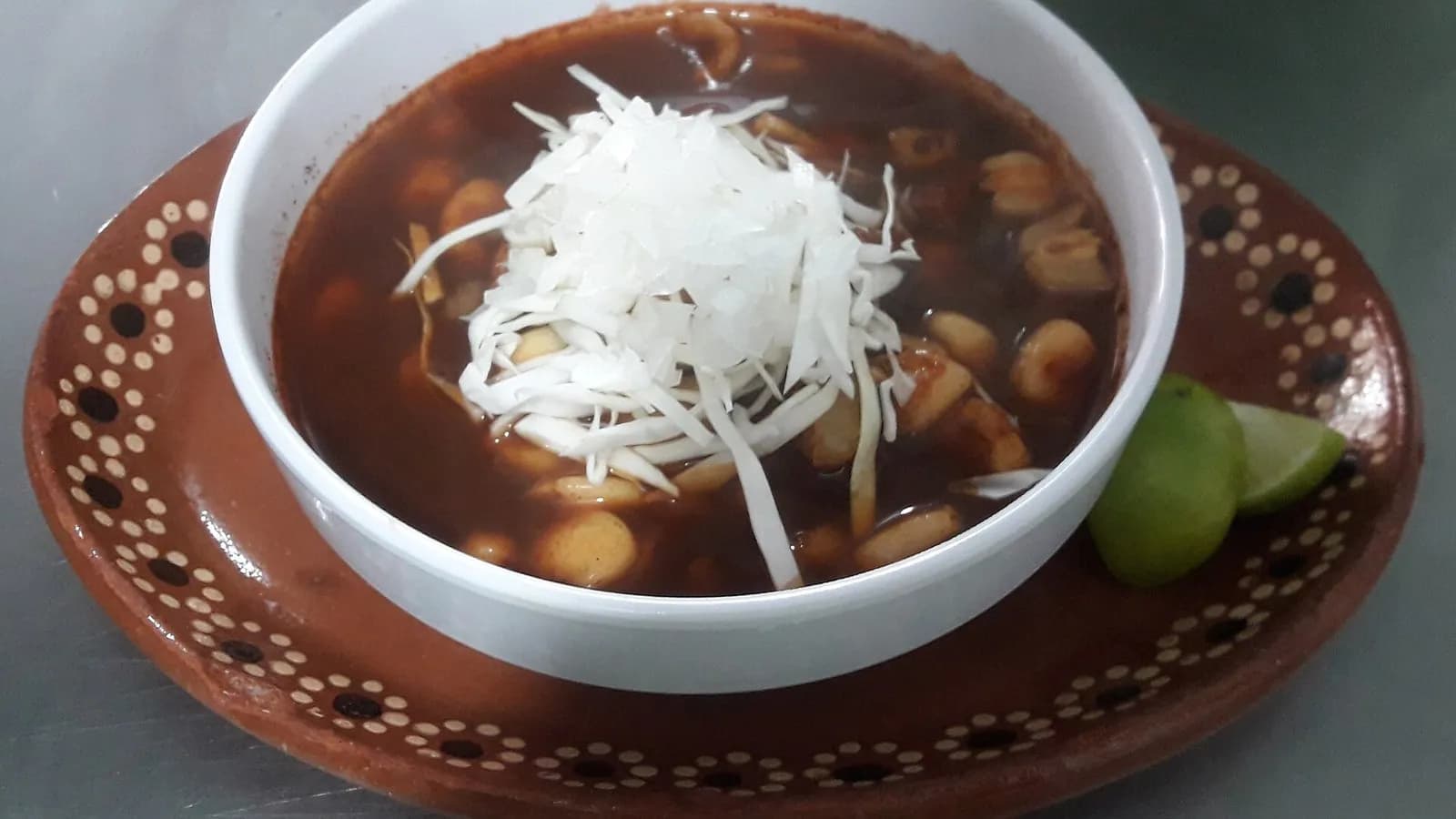
World Vegan Day was Sunday, and the month that follows it has pozole on the menu. VegNews put a vegan Mexican pozole built on oyster mushrooms second in its ten global recipes for World Vegan Day, published on 2 November, and the dish had already had its moment the same weekend, because pozole is one of the main celebratory dishes of Dia de Muertos on 1 and 2 November. On Food Network, the ceremonial dancer Joaquin Abrego serves a mushroom pozole verde de hongo at his group's all-night Day of the Dead ceremony because it is filling yet light enough to dance on.
Pozole is a stew of nixtamalised corn, the big, blossoming kernels sold as hominy. Its history is murkier than the legends suggest. Writing in Mexico News Daily on 20 September, Chris Sands reports the food historian Alberto Peralta de Legarreta's finding that the word never appears in any pre-Hispanic text, that the earliest cookbook recipe he could find dates from 1937, and that the popular story of Mexica elites eating it with human flesh is doubtful. What is solid is the geography: Guerrero claims pozole verde and blanco, Jalisco and Michoacan the red, and Guerrero's Thursday pozole habit, jueves pozolero, has spread across the country.
The Spanish brought the pig, and pork has been the usual meat ever since. Oyster mushrooms are the best stand-in because they tear into strands the way shoulder does, and because they take on the chilli broth without turning to mush. The result is deep red, faintly smoky, and the hominy gives it that soft, popped-corn chew that nothing else has. Hominy is not a protein food, at 1.48 g per 100 g in the USDA record for canned white hominy, so the mushrooms and the pumpkin seeds in the garnish are doing that job.
Ingredients
Serves 6. About 80 minutes in total, most of it simmering.
- 500 g oyster mushrooms, torn lengthways into strands
- 2 x 400 g tins hominy (about 480 g drained), rinsed
- 4 dried guajillo chillies, stems and seeds removed
- 2 dried ancho chillies, stems and seeds removed
- 1 dried chipotle or 1 teaspoon smoked paprika, optional, for smoke
- 1 large white onion, half roughly chopped, half finely diced for serving
- 5 cloves garlic, peeled
- 2 tablespoons vegetable oil
- 1.5 litres vegetable stock
- 2 bay leaves
- 2 teaspoons dried Mexican oregano, plus more for the table
- 1 teaspoon ground cumin
- 1.5 teaspoons fine sea salt, or to taste
- To serve: 200 g shredded white cabbage or lettuce, 6 radishes sliced thin, 2 limes in wedges, 1 avocado diced, 40 g toasted pumpkin seeds, tostadas or warm corn tortillas
Method
- Toast the dried chillies in a dry frying pan over medium heat for 30 seconds a side until fragrant, pressing them flat with a spatula. Do not let them blacken or the broth will be bitter. Cover with 500 ml of just-boiled water and soak for 20 minutes.
- Meanwhile heat 1 tablespoon of oil in a large pot over high heat. Add half the mushrooms in a single layer and leave them alone for 3 minutes until browned underneath, then stir and cook 2 minutes more. Season lightly, remove, and repeat with the rest. Set aside.
- Lower the heat, add the remaining oil, the roughly chopped onion and 3 of the garlic cloves, and cook for 6 minutes until soft and golden.
- Put the soaked chillies, 250 ml of their soaking water, the cooked onion and garlic, the 2 raw garlic cloves, the cumin and half the oregano into a blender. Blend for a full minute until completely smooth, then push through a sieve back into the pot, pressing with a ladle. Discard the skins.
- Fry the chilli puree over medium heat for 5 minutes, stirring, until it darkens and smells toasty. This step is what separates a pozole from a chilli soup.
- Add the stock, hominy, bay leaves, the rest of the oregano and the salt. Bring to a boil, then simmer uncovered for 30 minutes so the hominy swells and the broth thickens slightly.
- Stir in the mushrooms and simmer 10 minutes more. Taste; it should be bright with chilli and well salted, and a squeeze of lime will tell you if it needs more.
- Ladle into deep bowls and let everyone top their own with cabbage, radish, diced onion, avocado, pumpkin seeds, a pinch of oregano and lime. Tostadas on the side.
Tips, variations and storage
For a green version, skip the dried chillies and blend 500 g of charred tomatillos with 2 poblanos, a jalapeno, a handful of coriander and 50 g of pumpkin seeds, then fry the puree the same way. Jackfruit in brine, drained and shredded, is the other common swap for the pork, and king oyster mushrooms sliced into coins and seared give a meatier bite. Dried hominy, soaked overnight and simmered for 2 hours, has better texture than tinned if you can find it.
The stew keeps for 4 days in the fridge and improves on the second; the hominy keeps drinking broth, so loosen it with stock when reheating. It freezes well for 3 months without the garnishes. Keep the cabbage, radish and lime separate until the bowl is in front of you, because the contrast of cold crunch on hot broth is the point.
Pozole has always been a dish for a crowd and a long night, which is why the Thursday pot in Guerrero and the Day of the Dead vigil both lean on it. A vegan version does not need a special reason in November; it just needs a big pot and people to feed.
Published in The Outspoken Digest
Editorial desk
Outspoken Digest Food DeskCooking, ingredients, restaurants and the economics of what ends up on the table.
Newsletter
The Digest, in your inbox
One edition, sent when it is ready. No noise, and your address is never passed on.
Read Next
More Recipes →
Diabetes-Friendly Tandoori Chicken With Raita and Kachumber: A Carb-Counted Main for Diwali Week
Nov 3, 2026/4 min read
Sugar-Free Pumpkin Pie With Allulose: A Thanksgiving Custard That Browns Like the Real Thing
Nov 3, 2026/4 min read
Keto Mashed Cauliflower for Thanksgiving: The Low-Carb Mash That Passes for Potatoes
Nov 3, 2026/3 min read

Toffee Apple Hand Pies for Bonfire Night: Caramelised Apple in Puff Pastry You Can Eat by the Fire
Nov 3, 2026/4 min read