Vitamin D Supplements: A Reality Check on Who Actually Benefits
Large trials with more than 30,000 participants found vitamin D pills do little for people who are not deficient, reshaping decades of assumptions.
Tuesday, January 20, 2026/4 min read
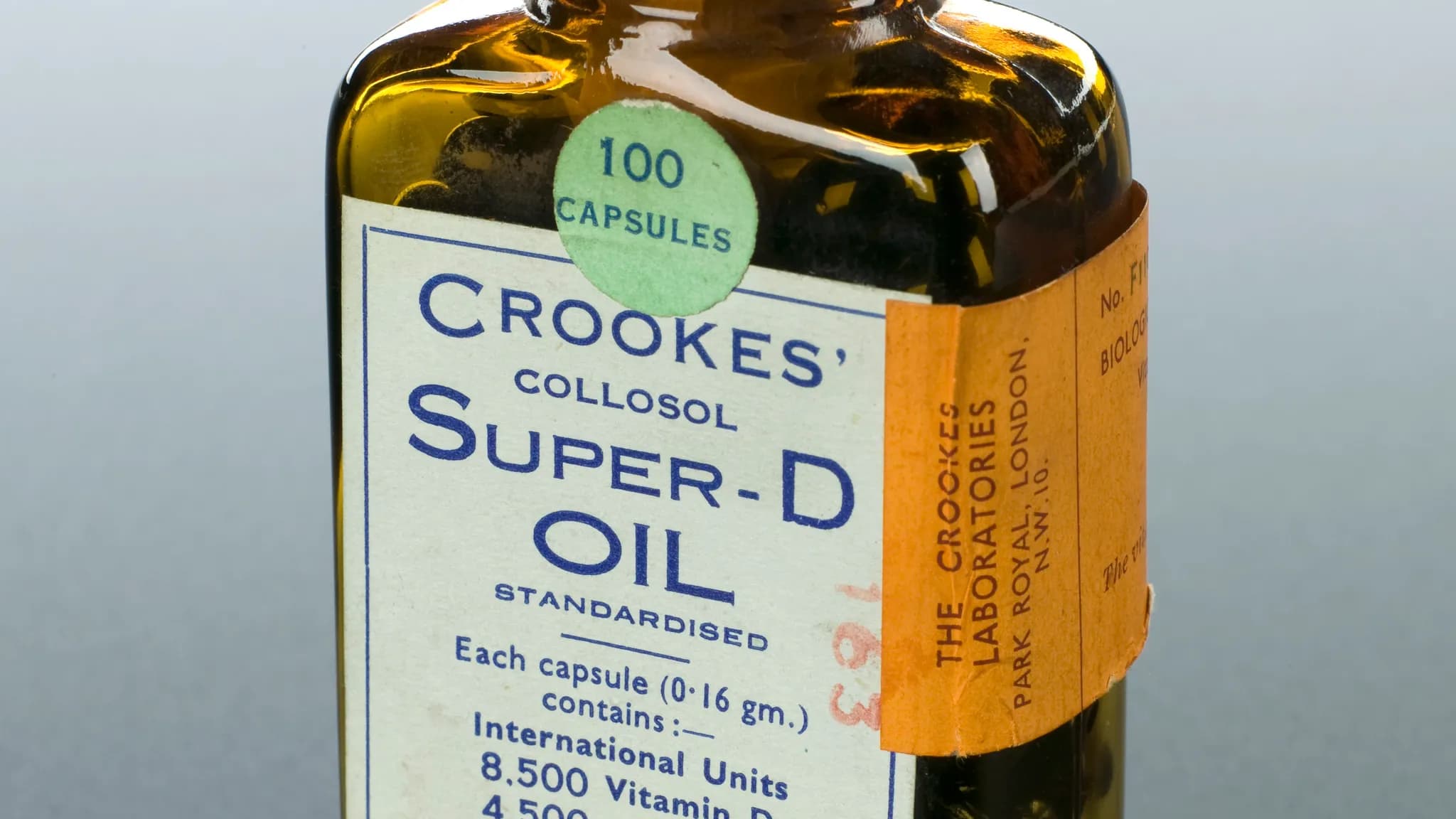
Vitamin D built its reputation as the supplement everyone should take, the cheap insurance policy against everything from broken bones to cancer to a weakened immune system. Large, rigorous randomized trials completed over the past several years have quietly narrowed that promise down to something much more specific: vitamin D supplements help people who are actually deficient in it, and appear to do very little for people who already have enough.
What the biggest trials found
Three major randomized clinical trials, VITAL, ViDA and D2d, together enrolling more than 30,000 participants, tested vitamin D supplementation in adults whose baseline blood levels were already vitamin D-replete, meaning above roughly 50 nanomoles per liter of 25-hydroxyvitamin D. Findings summarized in Nature Reviews Endocrinology concluded that supplementing people who were not deficient did not prevent cancer, cardiovascular events, falls, or progression to type 2 diabetes. That is a striking result given how broadly vitamin D has been recommended as a general-purpose preventive supplement.
Falls and fractures specifically
The same body of evidence found that vitamin D supplementation at doses equivalent to 2,000 to 3,300 IU per day showed no favorable effect on the risk of falls or fractures in these large recent trials among people who were not deficient to begin with, a notable reversal of what was widely assumed for years about vitamin D and bone protection in the general population.
Where the benefit clearly still holds
None of this means vitamin D is irrelevant, it means the benefit is concentrated in people who actually lack it. Post hoc analyses of the same large trials suggested some benefits specifically in participants who had vitamin D deficiency at baseline, and in a genuinely vulnerable population, older adults in nursing homes with both vitamin D and calcium insufficiency, the combination of the two supplements in modest replacement doses dramatically reduces the risk of hip and other fractures, a finding described in a systematic review of clinical guidelines published via PMC.
Respiratory infections, a more nuanced picture
A separate systematic review and meta-analysis on vitamin D supplementation and acute respiratory infections in older adults, also indexed via PMC, found evidence in this specific area more mixed and population-dependent than the blanket claims often repeated online, underscoring that vitamin D's proven benefits cluster around specific deficient or higher-risk groups rather than applying uniformly to everyone.
What this does not overturn
This evidence does not mean correcting a genuine, documented vitamin D deficiency is unimportant, severe deficiency causes real problems, including bone softening and muscle weakness, and correcting it remains standard, sound medical practice according to a broader evidence-based review of vitamin D health effects published via PMC. What has shifted is the idea that supplementing beyond adequate levels, in someone who is not deficient, provides additional protective benefit. The data from these large trials says it largely does not.
Why the Gulf is a genuine exception to the sunshine assumption
The general reasoning that abundant sun exposure prevents vitamin D deficiency does not hold up in the Gulf. A five-year retrospective study from Saudi Arabia, indexed via PMC, found a period prevalence of vitamin D deficiency of 67.3 percent in the population studied between 2017 and 2021, despite the country's abundant year-round sunshine. A systematic review of vitamin D status among apparently healthy individuals in the UAE, published in Frontiers in Nutrition, similarly found deficiency widespread despite the country averaging roughly ten hours of daily sunlight. Researchers attribute the mismatch to lifestyle factors: covering clothing, limited outdoor activity during extreme heat, widespread sunscreen use and more time spent indoors in air-conditioned spaces, all of which cut the skin's actual sun exposure regardless of how much daylight is available outside. That combination makes the Gulf one of the clearer real-world illustrations of why the deficient-versus-replete distinction in the major trials matters practically, plenty of people living somewhere sunny are still testing low.
What this means practically
The useful takeaway is not blanket avoidance or blanket supplementation, it is testing, since a blood test is inexpensive relative to the cost of years of unnecessary daily supplementation, or the cost of leaving a genuine deficiency uncorrected. Someone who suspects they might be deficient, due to limited sun exposure, darker skin pigmentation reducing skin synthesis, malabsorption conditions, or living at higher latitudes with less year-round sun, has a reasonable case for checking blood levels with a clinician before deciding whether supplementation is warranted, rather than assuming a daily pill is doing preventive work regardless of their actual level.
What would refine this further
More granular trials stratifying benefit by baseline vitamin D level, ethnicity, geographic latitude and existing bone health status would help clarify exactly where the cutoff for meaningful benefit sits, rather than the current somewhat blunt deficient-versus-replete distinction the major trials were designed around.
This article is reporting on nutritional research, not medical advice. Whether to test vitamin D levels or supplement is a decision to make with a clinician who can review individual risk factors, current blood levels and any relevant health conditions.
Vitamin D did not lose its importance in this research, it lost its status as a supplement that helps everyone regardless of what their body already has. That is a more useful, and more testable, finding than the blanket advice it replaces, and it is a rare case in nutrition science where the more precise answer is also the more actionable one.
Published in The Outspoken Digest
Editorial desk
Outspoken Digest Health DeskMedicine, public health and the research behind the headlines, read carefully.
Newsletter
The Digest, in your inbox
One edition, sent when it is ready. No noise, and your address is never passed on.
Read Next
More Health →
Two Days After the Nobel for Optogenetics, a Small NEJM Trial Shows It Helped Some Blind Patients Detect Objects
Oct 9, 2026/3 min read

WHO Launches a Global Roadmap on Pre-Eclampsia and Pregnancy Hypertension, Tied to 42,000 Maternal Deaths a Year
Oct 8, 2026/3 min read

WHO Says Diet and Exercise Come First and Children Under 10 Should Not Get Weight-Loss Drugs or Surgery
Oct 7, 2026/3 min read

Kenya Confirms Its First Ebola Case, a Man Who Flew In From Uganda After Years in Congo and Died in Nairobi
Oct 6, 2026/3 min read