Voyager 1 Is Two Days From a Light-Day: NASA Says It Reaches the Milestone on Wednesday and Asks the World to Flash VGR
At 10:16 UTC on 18 November the 1977 probe becomes the first human-made object a full day of light-travel from home, 25.9 billion km out, and NASA wants a Morse signal from you on Tuesday.
Monday, November 16, 2026/2 min read
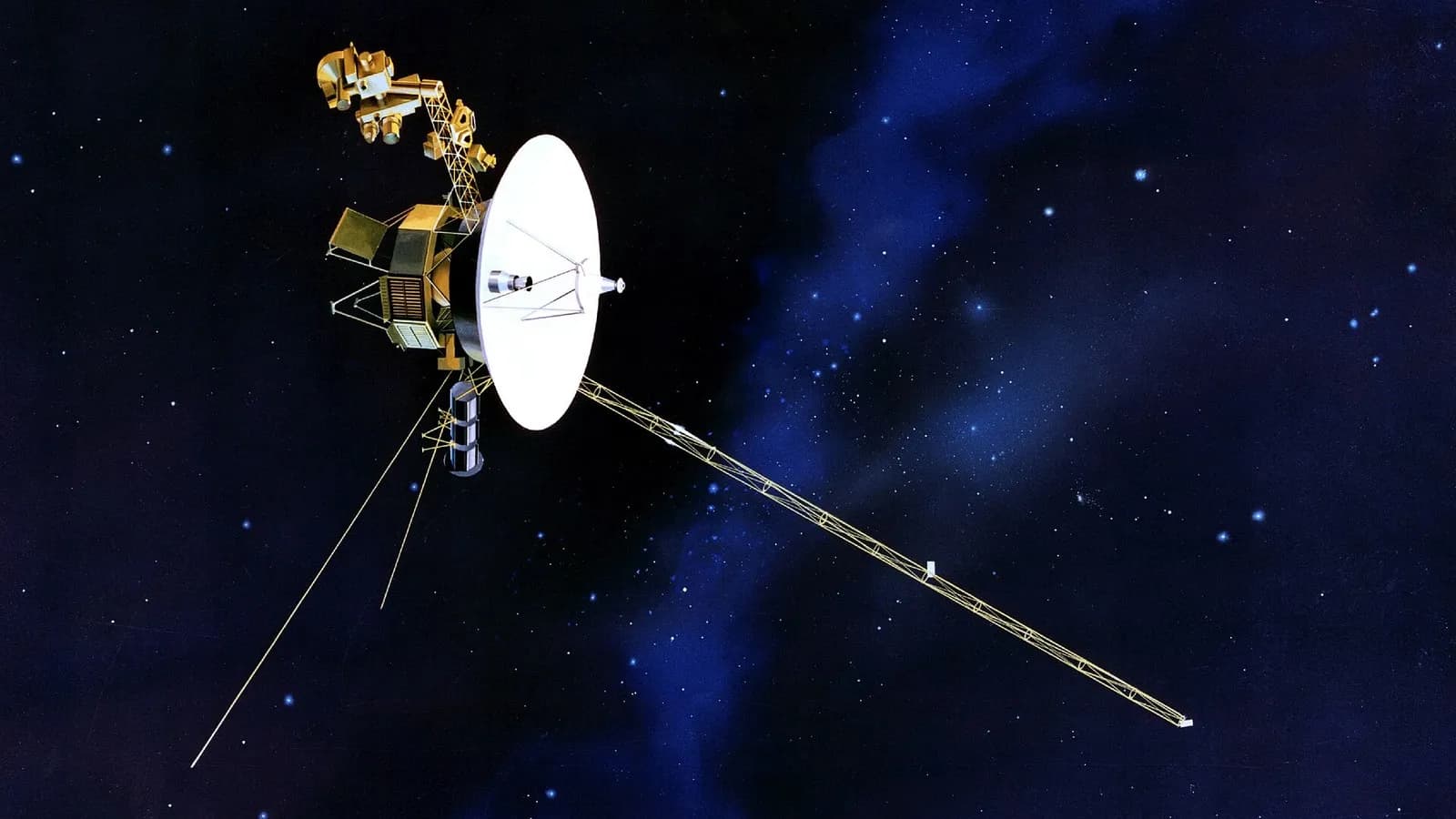
Voyager 1 is about to be a full day away. At 10:16 UTC on Wednesday 18 November, NASA says, the probe will reach one light-day from Earth, the first human-made object ever to do so. A radio signal sent to it from that moment will need 24 hours to arrive, and the reply another 24 hours to come back.
The line sits at about 25.9 billion km, or 173 astronomical units, and nothing physical changes when the spacecraft crosses it. It is a milestone for the people on the ground, and for the idea of how far a human-made object can go.
What does one light-day from Earth actually mean?
It is the distance light covers in a day, and NASA's media advisory puts it at 16.09 billion miles. Because a signal takes 24 hours each way, the Voyager team will receive its "return call" at the same time on 19 November, NASA says. EarthSky calculates that Voyager 1 needed 49 years, 2 months and 11 days after launch in 1977 to get there.
For scale, Science News notes that the probe crossed the heliopause, the boundary scientists treat as the edge of the solar system, on 25 August 2012, at about 18 billion km from the sun. Since then it has flown through interstellar space, where dust is about half as abundant as inside the heliosphere and the magnetic field is weaker. Readings of the field and particle density have spiked four times, and have stayed high since mid-2020 for reasons nobody has explained.
How can you take part on Tuesday?
NASA's advisory also offers journalists remote interviews with mission staff on Tuesday between 6 a.m. and 2 p.m. Eastern time.
NASA is asking people to "Shine Bright for Voyager's Light-Day" after sunset on Tuesday 17 November, the evening before the milestone. Popular Science explains how: point a flashlight or phone at the sky and blink the Morse code for VGR, the probe's three-letter call sign. NASA also offers a website that flashes the code automatically.
How much of Voyager 1 still works?
Not all of it. NASA's advisory says many of the science instruments have been switched off to conserve energy, though the probe still returns data. EarthSky reports that the Low-Energy Charged Particle instrument, which detected electrons, ions and cosmic rays, was turned off in April 2026, and that NASA could turn it on again. Science News says scientists estimate the power sources will run out in 10 to 15 years, which will end transmissions.
That clock is what gives Wednesday its weight. When Voyager 1 passes one light-day, it will still be talking, though every conversation with it now takes two days. The team's next job is to decide which instruments are worth the power for the years that remain.
Published in The Outspoken Digest
Editorial desk
Outspoken Digest Science DeskReports for The Outspoken Digest across Technology, Latest Trends, Health.
Newsletter
The Digest, in your inbox
One edition, sent when it is ready. No noise, and your address is never passed on.
Read Next
More Technology →
SpaceX Catches a Starship Upper Stage From Orbit for the First Time, but Loses the Booster
Nov 14, 2026/2 min read

NASA's Roman Space Telescope Finishes Aligning Its Instruments, With the Coronagraph's 3,000 Moving Parts Next
Nov 14, 2026/2 min read

Nvidia's Board Approached Arm CEO Rene Haas About Succeeding Huang, as Staff Post Calls for His Return
Nov 14, 2026/2 min read

Starship Flight 15: Booster Diverted to the Gulf, Ship Coasts in Orbit Ahead of Saturday's Tower Catch Attempt
Nov 14, 2026/2 min read