There Is a Three Week Bicycle Race Going On and This Desk Has Never Once Mentioned It
The Vuelta a Espana runs from 22 August to 13 September, 21 stages and 3,310 kilometres from Monaco to Granada. If you have never followed a grand tour, the thing to understand is that it is not really a race. It is twenty one of them.
Wednesday, September 2, 2026/4 min read
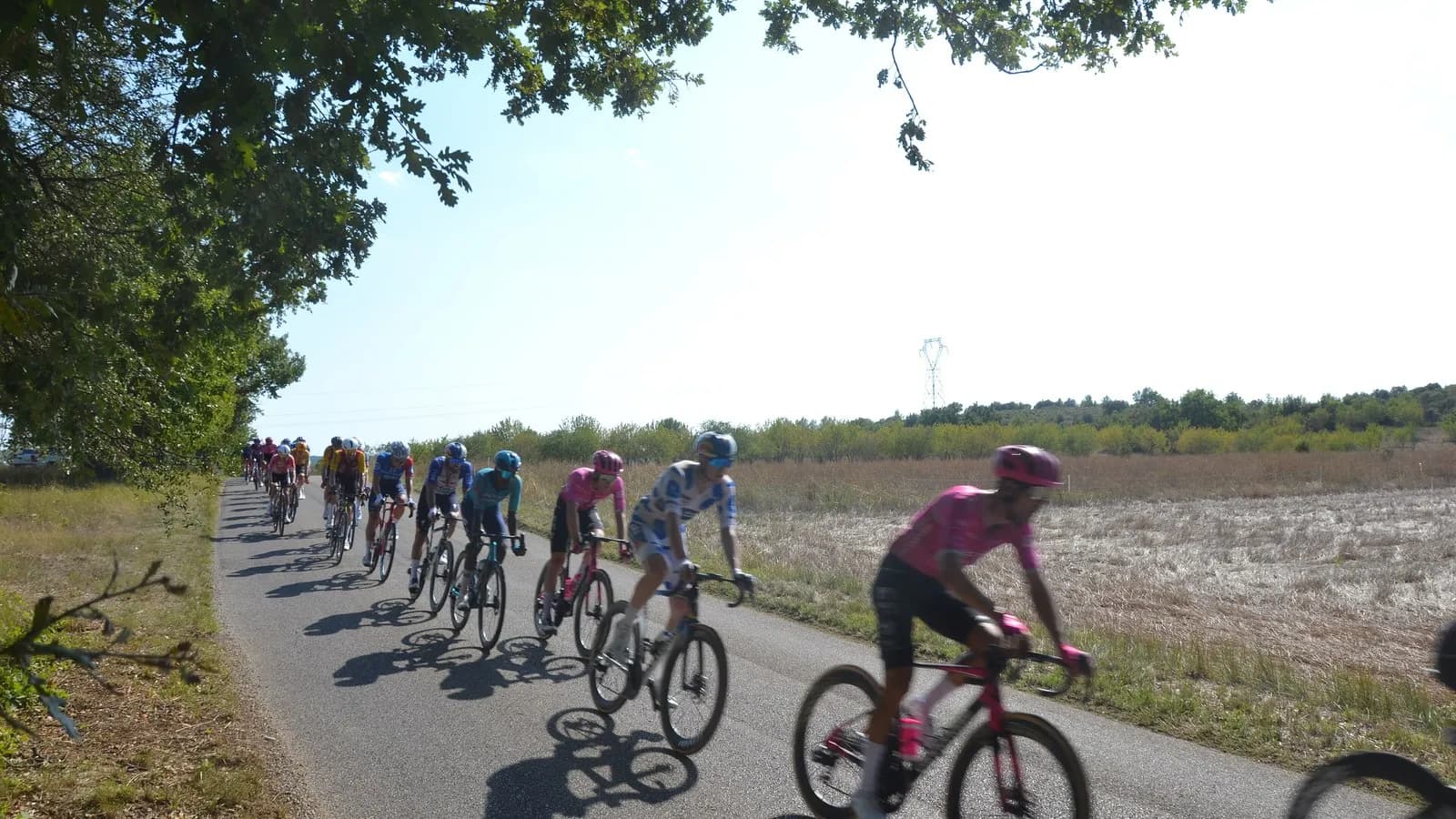
The 2026 Vuelta a Espana began in Monaco on 22 August and finishes in Granada on 13 September: 21 stages, 3,310.6 kilometres, three weeks of racing with two rest days in it.
On Wednesday, stage eleven took the race 151.3 largely flat kilometres from Cartagena to Lorca. Matthew Brennan won it. Enric Mas kept the overall lead. Ten stages remain.
Almost nobody reading this followed any of that, which is the reason to write it.
The thing that makes no sense until somebody explains it
A grand tour has two competitions running on top of each other and they are not the same sport.
Every stage is a race in itself, won by whoever crosses the line first that day. Separately, everyone's finishing times are added up across all 21 days, and the person with the lowest total wears the leader's jersey. That is the general classification, and it is what people mean by winning the Vuelta.
So Brennan won on Wednesday and is not close to winning the race. Mas did not win on Wednesday and is leading it. Both statements are correct and neither is a contradiction, and until that clicks, watching is baffling.
Why the flat days look like nothing happens
Because on a flat stage, nothing does, and that is deliberate.
Air resistance is most of what a cyclist fights at racing speed, and riding directly behind another rider costs substantially less energy than riding in front. A large group therefore travels faster than any individual can, and everyone in it finishes on the same time. A stage like Cartagena to Lorca usually ends with the whole field arriving together and a sprint decided in the last few hundred metres.
The general classification barely moves on those days. What is actually happening is energy management: the contenders are spending as little as possible, because the mountains are where the race gets decided and the cost of a bad day there is measured in minutes rather than seconds.
Why the mountains decide it
Uphill, the physics that made the group fast stops working.
At climbing speeds the wind is no longer the main enemy, gravity is, and drafting saves far less. The group comes apart and each rider goes at whatever their own power to weight ratio allows. That is why the overall standings are made in the high stages and why a rider can lose a grand tour in forty minutes on a mountain after defending it for a fortnight.
It is also why grand tour winners tend to be small. Watts per kilogram is the number, and the denominator is a person.
The team part, which is the least understood
Eight riders on a team, one of whom is trying to win. The other seven have jobs.
They shelter the leader from the wind for hours, fetch bottles from the team car, give up their own bicycle if the leader punctures, and ride themselves to a standstill at the front of a climb to burn off rivals before dropping away entirely. A domestique who finishes an hour down has often had the best day on the team.
This is the part that makes cycling worth an outsider's attention. It is an endurance sport organised as a collective sacrifice, scored individually, in public, for three weeks.
Why the Vuelta specifically
It is the third of the three grand tours, after the Giro d'Italia in May and the Tour de France in July, and it has a reputation as the wild one.
The Tour is the one everybody watches and is often controlled to the point of tedium by a dominant team. The Vuelta arrives at the end of a long season, with riders who have already peaked once, on brutally steep and short Spanish climbs, in September heat. Races come apart in it. Reputations get made by people who spent August as somebody else's helper.
This one starting in Monaco and ending in Granada is a long way from a purely Spanish route, which is now normal: grand tours sell their opening days abroad, and the money is real.
How to watch ten stages without watching thirty hours
Two rules. Ignore the flat days unless you like sprints, and read the profile before you commit an afternoon.
Every stage is published as an elevation diagram. If it ends with a steep climb, the last hour will decide something and is worth watching live. If it is flat, the last fifteen minutes are the whole story. The mountain stages in the final week are where the Vuelta is won, and there are still ten stages to go.
We have written about how the region has bought its way into the calendar of most other sports, in the Gulf's sporting decade, and about the sport that actually took hold locally in the rise of padel. Road cycling has not arrived here in the same way, for reasons that have a great deal to do with heat and roads and very little to do with interest.
Published in The Outspoken Digest
Newsletter
The Digest, in your inbox
One edition, sent when it is ready. No noise, and your address is never passed on.
Read Next
More Sports →
Brewers Go Up 2-0 on the Dodgers in the NLCS as Guardians Beat the Rays in ALCS Game 1
Oct 13, 2026/2 min read
Bills Beat Rams 37-34 in Overtime on Monday Night Football After Tyler Bass's 45-Yard Kick and a Blocked Field Goal
Oct 13, 2026/2 min read
Backup Tyler Huntley Sneaks the Ravens Past the Falcons in Overtime, 30-23, With Lamar Jackson Out
Oct 12, 2026/2 min read
Cam Little's 57-Yard Field Goal as Time Expires Gives the Jaguars a 19-17 Win Over the Eagles in London
Oct 11, 2026/2 min read