A Tape Measure Round the Waist Did the Same Job as Four Measurements and a Formula
In 1,900 American adults, waist circumference on its own matched a new multi measurement framework against a proper body fat scan. BMI alone missed a substantial number of people who met the body fat criteria for obesity.
Tuesday, September 1, 2026/3 min read
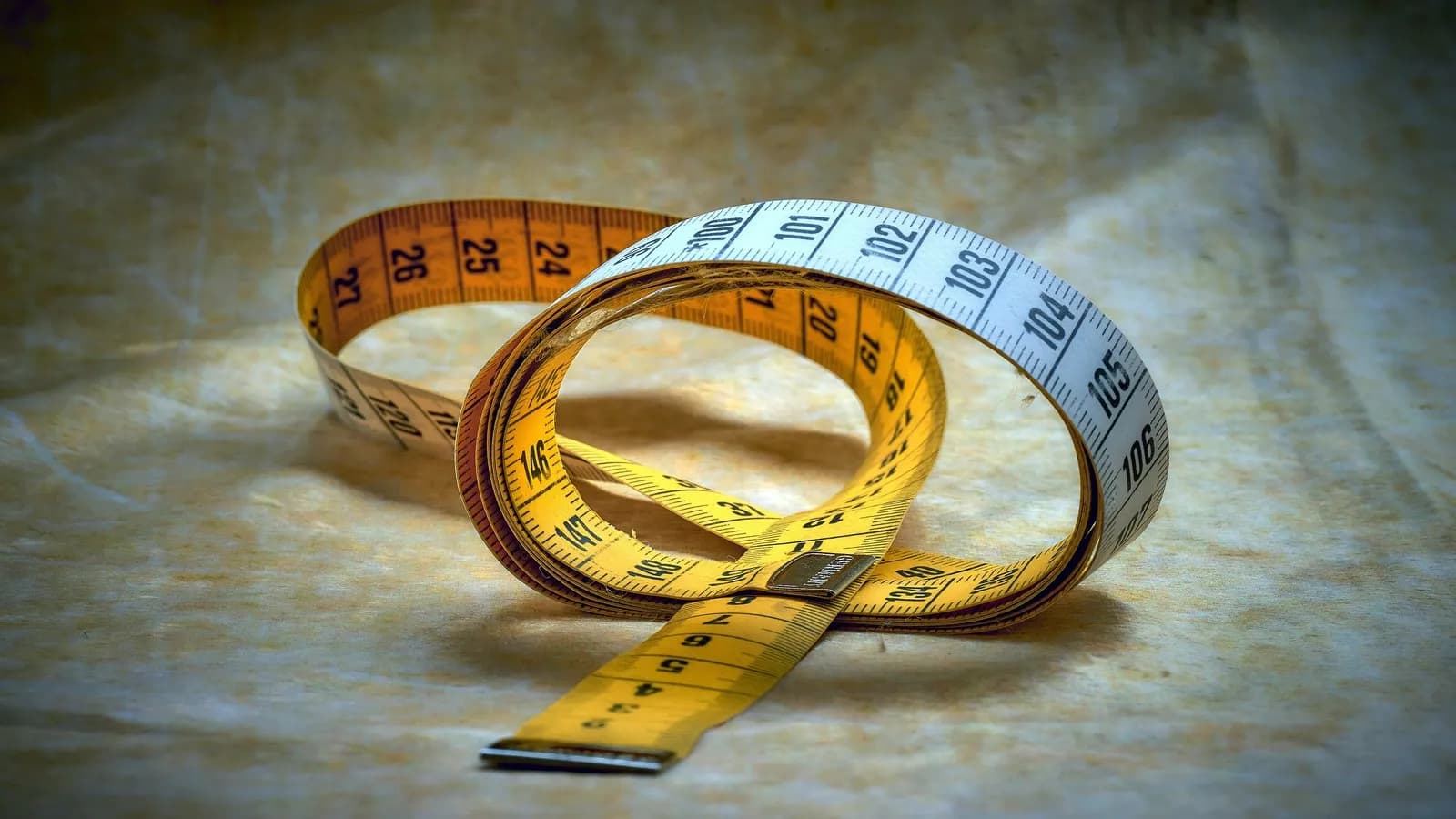
A research letter published in JAMA Network Open compared three ways of deciding whether somebody has obesity, against an accurate measurement of body fat as the reference.
Measuring the waist, on its own or alongside BMI, performed about as well as a considerably more elaborate framework using four different body measurements. BMI on its own failed to identify a substantial number of people who met the body fat criteria.
What was actually compared
1,900 American adults aged 20 to 59 from the National Health and Nutrition Examination Survey, in work led by Aayush Visaria at Rutgers.
Three approaches were tested. BMI alone. Waist circumference, alone or with BMI. And the newer Lancet definition, which combines BMI, waist circumference, waist to height ratio and waist to hip ratio. All three were judged against a direct measurement of body fat.
The result is not that the elaborate version is wrong. It is that it does not buy anything the tape measure does not already give you, while requiring measurements that clinics do not take.
The practical objection that decides this
Hip circumference is rarely recorded at a routine appointment.
That single sentence is why the simpler approach wins. A screening rule is only as good as the chance somebody performs it, and a definition that needs four measurements including one nobody currently takes will be applied inconsistently or not at all. A rule that needs a tape measure round the middle can be done in twenty seconds by anyone.
Medicine has a long habit of preferring the more sophisticated instrument on paper and then using the crude one in practice. Occasionally the crude one turns out to be sufficient, and this appears to be one of those times.
Why BMI keeps failing
It cannot tell what the weight is made of, or where it sits.
BMI is mass over height squared, which was designed to describe populations and has been used on individuals for a century because it is free. It cannot distinguish muscle from fat, and it cannot distinguish fat around the hips from fat around the organs. Those two kinds of fat carry very different risk.
Waist circumference is a crude instrument too, but it is crude about the right thing. It responds to abdominal fat, which is the deposit most strongly associated with metabolic and cardiovascular harm. That is the entire reason a tape measure outperforms a formula here: it is measuring closer to the mechanism.
What it does not settle
Where the threshold sits, and for whom.
Waist cut-offs vary by sex and differ across populations, and the appropriate numbers for South Asian and East Asian populations are lower than those commonly used in Europe and North America. A study in American adults aged 20 to 59 does not answer the threshold question for a 70 year old, and cannot speak to a global standard on its own.
Nor does any of this make a number on a tape a diagnosis. It is a screening signal, which is a prompt to look further, not a verdict.
What to do with it
Measure at the level of the navel, breathe out normally, do not pull the tape tight, and use the number as a trend rather than a score.
The direction over months is more informative than the reading on any one day, and it responds to changes that the scale hides completely. Anybody who has trained seriously while eating well has watched a bathroom scale refuse to move for weeks while their waistband changed size, and the tape is the instrument that notices.
That matters a great deal right now, because the drugs reshaping this field also change body composition, and weight alone is a poor way to watch it. We set out what the evidence says about lean mass in the muscle loss question, and why the speed of loss is the wrong thing to optimise in fast weight loss is not evidence.
The honest summary is that the cheapest tool in the room was underrated, and that it is now the one with the evidence behind it.
Published in The Outspoken Digest
Editorial desk
Outspoken Digest Health DeskMedicine, public health and the research behind the headlines, read carefully.
Newsletter
The Digest, in your inbox
One edition, sent when it is ready. No noise, and your address is never passed on.
Read Next
More Health →
Two Days After the Nobel for Optogenetics, a Small NEJM Trial Shows It Helped Some Blind Patients Detect Objects
Oct 9, 2026/3 min read
WHO Launches a Global Roadmap on Pre-Eclampsia and Pregnancy Hypertension, Tied to 42,000 Maternal Deaths a Year
Oct 8, 2026/3 min read

WHO Says Diet and Exercise Come First and Children Under 10 Should Not Get Weight-Loss Drugs or Surgery
Oct 7, 2026/3 min read

Kenya Confirms Its First Ebola Case, a Man Who Flew In From Uganda After Years in Congo and Died in Nairobi
Oct 6, 2026/3 min read