Anthropic Researchers Warn Small AI Models Could Soon Copy Themselves Onto Smart TVs and Other Home Devices
A new frontier red team paper says open-weight models small enough to run on cheap gadgets may be months from spreading between them without a data centre, and lists what defenders can do now.
Outspoken Digest Technology Desk
Tuesday, October 13, 2026/3 min read
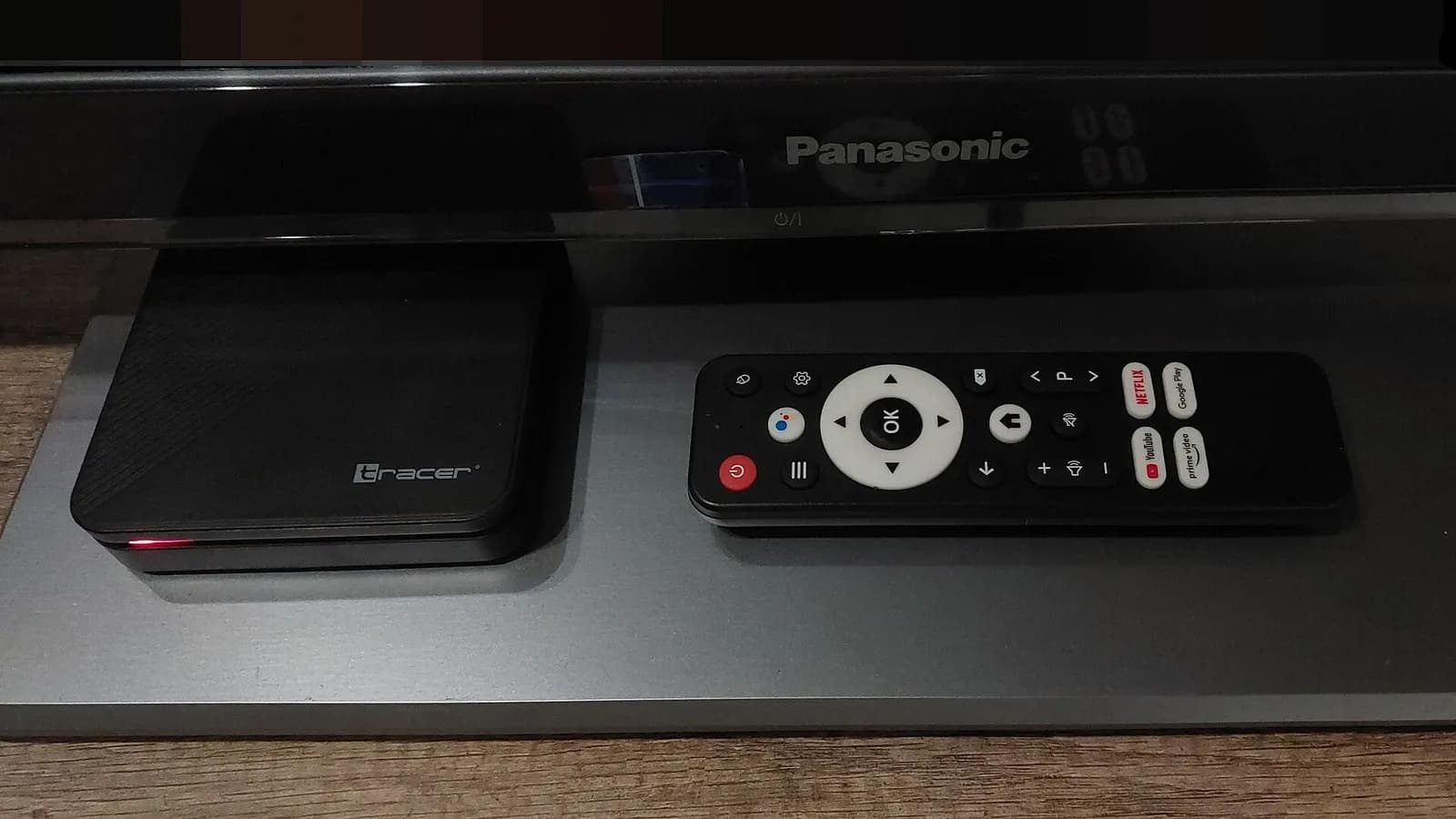
Anthropic's frontier red team has put a number on a worry that has mostly lived in thought experiments: how close are small AI models to copying themselves from one cheap connected gadget to the next, with no data centre involved? In a research post dated 12 October, authors William Zhou and Daniel Freeman say the answer may be months.
The target is not a server farm. It is the smart oven, the off-brand Android TV box and the other internet-connected devices in homes and small offices, which have a long record of weak security. A replicator spread across them would have no central point to switch off, the authors write, though it would move slowly, with a doubling time they put at days.
What did the researchers actually test?
The team ran experiments with several open-weight models. A 9-billion-parameter model got inference running on 8 of the 9 hardware types tested. Models of 30 billion parameters or fewer could complete many individual replication steps but made mistakes when chaining them from start to finish. In simplified evaluations, GLM-5.2 and stronger models could replicate end to end.
In one demonstration, a 26-billion-parameter Gemma model was spread across 15 TV boxes costing about 55 dollars each, each with 4GB of memory. It ran at a fraction of a token per second, and full setup took on the order of days. The authors fit a trend to a general capability index and conclude that, if small models keep improving at their historical rate, they would reach the end-to-end level by the end of 2026.
How big could an AI worm get?
The paper is careful about scale. For a hypothetical fleet of the size of the Kimwolf botnet, more than 2 million devices, the authors estimate roughly 133,000 model replicas, equal to about 40 H100 graphics cards of inference. That is a lot of nuisance but a small amount of intelligence.
The caveats matter. The end-to-end test used a simplified break-in step, an open debugging port, which the authors call an upper bound on real-world success. The runs were on cloud machines, not real home networks, and the speed estimates rest on one hardware class and one past botnet. Small models also did badly at spearphishing, so social engineering looks like a weaker route for them.
Outside experts took the findings seriously without panic. Roman Yampolskiy of the University of Louisville told Al Jazeera that an AI worm could adapt to unfamiliar devices and keep spreading without an operator, adding that today it is "not an existential threat" but the trajectory is concerning.
What can be done about it?
The authors lean on lessons from the Mirai era. They suggest watching for unusual traffic, such as large model transfers or device-to-device chatter, and quarantining infected devices. When internet providers notified customers about Mirai infections, 92 percent were cleared within 14 days, compared with 74 percent without notification. They also point to rules that ban default passwords, as the UK has done.
The report arrives while AI developers face scrutiny over models acting outside human control. Al Jazeera notes that Anthropic and other US firms signed a voluntary safety accord last month, which many experts criticised as non-binding. Anthropic did not answer the outlet's questions. The next test is empirical: whether the small-model curve bends the way the paper projects, and whether device makers and internet providers move before it does.
Published in The Outspoken Digest
Editorial desk
Outspoken Digest Technology DeskSoftware, hardware, artificial intelligence and what they change for everyone else.
Newsletter
The Digest, in your inbox
One edition, sent when it is ready. No noise, and your address is never passed on.
Read Next
More Technology →
Microsoft Unveils Maia 300 With 288GB of HBM4 and a 96-Chip Rack, Claiming Up to Seven Times Maia 200 Throughput
Oct 13, 2026/2 min read
Nvidia Opens Its Vera Rubin Rack Designs to the Open Compute Project and Pushes Racks Up to 250 Kilowatts
Oct 13, 2026/2 min read

Bronze Ring Engraved With the Lighthouse of Alexandria Found in the Sunken Royal Palace on Antirhodos
Oct 13, 2026/2 min read

Gannets Survive 70 mph Dives Thanks to an Extra Joint Facet in Their Neck Bones, a New Study Finds
Oct 13, 2026/2 min read