Ariane 6 Launches 36 Amazon Leo Satellites Nine Days After Vulcan Lost 40 in a Failed Launch
A one-day delay for a ground-systems fault ended with all 36 satellites deployed from Kourou, taking Arianespace to 136 Amazon Leo satellites while two of its US rockets are out of action.
Outspoken Digest Technology Desk
Tuesday, November 24, 2026/2 min read
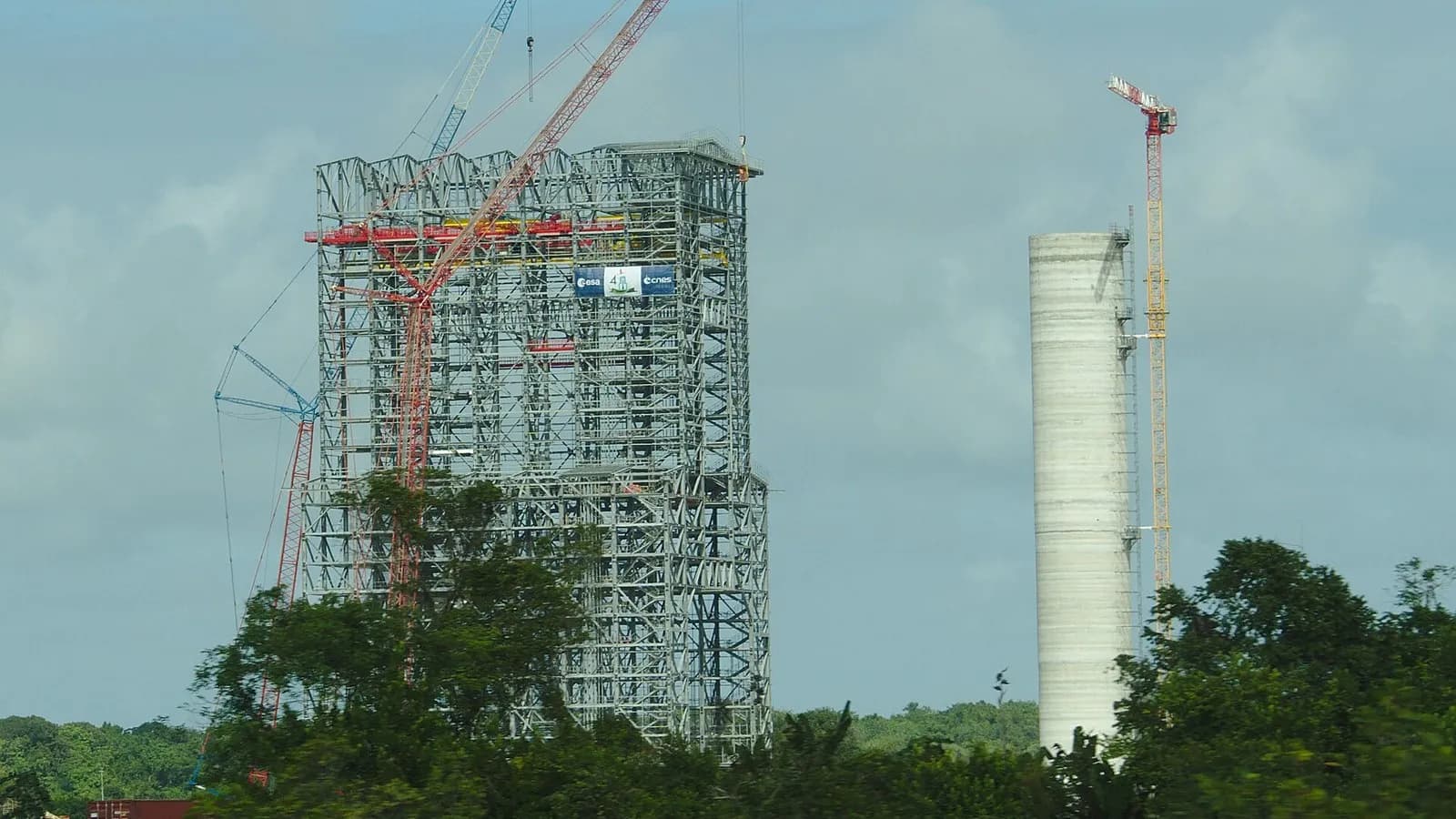
Europe's rocket delivered what an American one lost. On Tuesday morning an Ariane 6 lifted off from French Guiana with 36 Amazon Leo satellites and, by late morning in Florida, all of them had been released into orbit, nine days after a United Launch Alliance Vulcan rocket failed with 40 of Amazon's satellites on board.
The Ariane 64 flew at 11:14 UTC (8:14 a.m. local time) from Europe's Spaceport at Kourou, at the very end of its launch window, Spaceflight Now reports. A deployment update at 15:25 UTC confirmed all 36 satellites were free. The final separation came 2 hours and 4 minutes after liftoff, as Arianespace had forecast.
Why did the Ariane 6 launch slip a day?
The flight, designated VA271 by Arianespace and LE-04 by Amazon, had been planned for Monday. Arianespace said a technical event on 23 November affected the launcher's ground support systems, that teams ran checks, and that the rocket and satellites stayed in safe condition. It moved the launch to Tuesday with a roughly 30-minute window that closed at 11:14 UTC.
How many satellites does Amazon Leo have in orbit?
Spaceflight Now puts the constellation at 432 satellites in orbit across all providers, including ULA and SpaceX, with 136 launched by Arianespace. That is out of 3,232 planned for the first generation. MediaSat notes this was Ariane 6's tenth flight and its fifth of 2026, the fourth in the four-booster configuration, and the fourth for Amazon. Arianespace has now placed 136 Amazon Leo satellites in under ten months.
The Vulcan failure on 15 November, during that rocket's return to flight, was ULA's first full mission failure since the company was founded in 2006, according to Spaceflight Now. It had followed a solid rocket booster anomaly in February that grounded the rocket for most of the year. The Outspoken Digest had previewed that return in its earlier launch-week piece.
What does the rocket shortage mean for Amazon?
Amazon's licence from the US Federal Communications Commission requires the full first-generation network to be deployed by 30 July 2029. The company missed an interim target of launching half the satellites by 30 July 2026, and the FCC partly waived that requirement in June, says Spaceflight Now. MediaSat adds, citing Bloomberg, that Blue Origin's New Glenn, which Amazon also booked, has been grounded since an explosion on 28 May during a static fire that badly damaged its only pad, with a return to flight pushed to January 2027.
That leaves Ariane 6 as the steady workhorse in a crowded queue. Amazon ordered six more Ariane 64 launches in September, bringing its Arianespace contract to 24, and the next test is how quickly the European pad can turn that order into launches while its competitors recover.
Published in The Outspoken Digest
Editorial desk
Outspoken Digest Technology DeskSoftware, hardware, artificial intelligence and what they change for everyone else.
Newsletter
The Digest, in your inbox
One edition, sent when it is ready. No noise, and your address is never passed on.
Read Next
More Technology →
Anthropic Launches Claude Ship, AI Agents That Review, Fix and Approve Code Changes for Teams
Nov 23, 2026/2 min read

SpaceX Launches a Spy Satellite Mission From Vandenberg 32 Hours After the Last, a New Pad Turnaround Record
Nov 23, 2026/2 min read

OpenAI Says Database Maintenance Took Out Both Authentication Replicas, Failing Up to 75% of ChatGPT Requests
Nov 22, 2026/2 min read
Voyager 1 Passes One Light-Day From Earth While Its Science Data Stays Silent
Nov 19, 2026/2 min read