Can You Get the Bends From Freediving? Yes, and Here Is How
The old assumption was that one breath cannot load enough nitrogen to matter. Repetitive deep dives with short surface intervals disprove it, and the divers it happens to are usually working, not competing.
Wednesday, August 12, 2026/3 min read
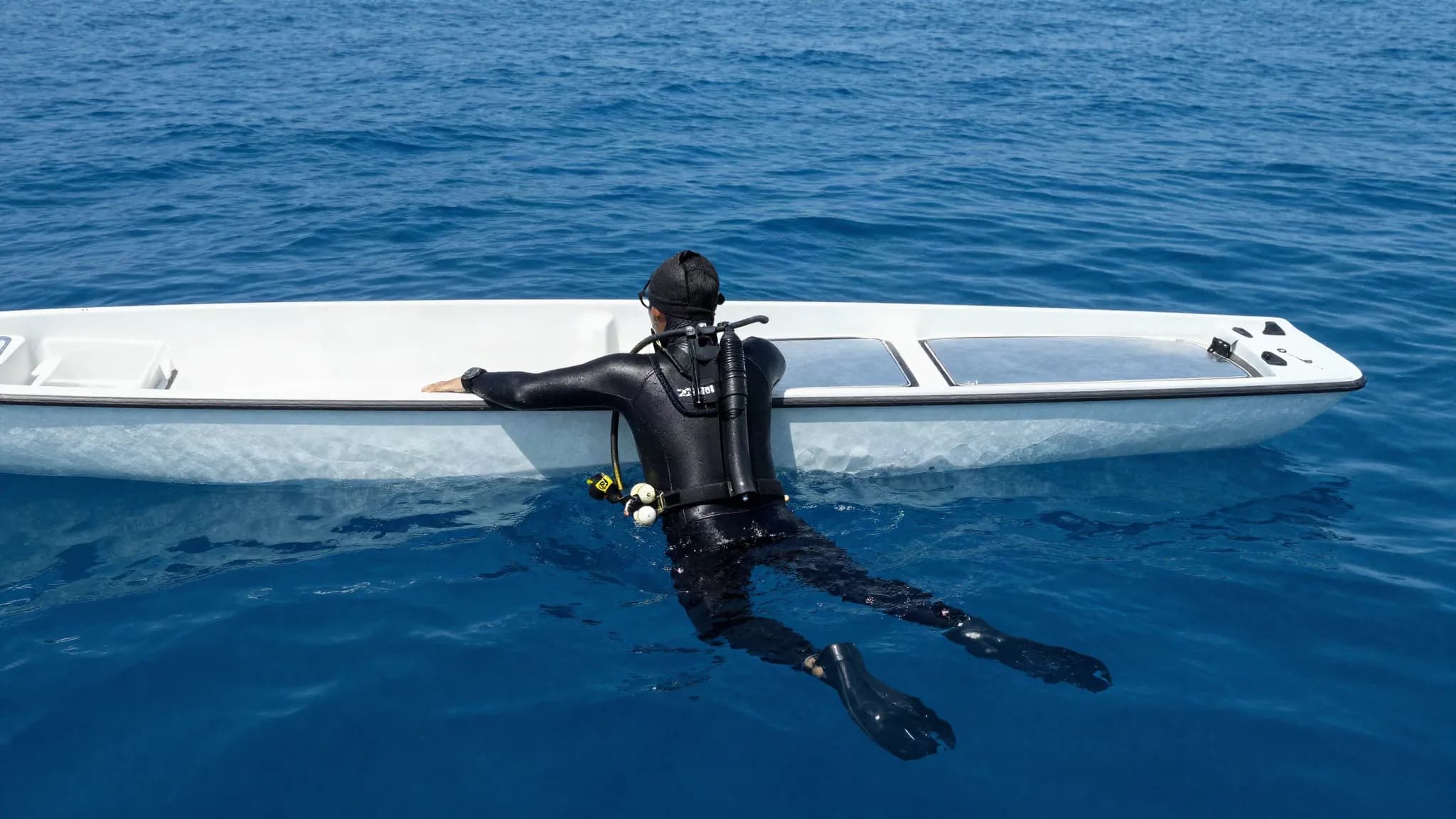
For a long time the answer given to this question was no. A freediver carries one lungful of air, the reasoning went, and one lungful cannot dissolve enough nitrogen into the blood to cause trouble on the way up.
That reasoning is right about a single dive and wrong about a day of them.
What actually happens
Nitrogen dissolves into tissue in proportion to pressure and time. A freediver at 30 m spends perhaps a minute at pressure, which is not much loading. But it is not zero.
Surface for ninety seconds, dive again. Some of the nitrogen from the first dive has not been offloaded. Repeat forty times across a morning and the residual accumulates dive after dive, because the surface intervals are too short to clear what the descents keep adding.
Eventually tissue nitrogen reaches a level where the pressure drop on ascent lets it come out of solution as bubbles. That is decompression sickness, arrived at by a different route than a scuba diver takes but ending in the same place.
Taravana
The condition has been documented for decades under a name borrowed from the pearl divers of the Tuamotu archipelago in French Polynesia, who described it as taravana, roughly to fall crazily.
Those divers were doing exactly the profile that causes it: repeated dives to 30 or 40 m, all day, with brief surface intervals, because they were working rather than training. Similar patterns are recorded among Japanese and Korean ama divers and among Greek sponge divers.
Symptoms are neurological far more often than joint pain: vertigo, nausea, visual disturbance, slurred speech, weakness down one side, confusion, and in serious cases paralysis or loss of consciousness. Because the presentation is largely neurological, it is often mistaken for exhaustion, seasickness or a squeeze.
Who is actually at risk
Not the recreational freediver doing six dives to 15 m on a Saturday. The nitrogen loading there is trivial.
The risk concentrates in four groups. Working divers doing many deep dives across a full day. Spearfishers, who are the most commonly affected recreational group, because a good spot produces dive after dive with minimal rest and the incentive to keep going is a fish rather than a training plan. Competitive freedivers doing repeated deep warm-up dives. And anyone freediving after scuba, who starts already loaded.
That last combination deserves its own sentence: do not freedive after a scuba dive. You begin with residual nitrogen from the scuba profile and then repeatedly compress and decompress it. Wait at least twelve hours, and longer after repetitive or deep scuba days.
How to avoid it
The single most effective measure is surface interval discipline. The old rule of thumb is a surface interval of at least twice your dive time, and for deeper work three or four times is more defensible. If you dove for two minutes, rest at least four, and be honest about the clock rather than estimating.
Cap the number of deep dives in a session. Depth beyond about 20 m is where this starts to matter, and a long day of repeated 30 m dives is the classic profile.
Stay hydrated, which matters more than people expect, and avoid alcohol the night before.
Spearfishers specifically: set a limit before you get in the water, because the decision to do one more dive is never made rationally with a fish in sight.
If it happens
Treat neurological symptoms after repetitive deep freediving as decompression sickness until a doctor says otherwise. Get the diver out of the water, lay them flat, give oxygen if it is available, keep them warm, and arrange medical evacuation to a facility with a recompression chamber.
Do not put them back in the water. In-water recompression is dangerous and has no place outside a very small number of expert commercial settings. How chamber treatment actually works is worth understanding before you need it, and so is who pays for the evacuation, because a chamber ride and an air ambulance are expensive and most travel insurance excludes diving.
The reasonable summary: this is rare, it is real, and it is almost entirely a function of profile rather than depth alone. Long surface intervals are the whole defence.
This article is general information, not medical advice. Any suspected decompression illness needs a diving physician.
Published in The Outspoken Digest
Editorial desk
Outspoken Digest Diving DeskCovers freediving, recreational and technical diving, dive medicine and the incidents the sport learns from.
Newsletter
The Digest, in your inbox
One edition, sent when it is ready. No noise, and your address is never passed on.
Read Next
More Diving →
Black Swallower Filmed With a Hugely Swollen Belly 1,259 Metres Down Off Trinidad and Tobago
Oct 13, 2026/2 min read
Playing Recordings of a Healthy Reef Drew More Coral and Fish Larvae to Artificial Structures Off Hawaii
Oct 9, 2026/3 min read
Blacktip Sharks Can Hear a Sound From Nearly 250 Feet Away and Swim Straight Toward or Away From It
Oct 1, 2026/2 min read
A Sea Turtle Species Never Recorded Nesting in the United States Laid Eggs on a Southern California Beach
Oct 1, 2026/2 min read