How to Stop Gulf Summers Destroying Your Clothes
Heat, sweat, hard water and relentless sun age a wardrobe faster than wear does. Most of the damage is preventable, and almost all of it comes down to washing habits rather than fabric choice.
Wednesday, August 12, 2026/4 min read
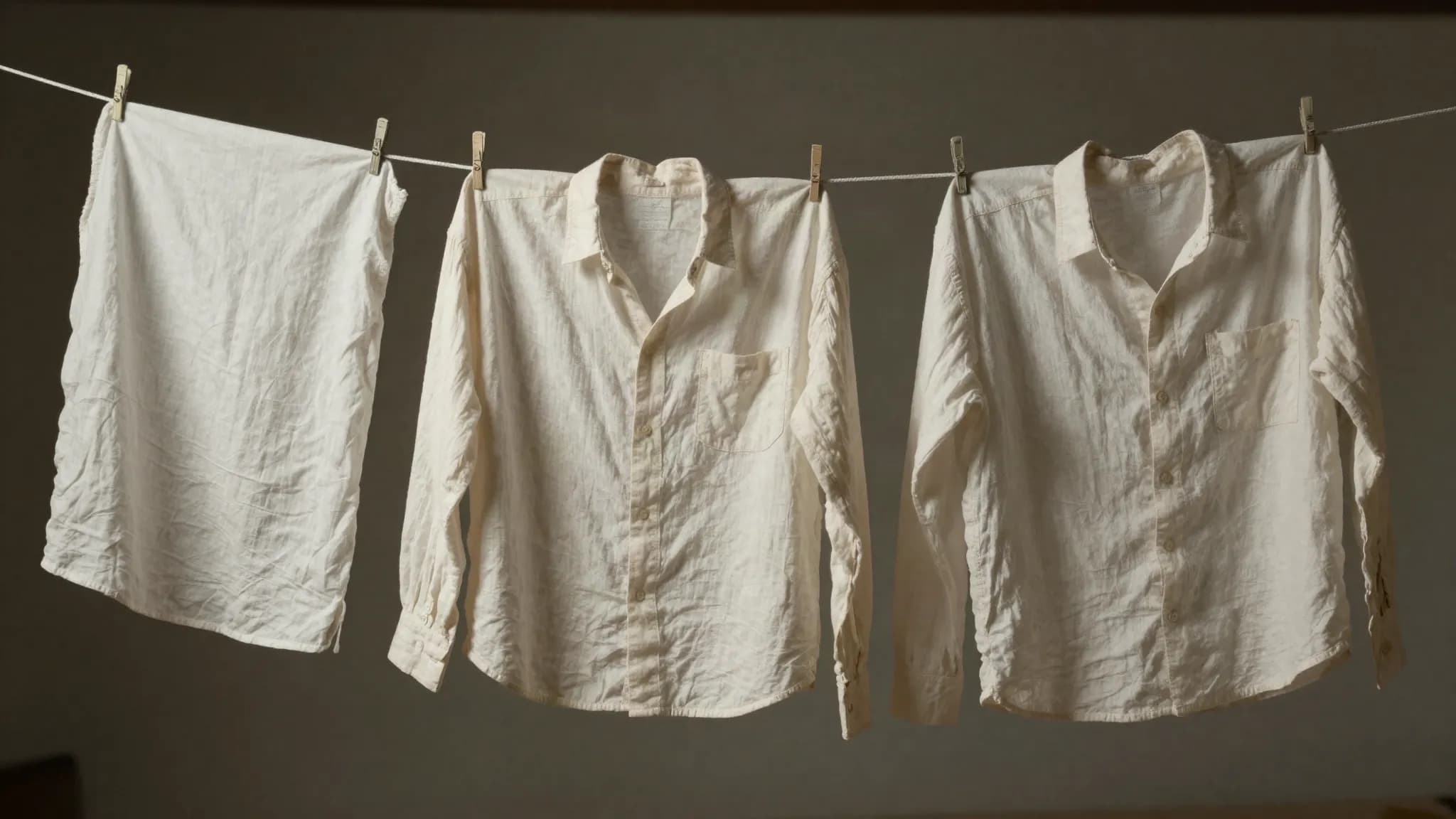
A wardrobe in this climate ages on a different schedule. Collars yellow, dark colours grey out, whites turn dingy, elastic dies, and pale shirts develop stiff patches under the arms that no wash removes.
Very little of that is fabric quality. Most of it is a small number of avoidable mistakes, repeated.
The yellow underarm stain is not sweat
Start here, because it destroys more shirts than anything else and almost everyone treats it wrongly.
Sweat itself is largely water and salt and does not stain much. The yellow crust is a reaction between the aluminium in antiperspirant and the proteins in sweat, baked in by heat.
Which means the fix is at the source. Let antiperspirant dry fully before dressing. Use less than you think. Wash affected shirts promptly rather than letting them sit in a basket in a warm room, because the reaction continues.
For existing stains, an enzyme pre-treatment or a soak in oxygen bleach works far better than chlorine bleach, which reacts with the proteins and sets the yellow permanently. Bleaching a yellowed collar is the single most common way people finish off a shirt they were trying to save.
Wash cooler, and less
Hot washes are the other main culprit. They shrink natural fibres, break down elastane, and fade dye far faster than cold water does.
30C with a decent detergent handles ordinary sweat and wear. Reserve hot washes for towels, bedding and genuinely soiled items.
Wash less often, too. Outer layers, jeans, jackets and knitwear rarely need washing after one wear; airing them overnight does most of the work. The exception in this climate is anything worn directly against skin in the heat, which should be washed after each wear because sweat left in fabric degrades fibres and feeds odour bacteria.
Hard water is doing damage you cannot see
Much of the region runs on desalinated or mineral-heavy supply, and hard water is quietly hard on textiles.
Minerals bind with detergent to form a residue that deposits in the fibres, which is what makes towels stiff and dark clothes look chalky. It also reduces how well the detergent works, prompting people to use more, which makes the residue worse.
Two fixes. Use the correct dose for hard water as stated on the packaging rather than guessing upward. And add white vinegar to the rinse compartment occasionally, which dissolves mineral buildup without leaving a smell once dry.
Sun is a bleach
Line drying in direct sun will fade colours in a handful of cycles and weaken fibres over a season. Ultraviolet degrades cotton and is brutal on synthetics.
Dry in shade, or indoors, or turn garments inside out if drying outside is unavoidable. Sun is genuinely useful on white cotton and on nothing else.
Tumble dryers are worse than most people realise: the lint filter is your clothes, disassembled. Air drying is better for the garment and, in a climate where things dry in an hour, easier anyway.
Fabric choices that actually help
Linen is the obvious one and deserves its reputation: it is highly breathable, dries fast and gets softer with washing. It creases, which is a look rather than a fault.
Cotton in open weaves such as poplin, seersucker and oxford performs well. Tightly woven heavy cotton does not.
Merino wool sounds wrong in 45C and is not. It regulates temperature, resists odour remarkably well and can be worn several times between washes, which is a real advantage.
Polyester is the one to avoid next to skin in heat. It does not breathe, and it holds odour in a way that survives washing because the compounds bind to the fibre. It also traps sweat against the skin, which matters beyond laundry: evaporation is how the body sheds heat, and a fabric that blocks it works against you on the days when that mechanism is doing real work.
The broader point is that garments chosen for daily use in the climate you actually live in earn their cost quickly, which is the arithmetic behind cost per wear. A heavy wool coat bought as an investment piece and worn six times a year is a worse purchase here than three good linen shirts.
Storage
Never store anything unwashed. Body oils and sweat residue attract insects and oxidise into stains that appear months later on a garment that looked clean when you put it away.
Fold knitwear rather than hanging it, which stretches shoulders. Use cedar rather than mothballs. And keep storage out of humid rooms, because humidity plus warmth is how mildew starts on the clothes you see least often.
None of this is demanding. It is mostly washing cooler, drying out of the sun, and dealing with antiperspirant before it deals with your shirts.
Published in The Outspoken Digest
Editorial desk
Outspoken Digest Style DeskReports for The Outspoken Digest across Design, Fashion, Lifestyle.
Newsletter
The Digest, in your inbox
One edition, sent when it is ready. No noise, and your address is never passed on.
Read Next
More Fashion →
Anthony Vaccarello Is Leaving Saint Laurent After a Decade, and Kering Has Not Yet Named His Successor
Oct 9, 2026/2 min read

Louis Vuitton Closes Paris Fashion Week With Hovering Cars, Paper-Light Dresses and a Louvre Courtyard Cityscape
Oct 7, 2026/2 min read

Celine Dion Made a Surprise Return to the Catwalk to Close L'Oreal's Paris Fashion Week Opening Show
Sep 29, 2026/2 min read

Louise Trotter Doubled Down on Colour and Oversized Bags for Her Latest Bottega Veneta Show in Milan
Sep 27, 2026/2 min read