Cost Per Wear Is the Only Fashion Maths That Survives Contact With a Wardrobe
The price tag tells you almost nothing. Divide by the number of times you will actually wear it and the expensive coat is frequently the cheap one, but only if you are honest about the denominator.
Saturday, August 8, 2026/4 min read
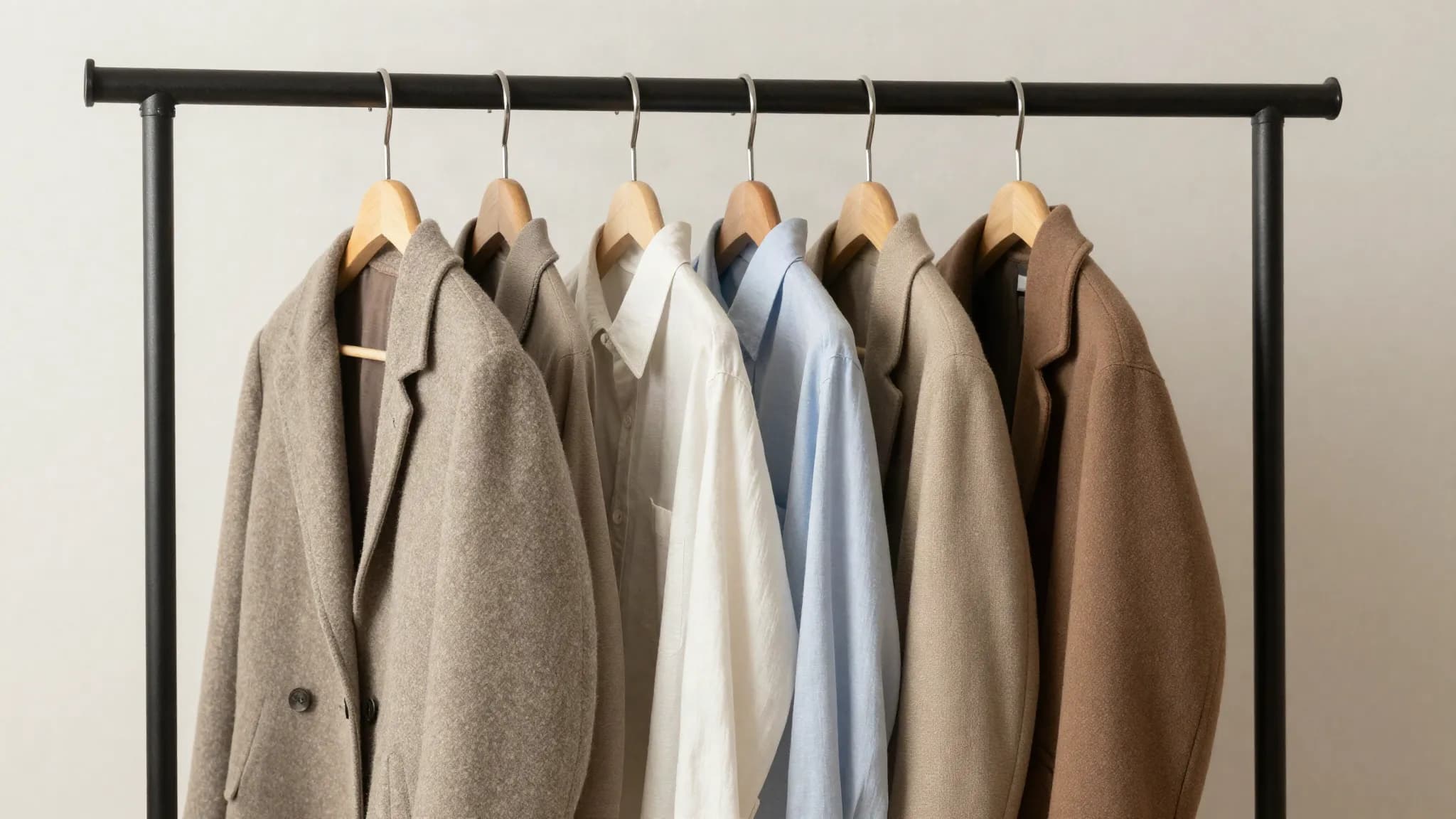
There is one piece of arithmetic that changes how people shop, and it fits on a line: divide the price by the number of times you will wear it.
A coat at 1,200 worn two hundred times costs six per wear. A coat at 200 worn eight times costs twenty-five. The cheap coat was three times more expensive, and it is also the one still taking up space.
The formula is not new and it is not complicated. What makes it useful is that it forces attention onto the number almost nobody estimates honestly.
The denominator is where people lie to themselves
Everybody can read a price. Very few people can predict wear count, and the errors run in a consistent direction.
Occasion-specific clothing is the worst offender. A dress bought for a wedding gets worn once and is remembered as versatile. Anything bought for an imagined future self, the one who attends galas or takes up hiking, tends to be worn zero times.
Trend pieces have a hidden expiry. The garment survives; the willingness to wear it does not. A distinctive silhouette that dates in eighteen months has a wear ceiling regardless of quality.
And comfort dominates everything. A garment that pinches, itches, needs adjusting or cannot be worn without a specific undergarment will be passed over every morning, whatever it cost and however good it looks.
An honest denominator asks a different question: not would I wear this, but when did I last wear something similar, and how often.
Where high cost per wear is fine
The formula is a tool, not a moral rule, and applying it universally produces a joyless wardrobe.
Some clothes are bought for a single occasion that matters. A wedding outfit at a high cost per wear is not a failure; the purpose was the day. The mistake is only in pretending it will become everyday.
The useful move is to decide which category a purchase belongs to before buying, rather than justifying afterwards. Foundation pieces should have a low cost per wear. Occasion pieces do not need to, and should be budgeted separately and smaller.
What actually drives longevity
Quality is used loosely, usually to mean brand or price. Neither predicts lifespan reliably. A few concrete things do.
Fibre content is the first check, and it takes five seconds on the label. Natural fibres and high-quality blends generally wear and age better than cheap synthetics, which pill and lose shape. Wool, cotton, linen and silk have failure modes people find acceptable; polyester tends to fail in ways that look shabby rather than worn.
Construction details are visible if you look. Seams that are finished rather than raw and overlocked. Patterns matched across a seam. Buttons sewn with a shank on thicker fabric. Spare buttons supplied. A garment lined where a lining is needed. These indicate time spent, and time spent correlates with durability.
Repairability matters and is rarely considered. Generous seam allowances allow letting out. A hem deep enough to lengthen. Shoes with a construction that permits resoling rather than a moulded sole that cannot be replaced. A resoleable shoe has a wear count several times higher than one that cannot be repaired.
Climate changes the calculation
In the Gulf the maths is distorted by the weather, and the standard investment-piece advice imported from Europe partly fails here.
A heavy wool coat has a low cost per wear in London and a terrible one in Dubai, where it might be used on a handful of travel days a year. Meanwhile lightweight breathable garments worn daily in extreme heat go through a hard life: sweat, frequent washing and strong sun all shorten lifespan.
That argues for spending on the things worn every day in the climate you actually live in, which is usually fine cotton and linen, well-cut lightweight tailoring, and footwear. Not the dramatic outerwear that dominates aspirational content.
The audit worth doing once
Reverse the formula on what you already own.
Go through a wardrobe and, for each item, estimate how many times it has been worn since purchase. The exercise is uncomfortable and highly educational, because it produces a personal error profile: the categories where you consistently overbuy, and the ones where you underinvest and replace too often.
Most people discover the same two things. A small number of items account for the overwhelming majority of wears. And the most expensive mistakes were not the expensive purchases; they were the cheap ones bought repeatedly.
Buying fewer, better things is advice that has become a slogan. Cost per wear is the version of it that can be checked, and it is the reason the advice survives the slogan. It also sits comfortably alongside the wider move towards buying less in general, and against the churn described in our look at resale going mainstream.
Published in The Outspoken Digest
Editorial desk
Outspoken Digest Style DeskReports for The Outspoken Digest across Design, Fashion, Lifestyle.
Newsletter
The Digest, in your inbox
One edition, sent when it is ready. No noise, and your address is never passed on.
Read Next
More Fashion →
Victoria's Secret Fashion Show Heads to Los Angeles on Sunday With an All-Women Lineup and Three Angel Hopefuls
Oct 15, 2026/2 min read

Anthony Vaccarello Is Leaving Saint Laurent After a Decade, and Kering Has Not Yet Named His Successor
Oct 9, 2026/2 min read

Louis Vuitton Closes Paris Fashion Week With Hovering Cars, Paper-Light Dresses and a Louvre Courtyard Cityscape
Oct 7, 2026/2 min read

Celine Dion Made a Surprise Return to the Catwalk to Close L'Oreal's Paris Fashion Week Opening Show
Sep 29, 2026/2 min read