Chicken Kabsa: The Weeknight Version of Saudi Arabia's National Dish
Lamb kabsa takes an afternoon. Chicken kabsa takes about an hour and follows the same logic: build the broth, cook the rice in it, and grill the chicken at the end for colour.
Friday, August 14, 2026/4 min read
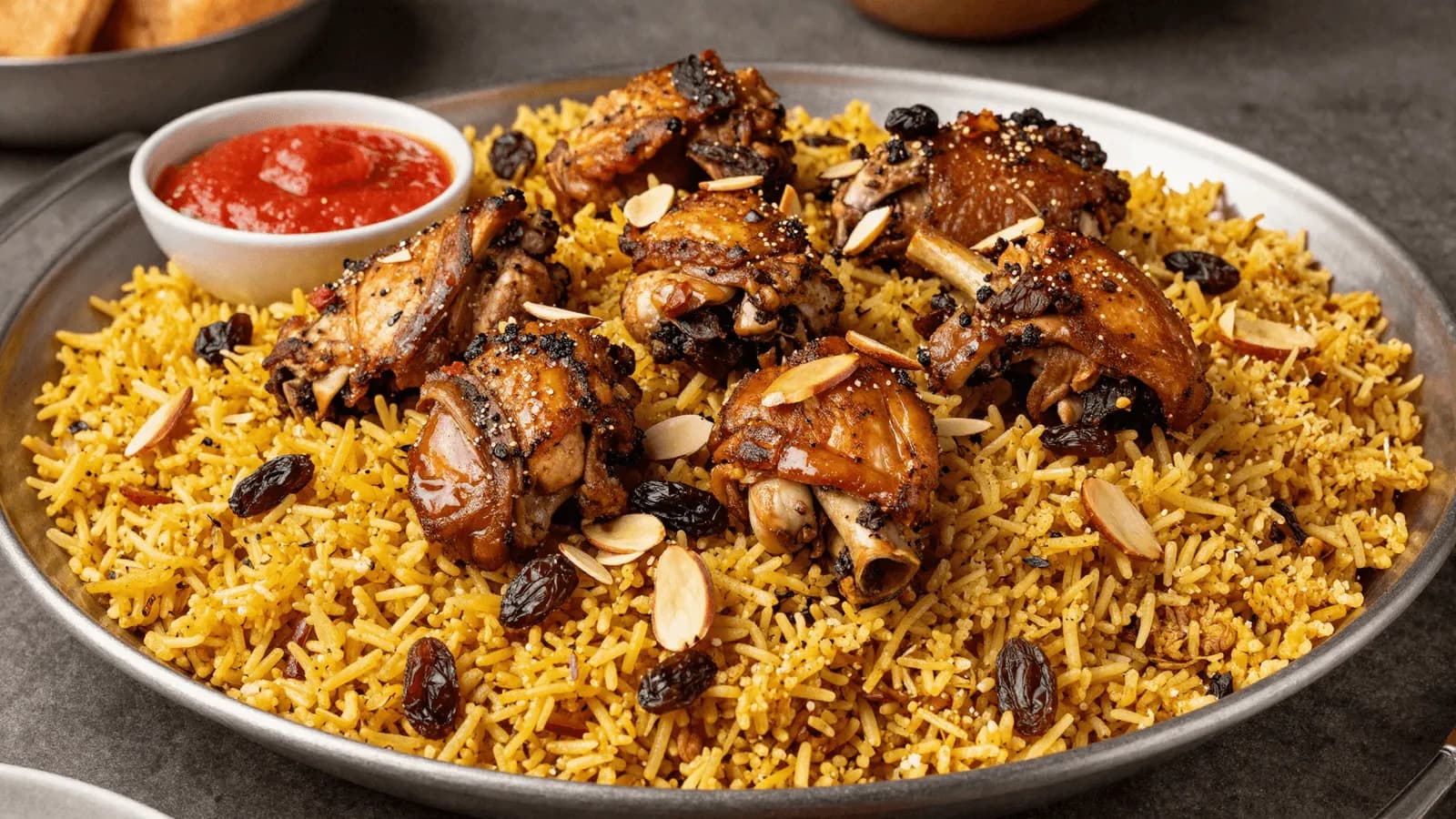
Chicken kabsa is the Saudi national dish made in about an hour instead of an afternoon. The structure is identical to the lamb version: the meat is browned and simmered into a spiced tomato broth, the rice is then cooked in that broth so every grain takes on the flavour, and the meat goes back on top to serve.
The one thing that separates a good kabsa from a competent pilaf is the dried lime. Do not skip it.
What makes it kabsa
Three things. Loomi, the dried black lime, which gives a sour, faintly fermented depth that nothing else provides. A warm baharat blend of cinnamon, clove, cardamom and black pepper. And the method itself, where the rice absorbs a meat broth rather than being cooked separately and mixed in.
That last point is what distinguishes it from biryani, which is layered rather than absorbed, and we set the full comparison out in the lamb kabsa recipe.
Ingredients
Serves 4 to 6. About 1 hour 10 minutes.
- 1.2 kg bone-in chicken pieces, skin on, legs and thighs
- 400 g basmati rice
- 2 large onions, finely chopped
- 4 cloves garlic, crushed
- 1 tablespoon grated ginger
- 3 tablespoons ghee or oil
- 3 tablespoons tomato paste
- 2 tomatoes, chopped
- 2 dried limes (loomi), pierced
- 1 cinnamon stick
- 4 green cardamom pods
- 4 cloves
- 2 bay leaves
- 1.5 teaspoons ground coriander
- 1 teaspoon ground cumin
- 1 teaspoon turmeric
- 0.5 teaspoon black pepper
- 0.25 teaspoon ground nutmeg
- 1 large carrot, grated
- 1.2 litres water
- Salt
- To finish: toasted flaked almonds, raisins, chopped parsley
Method
1. Rinse and soak the rice
Rinse the basmati until the water runs clear, then soak it for 20 minutes and drain. This is not optional in a dish where the rice must stay separate. Unsoaked basmati absorbs unevenly and breaks.
2. Brown the chicken properly
Heat the ghee in a wide heavy pot and brown the chicken pieces skin side down without moving them, about five minutes, then turn. You are after real colour, because this is where most of the flavour of the finished broth comes from. Remove and set aside.
3. Build the base
Soften the onions in the same fat for eight to ten minutes until golden, not pale. Add the garlic and ginger for one minute, then the whole spices, the cinnamon stick, cardamom, cloves and bay.
Add the ground spices and stir for thirty seconds until they smell toasted rather than raw. Then the tomato paste, cooked for two minutes until it darkens, then the chopped tomatoes.
4. Simmer the chicken
Return the chicken, add the pierced dried limes, the grated carrot, the water and a generous amount of salt. Bring to a boil, then simmer covered for 25 to 30 minutes until the chicken is cooked through.
Lift the chicken out and set it aside. Taste the broth now and correct the salt. Once the rice goes in you cannot fix it.
5. Cook the rice in the broth
Measure the broth. You want roughly 1.5 times the volume of the drained rice; top up with water or reduce it if you are over.
Add the rice, bring back to a boil, then cover tightly and cook on the lowest heat for 15 minutes. Do not lift the lid. Rest off the heat, still covered, for a further 10 minutes.
6. Colour the chicken
While the rice rests, put the chicken on a tray under a hot grill element for five to eight minutes until the skin crisps and darkens. This step is what makes it look and taste like restaurant kabsa rather than boiled chicken on rice.
7. Serve
Fork the rice through gently, tip onto a large platter, arrange the chicken on top, and scatter with toasted almonds, raisins and parsley.
What is daqoos, and do you need it?
Daqoos is the thin cooked tomato and garlic sauce served alongside almost every Gulf rice dish, and yes, you want it. Kabsa is aromatic rather than sharp, and the plate needs an acidic element.
Simmer four chopped tomatoes with three crushed garlic cloves, a teaspoon of tomato paste, a little cumin, salt and a splash of water for fifteen minutes, then crush roughly. Some households add green chilli. Serve it in a bowl for people to spoon over.
Can you make it without dried limes?
You can make a good rice dish. You cannot make kabsa.
Loomi are limes boiled in brine and dried until hollow and almost black, and the sourness they give is earthy and slightly fermented rather than bright. If you genuinely have none, use the juice of one lemon plus a quarter teaspoon of tamarind paste and accept that it is an approximation.
Pierce them before they go in or they float uselessly, and press them against the pot side near the end.
Notes
Boneless chicken works and is worse. The bones are doing broth-building work, and without them the rice tastes noticeably thinner.
Kabsa reheats well, which is unusual for a rice dish. Sprinkle a little water over it, cover, and warm gently. It keeps three days.
For the slower, richer, celebration version, see lamb kabsa. For the closely related Bahraini treatment of the same idea, see machboos, which is the same technique with a different spice emphasis and a step where the chicken is finished in the pot rather than under the grill.
Published in The Outspoken Digest
Editorial desk
Outspoken Digest Food DeskCooking, ingredients, restaurants and the economics of what ends up on the table.
Newsletter
The Digest, in your inbox
One edition, sent when it is ready. No noise, and your address is never passed on.
Read Next
More Recipes →
Swangy Tamarind Glazed Chicken Wings for the Flavour Replacing Swicy on Fast Food Menus
Sep 29, 2026/3 min read

Baked Apple Cider Doughnuts for a Cider Season That Peaked Earlier Than the Calendar Says
Sep 29, 2026/3 min read
An Obatzda Bavarian Beer Cheese Dip for the Final Stretch of Oktoberfest 2026
Sep 29, 2026/3 min read