Dairy-Free Labneh: Cashews, Culture and Actual Tang
Most dairy-free labneh recipes are blended cashews with lemon juice, which tastes like nut paste. Culturing it properly is what produces the sourness, and it takes one extra day of doing nothing.
Thursday, August 13, 2026/3 min read
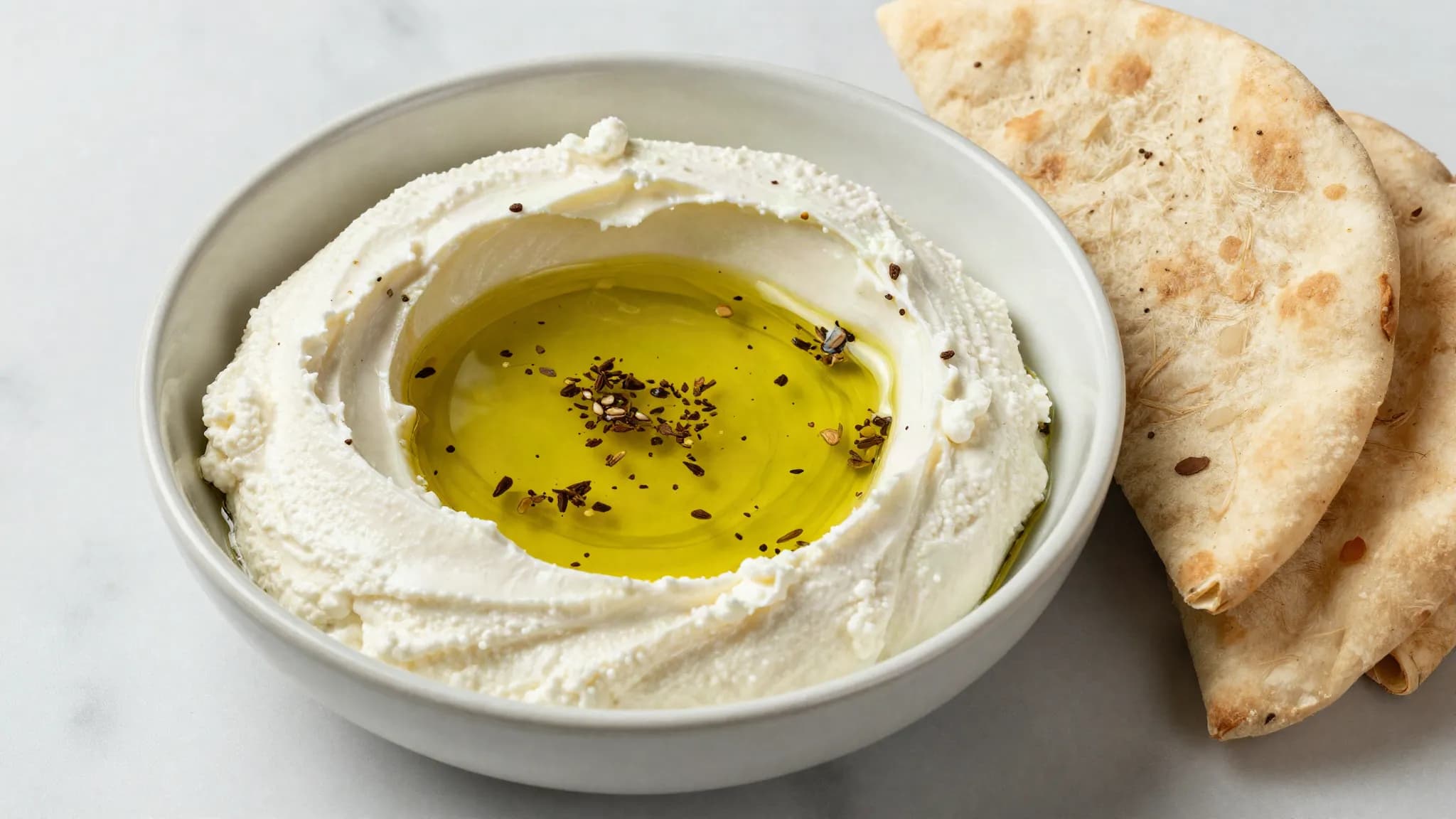
Labneh is strained yoghurt: thick, spreadable, and above all sour. Most dairy-free versions skip straight to blending soaked cashews with lemon juice, and the result is pleasant nut paste. It is not labneh, because the acidity is flat and one-dimensional.
Real tang comes from fermentation, where bacteria produce lactic acid over hours and generate the aromatic compounds that lemon juice cannot supply. Doing that with cashews is straightforward, costs nothing extra and takes one additional day in which you do nothing at all.
Ingredients
Makes about 400 g.
- 250 g raw cashews
- 120 ml water, plus more as needed
- The contents of 2 probiotic capsules, or 2 tablespoons of live dairy-free yoghurt
- 1 teaspoon fine salt
- 1 tablespoon lemon juice, at the end and to taste
To serve:
- Good olive oil
- Za'atar, or dried mint and sumac
- Warm flatbread
Method
1. Soak
Cover the cashews with plenty of cold water and soak for at least four hours, or overnight in the fridge. In a hurry, pour boiling water over them and leave for thirty minutes, though the texture is very slightly less silky.
Drain and rinse well.
2. Blend smooth, and mean smooth
Blend the cashews with the 120 ml of fresh water until completely smooth, scraping down and adding a tablespoon of water at a time if the blender stalls. Aim for the texture of thick double cream.
Do not add the salt yet. Salt slows the culture down, and at this stage you want the bacteria working quickly.
Any graininess left here will still be there at the end, so give it longer than feels necessary.
3. Culture it
Scrape into a clean glass or ceramic bowl. Stir in the probiotic powder or the live yoghurt with a clean spoon.
Cover with a cloth and leave somewhere warm, ideally 25 to 30C, for 12 to 24 hours. In a Gulf summer a kitchen counter is plenty; in a cold room, an oven with only the light on works.
Taste at 12 hours. It should smell faintly sour and clean, like yoghurt. When it tastes tangy enough, it is done. If it smells musty, bitter or off in any way, throw it out and start again with a clean bowl.
4. Salt and strain
Stir in the salt and the lemon juice now.
Line a sieve with muslin or a clean thin cloth, scrape the mixture in, gather the corners and twist gently. Sit it over a bowl in the fridge for 6 to 12 hours.
Less liquid comes out than with dairy yoghurt, because there is no whey to lose. The straining is mostly firming it up rather than draining it, so do not expect a puddle.
5. Serve
Spoon into a shallow bowl and spread with the back of the spoon to make a hollow. Pour olive oil into the hollow generously and scatter za'atar over the top.
To make labneh balls, strain a full 24 hours until firm enough to roll, shape into walnut-sized rounds with wet hands, and store submerged in olive oil in a jar in the fridge.
Notes
It keeps five days in a sealed container in the fridge, or several weeks as balls under oil.
Cashews are the best base for texture. Blanched almonds work and are firmer; macadamias are richer; sunflower seeds are the cheapest option and taste noticeably of sunflower.
Worth being clear about who needs this. Most people with lactose intolerance do not need to avoid dairy entirely, because it is a dose problem rather than a switch, and strained yoghurt and labneh are among the lowest-lactose dairy foods there are: straining removes the lactose-rich whey and live cultures digest more of it. We set out the thresholds here.
Where a version like this genuinely earns its place is cow's milk protein allergy, which is an immune reaction rather than an enzyme shortfall, and for anyone eating fully plant-based. It also gives you a dairy-free anchor for a mezze table alongside the rest of the plant-forward Levantine spread.
Published in The Outspoken Digest
Editorial desk
Outspoken Digest Food DeskCooking, ingredients, restaurants and the economics of what ends up on the table.
Newsletter
The Digest, in your inbox
One edition, sent when it is ready. No noise, and your address is never passed on.
Read Next
More Recipes →
Swangy Tamarind Glazed Chicken Wings for the Flavour Replacing Swicy on Fast Food Menus
Sep 29, 2026/3 min read

Baked Apple Cider Doughnuts for a Cider Season That Peaked Earlier Than the Calendar Says
Sep 29, 2026/3 min read
An Obatzda Bavarian Beer Cheese Dip for the Final Stretch of Oktoberfest 2026
Sep 29, 2026/3 min read