Why a Quake 110 Kilometres Down Can Still Wreck a City
Depth is usually protective. But a deep earthquake shakes a far wider area, and what determines whether buildings fall is not magnitude at all. It is ground motion, soil, and how the structure was built.
Wednesday, August 12, 2026/4 min read
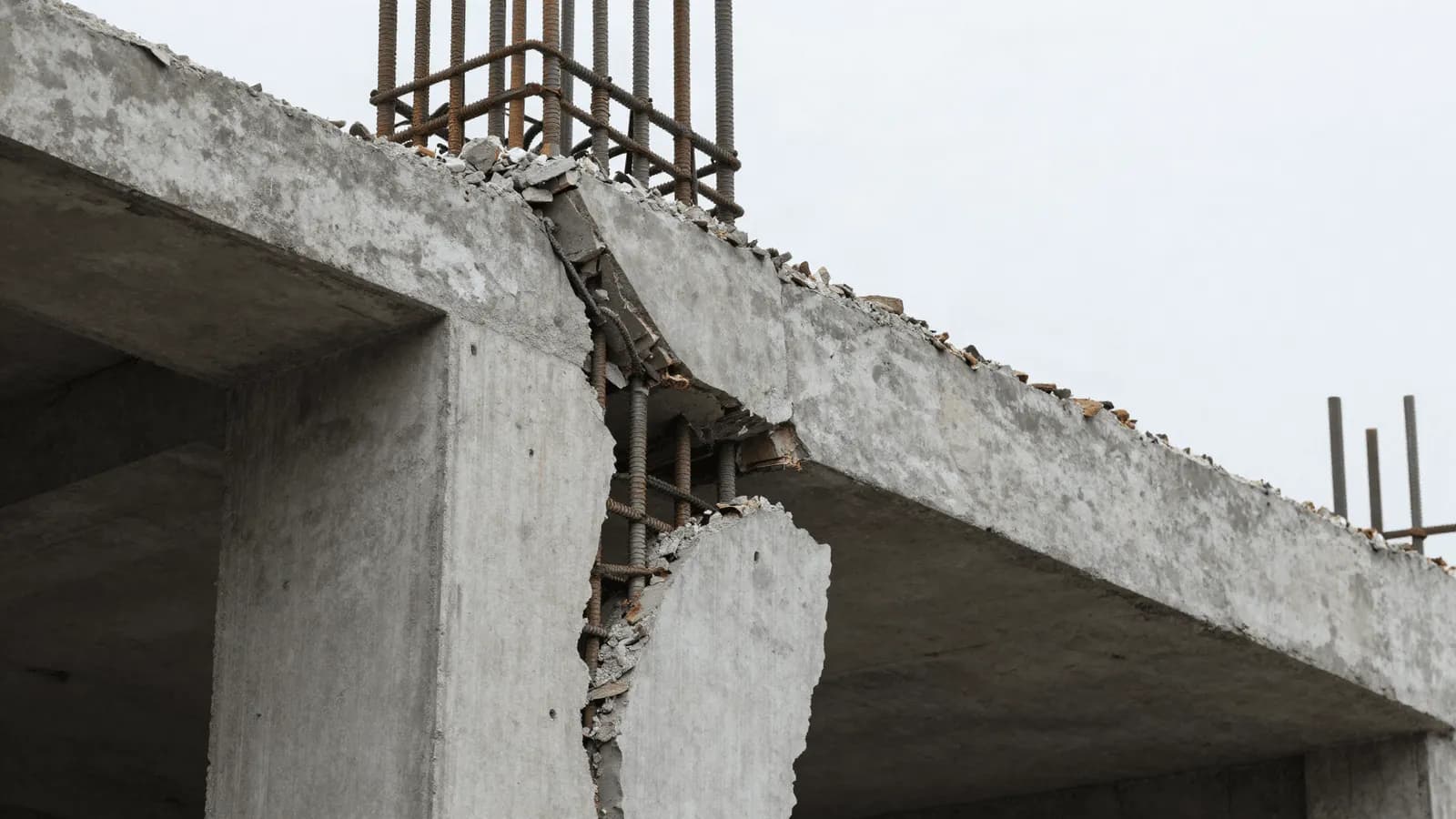
When an earthquake is reported at 110 kilometres depth, the natural assumption is that distance from the surface protects you. It usually helps. It does not save you, and the reasons are worth understanding, because they explain most of what determines whether an earthquake kills anyone.
Magnitude is not the thing that breaks buildings
Magnitude measures energy released at the source. It is one number for the whole event, and it tells you nothing about what happened where you were standing.
Three other measures do the work.
Intensity
Measured on the Modified Mercalli scale, intensity describes shaking and its effects at a specific place. One earthquake has many intensity values. Colombia's August event reached MMI VIII, severe, near the epicentre and far less further away.
Peak ground acceleration
PGA is how hard the ground accelerates, expressed as a fraction of gravity. It is the number engineers design to. The 0.427 g recorded at Jamundi means the ground was accelerating at roughly 43 per cent of gravity, which is a violent sideways shove for a structure designed to resist only downward load.
Duration and frequency
A short sharp jolt and two minutes of sustained shaking are different events for a building. Cyclic loading fatigues connections and progressively cracks masonry. Colombia's shaking lasted around two minutes, and duration is one of the most damaging parameters there is.
Frequency content matters just as much. Every building has a natural period, roughly proportional to its height. When the shaking's dominant frequency matches it, the structure resonates and the motion amplifies. This is why a given earthquake can leave low buildings standing and damage tall ones, or the reverse.
What depth actually changes
A shallow earthquake concentrates its energy. Directly above the rupture, shaking is extreme. Fifty kilometres away it drops off fast.
A deep earthquake does the opposite. The energy travels further to reach anywhere, so the peak is lower, but the shaking is distributed across a much larger footprint. The trade is intensity for area.
That is exactly what Colombia experienced: severe but not extreme shaking, spread wide enough to be felt in 32 departmental capitals and to cause building collapses in cities well away from the epicentre.
Deep earthquakes are also physically unusual. At 110 km, rock under that pressure and temperature should deform rather than snap. Intermediate-depth events happen inside subducting slabs, which stay cool enough and brittle enough to fracture as they descend.
Soil decides more than most people realise
Two identical buildings a kilometre apart can behave completely differently, because of what is under them.
Soft sediment amplifies seismic waves. Ground motion that is moderate on bedrock can be several times larger on soft alluvium, and river valleys and reclaimed land are where cities tend to be built. Mexico City's catastrophic 1985 damage, from an earthquake centred hundreds of kilometres away, is the textbook case, caused by an old lake bed amplifying and prolonging the shaking.
Two related failures matter as much:
- Liquefaction. Saturated loose sand loses strength under shaking and behaves like a fluid. Buildings sink or tilt while remaining structurally intact.
- Landslides. On steep terrain, shaking triggers slope failure. In mountainous regions this frequently kills more people than the shaking, and it is what cuts the roads that rescue teams need.
The construction that fails
Earthquakes do not kill people. Buildings do. The failure modes are well known and consistent worldwide.
- Unreinforced masonry. Brick and stone with no steel. Strong in compression, almost helpless against lateral load. Historic churches and older housing.
- Soft storeys. An open ground floor for parking or shops beneath solid floors above. The flexible level collapses and the building drops onto it.
- Non-ductile concrete frames. Insufficient or badly detailed reinforcement in columns, so they shatter rather than bend.
- Pounding. Adjacent buildings of different heights swaying out of phase and striking one another.
- Non-structural killers. Parapets, facades, unbraced ceilings, water tanks and unsecured heavy furniture cause a large share of injuries in buildings that never come close to collapse.
That last category is the most fixable thing in this entire article, and it is where household preparation actually pays, as set out in our practical safety guide.
Why codes work
Modern seismic design does not aim to keep buildings undamaged. It aims to keep them standing long enough for everyone to get out. A code-compliant building in a severe earthquake may be a write-off and still be a success by design.
The evidence that this works is overwhelming and comes from natural experiments: near-identical earthquakes in places with and without enforced codes produce death tolls that differ by orders of magnitude.
The catch is enforcement and retrofit. A code adopted in 1998 does nothing for a building put up in 1962, and most of any city's building stock predates its current rules. Which is why the honest summary of earthquake risk is not about geology at all. It is about what got built, when, on what, and whether anyone checked.
The event that prompted this piece is described in our report on the Colombia earthquake.
Published in The Outspoken Digest
Editorial desk
Outspoken Digest NewsroomReports for The Outspoken Digest across Latest Trends, Lifestyle.
Newsletter
The Digest, in your inbox
One edition, sent when it is ready. No noise, and your address is never passed on.
Read Next
More Latest Trends →
Federal Agents Search Rep. Ilhan Omar's Washington Home Three Weeks Before the Midterms, and She Calls It Intimidation
Oct 13, 2026/2 min read
Iran Calls the US Reply on Hormuz 'Inadequate' as Two Indian Seafarers Go Missing After a Tanker Is Hit Off Oman
Oct 13, 2026/2 min read
Trump Declares a Russia-Ukraine 'Energy Ceasefire' and Moscow Keeps Hitting Ukraine's Power Plants, Zelenskyy Says
Oct 13, 2026/2 min read

Saudi Arabia Vows a Serious Response After a Houthi Missile Killed 13 at Riyadh Airport as Trump Weighs Joining
Oct 13, 2026/2 min read