Earthquake Safety, Compared: What the Gulf, the US and Europe Actually Tell You to Do
Drop, Cover, Hold On is the near-universal instruction, and the exceptions matter. Here is the official guidance from the UAE, Saudi Arabia, the United States and Europe, and where it diverges.
Wednesday, August 12, 2026/5 min read
Earthquakes cannot be predicted or prevented. What can be changed is what happens in the ten seconds after the shaking starts and in the years before it, and on that, national guidance is far more consistent than people expect.
Here is what the main authorities actually say, and where they differ.
During the shaking: Drop, Cover, Hold On
This is the near-universal instruction. The US Geological Survey, FEMA and Ready.gov, the CDC, the Great ShakeOut programme, European civil protection agencies and Gulf authorities all converge on it.
- Drop onto your hands and knees immediately. This stops you being knocked over and lets you move.
- Cover your head and neck. Get under a sturdy table if one is within reach. If not, move against an interior wall away from windows and anything that can fall on you.
- Hold On to your shelter and be ready to move with it, because furniture slides during strong shaking.
The reasoning is that most injuries come from falling objects and flying glass, not from buildings collapsing. In any structure built to a modern code, staying put and protecting your head is overwhelmingly the safest action.
The things guidance explicitly tells you not to do
- Do not run outside. The most dangerous place in an earthquake is usually the ground immediately outside a building, where facades, glass, parapets and tiles land.
- Do not stand in a doorway. This advice comes from adobe construction where the frame was the strongest element. In modern buildings a doorway offers no more protection than anywhere else and none from falling objects.
- Do not use lifts.
- Do not light a flame until you know there is no gas leak.
Where you are changes the action
- In bed: stay there, turn face down, cover your head with a pillow. Getting up in the dark among broken glass causes more injuries than it prevents.
- Outdoors: move to open ground away from buildings, walls, trees and power lines, then drop.
- Driving: pull over clear of bridges, overpasses and overhead cables, stay in the vehicle with the handbrake on.
- On a coast: if shaking is strong or lasts more than about a minute, move inland or to high ground as soon as it stops, without waiting for an official tsunami warning. The shaking is the warning.
- Wheelchair user: lock the wheels, lean forward and cover your head and neck. Guidance for people who cannot drop is one of the weakest areas in most national material, a gap we have written about in the context of disability and disaster planning.
The Gulf: lower hazard, real exposure
The Gulf is not California, and it is not risk-free either. The UAE, Qatar, Bahrain and Kuwait sit at moderate distance from the seismically active Zagros belt in Iran and from the Makran subduction zone off Pakistan and Oman. Distant large earthquakes are regularly felt in Gulf high-rises, and the eastern edge of the region, particularly Oman and parts of the UAE's east coast, carries more direct exposure.
The UAE's National Emergency Crisis and Disasters Management Authority, NCEMA, coordinates preparedness and operates the national early warning system that issues alerts by text message, working with Civil Defence and emirate-level response teams. The UAE also applies seismic provisions in its building codes, which is the single most consequential form of protection available in a region of tall buildings.
Saudi Arabia's civil defence issues comparable guidance, and the western part of the kingdom near the Red Sea rift has genuine seismic and volcanic history.
The practical Gulf-specific points:
- In a high-rise, expect long, slow swaying from a distant large earthquake rather than sharp jolting. Tall buildings amplify long-period motion. This is alarming and generally not dangerous. Drop, cover and hold on, then wait.
- Take the stairs afterwards, never the lift, and expect lifts to be out of service while they are inspected.
- Register for official alerts and follow civil defence channels rather than social media, which during any regional tremor fills immediately with prediction claims of the kind we examine in our piece on earthquake prediction.
The United States and Europe
US guidance, through FEMA, the CDC and the Earthquake Country Alliance, is the most developed public material available and is worth reading wherever you live. The Great ShakeOut drill, run annually and internationally, is its most effective element, because rehearsal is what makes the response automatic.
European guidance, strongest in Italy, Greece, Turkey and Romania, says the same things with more emphasis on older masonry, because Europe's exposure is dominated by historic buildings that predate any code. Italy's civil protection material puts particular weight on identifying safe spots room by room in advance and on securing furniture, which is the appropriate emphasis for that building stock.
Before: the part that actually decides the outcome
Everything above is about ten seconds. What determines whether those seconds matter is what you did beforehand.
- Secure the heavy things. Bookcases, wardrobes and water heaters strapped to walls. Televisions anchored. Nothing heavy above a bed. This is the highest-value action in the entire list and it costs very little.
- Know your building. When was it built, and under which code? Does it have an open ground floor beneath solid storeys? The failure modes are described in how earthquake damage happens.
- Agree a family plan. One out-of-area contact everyone calls, because local networks fail and long-distance often works. One meeting point.
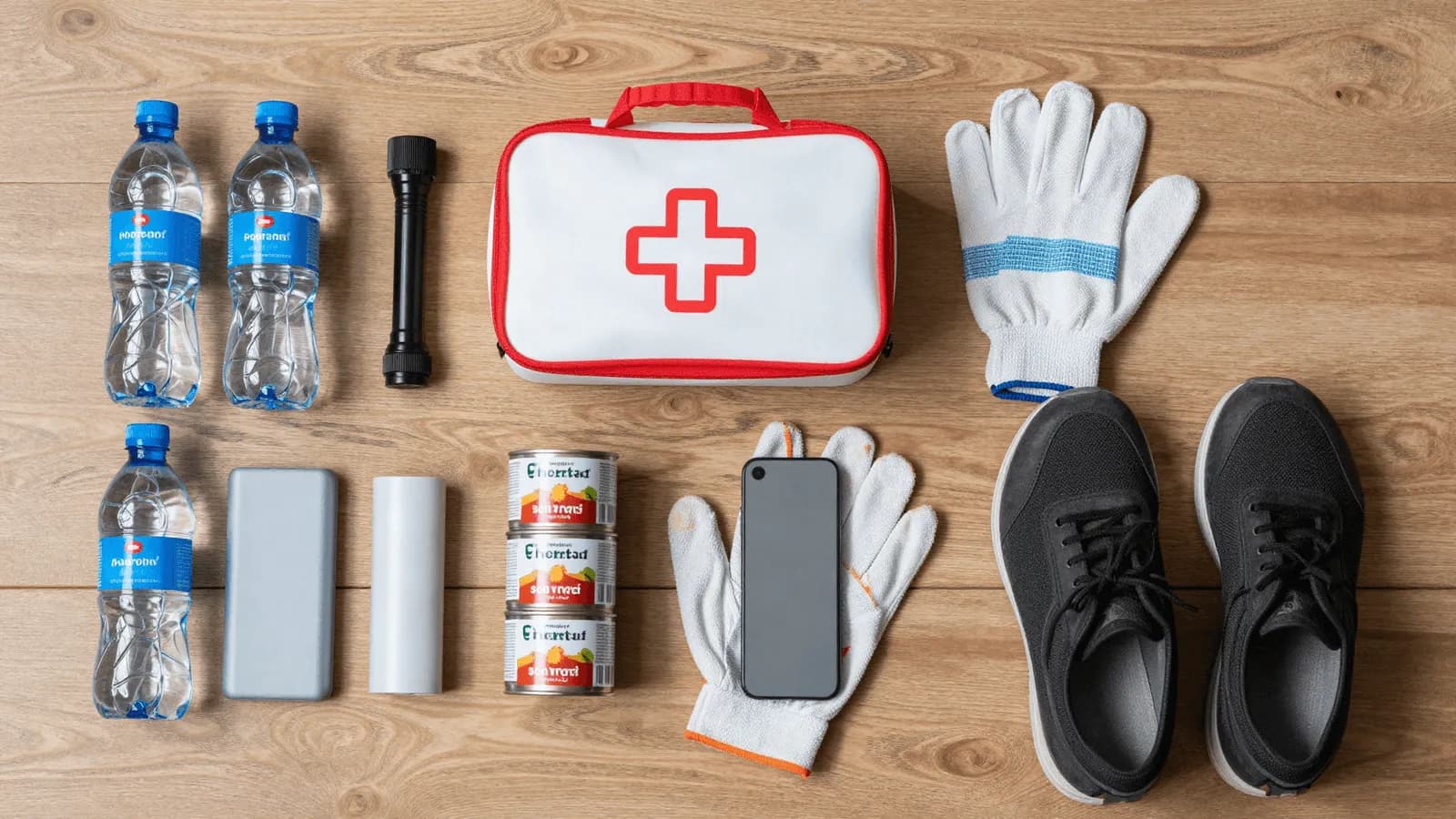
- Keep 72 hours of supplies. Water at four litres per person per day, food, torch, power bank, first aid, medication, cash, sturdy shoes and gloves by the bed.
- Learn your utility shut-offs and keep the tool with them.
- Photograph your documents and store them somewhere you can reach from anywhere.
After
Expect aftershocks, and treat each one as a new event. Check yourself before others. Do not enter damaged buildings. Text rather than call, to keep networks clear for emergency traffic. Turn off gas only if you smell or hear a leak, since needlessly shutting it off requires a professional to restore.
None of this is exotic and none of it depends on knowing when an earthquake will come, which is fortunate, because nobody does.
Published in The Outspoken Digest
Editorial desk
Outspoken Digest NewsroomReports for The Outspoken Digest across Latest Trends, Lifestyle.
Newsletter
The Digest, in your inbox
One edition, sent when it is ready. No noise, and your address is never passed on.
Read Next
More Lifestyle →
Tarek Atoui Opens Hold in Tate Modern's Turbine Hall, Turning the Cavernous Space Into a Giant Sound Instrument
Oct 13, 2026/2 min read
Jodie Comer, Adrian Lester and a Mary Whitehouse Play Take Top Honours at the 2026 UK Theatre Awards
Oct 12, 2026/2 min read

Andrew Scott's Elsinore Opens the London Film Festival With Tears, an Ovation and a Disco Tribute
Oct 9, 2026/3 min read