No, Nobody Predicted It: Earthquake Prediction, Frank Hoogerbeets and the Planets
After every major earthquake, a prediction resurfaces that appears to have called it. Here is how that trick works, why seismologists say prediction is not currently possible, and what forecasting can actually do.
Wednesday, August 12, 2026/4 min read
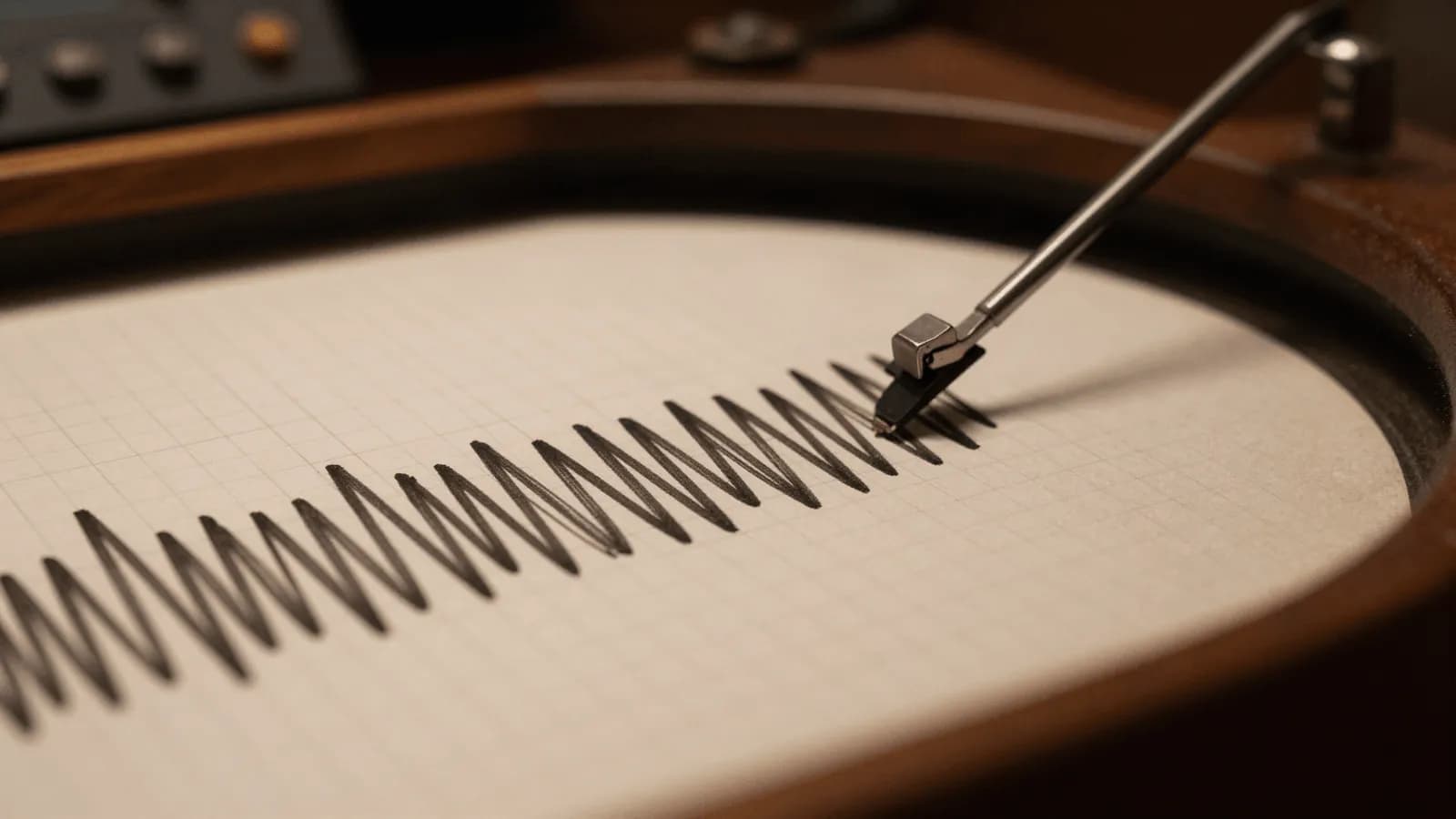
Within hours of the earthquake in Colombia, the familiar cycle started. Screenshots circulated of a post supposedly predicting it, attention returned to a Dutch researcher named Frank Hoogerbeets and his organisation SSGEOS, and a large number of people concluded that someone knew and nobody listened.
It is worth taking that seriously enough to explain properly, because the alternative is that people spend their attention on predictions instead of on the preparation that would actually protect them.
What scientific consensus says
The position of the US Geological Survey and of seismological bodies generally is unambiguous. Neither the USGS nor any other scientist has ever predicted a major earthquake, and they do not know how, and they do not expect to know how in the foreseeable future.
A genuine prediction has to specify three things narrowly enough to be useful and falsifiable: location, time window, and magnitude. Anything vaguer cannot be acted on and cannot be scored.
The claim, and the criticism of it
Hoogerbeets and SSGEOS relate seismic activity to the geometry of the solar system, arguing that planetary alignments and conjunctions correspond to periods of elevated earthquake risk. He warned of heightened risk in the opening days of January 2026, describing a critical window around 7 to 9 January.
He is best known for a post shortly before the February 2023 Turkey and Syria earthquake, which is the event that made him internationally visible.
Working seismologists reject the method. The head of the seismology department at Egypt's NRIAG, Sherif al-Hadi, described the claims as unscientific, inaccurate and irresponsible. Fact-checking organisations have reached the same conclusion repeatedly, and the criticism is consistent: the alerts are not specific enough to be testable, covering broad regions and multi-day windows.
The physical objection is separate and stronger. The tidal forces exerted on Earth's crust by planetary alignment are extraordinarily small, orders of magnitude below the stresses that accumulate on faults. The Moon and Sun exert vastly larger tidal forces, and the measurable effect of those on earthquake triggering is at best marginal and statistically slippery.
Why a prediction seems to hit
Three ordinary effects explain almost all apparent successes, and none require the method to work.
The base rate
The Earth produces roughly 15 earthquakes of magnitude 7 or above every year, and well over a hundred above magnitude 6. Predict a large earthquake somewhere in a seismically active region within the next week, and you are betting on something that happens routinely.
Elastic scoring
If the alert names several regions and a window of days, a hit can be claimed almost whenever anything happens. Nobody counts the windows that passed quietly, because a non-event generates no screenshot.
Selective memory
People share the post that matched. Hundreds of others are never mentioned again. This is the same asymmetry that keeps every prophecy business running, and it is not usually dishonest. It is simply how memory works when you are frightened.
A rigorous test would require registering predictions in advance, in a fixed format, and scoring every one, hits and misses together. That test has never been passed by any prediction method.
What forecasting genuinely does
Prediction is impossible. Forecasting is real, useful, and different, and conflating them costs public understanding a great deal.
- Probabilistic hazard mapping. Seismologists can state the likelihood of a given level of ground shaking at a location over decades. This is what building codes are set from, and it works.
- Aftershock forecasting. After a large earthquake, the statistical behaviour of aftershocks is well characterised. Authorities can say with real confidence how likely a magnitude 6 aftershock is in the next week. Colombia recorded more than 100 aftershocks.
- Early warning. Systems in Japan, Mexico, the US west coast and elsewhere detect the fast, non-destructive P-waves and issue an alert seconds before the damaging S-waves arrive. Seconds to tens of seconds is enough to stop a train, halt a surgery or get under a table. It is not prediction. The earthquake has already begun.
Why this matters more than it seems
Belief in prediction is not harmless, and the damage runs in two directions.
False alarms cause real cost: panic, evacuations, people sleeping outside for days, and in some documented cases injuries during the panic itself rather than from any earthquake. Regional tsunami and earthquake scares tied to viral predictions have done exactly this.
The deeper harm is displacement of effort. Every hour spent watching for a warning that will not come is an hour not spent securing a bookcase, agreeing a family meeting point, or asking whether the building is on a soft storey. Those measures work, they are cheap, and they are described in our guide to earthquake safety across the Gulf, the US and Europe.
The honest summary
Earthquakes cannot currently be predicted, and they cannot be prevented. Nothing about that is likely to change soon.
What can be changed is everything that determines whether an earthquake becomes a disaster: how buildings are constructed, what is bolted to the wall, whether hospitals stay standing, and whether people know what to do in the ten seconds they get. As we set out in how earthquake damage actually happens, the geology is fixed and the outcome is not.
That is a less satisfying answer than a date on a calendar. It is the one that saves lives.
Published in The Outspoken Digest
Editorial desk
Outspoken Digest NewsroomReports for The Outspoken Digest across Latest Trends, Lifestyle.
Newsletter
The Digest, in your inbox
One edition, sent when it is ready. No noise, and your address is never passed on.
Read Next
More Latest Trends →
Federal Agents Search Rep. Ilhan Omar's Washington Home Three Weeks Before the Midterms, and She Calls It Intimidation
Oct 13, 2026/2 min read
Iran Calls the US Reply on Hormuz 'Inadequate' as Two Indian Seafarers Go Missing After a Tanker Is Hit Off Oman
Oct 13, 2026/2 min read
Trump Declares a Russia-Ukraine 'Energy Ceasefire' and Moscow Keeps Hitting Ukraine's Power Plants, Zelenskyy Says
Oct 13, 2026/2 min read

Saudi Arabia Vows a Serious Response After a Houthi Missile Killed 13 at Riyadh Airport as Trump Weighs Joining
Oct 13, 2026/2 min read