The DeepSeek Moment: How One Cheap Model Rattled Wall Street
A Chinese startup's R1 model wiped nearly $600 billion off Nvidia's value in a single day, exposing how fragile the AI spending story had become.
Outspoken Digest Business Desk
Wednesday, January 29, 2025/4 min read
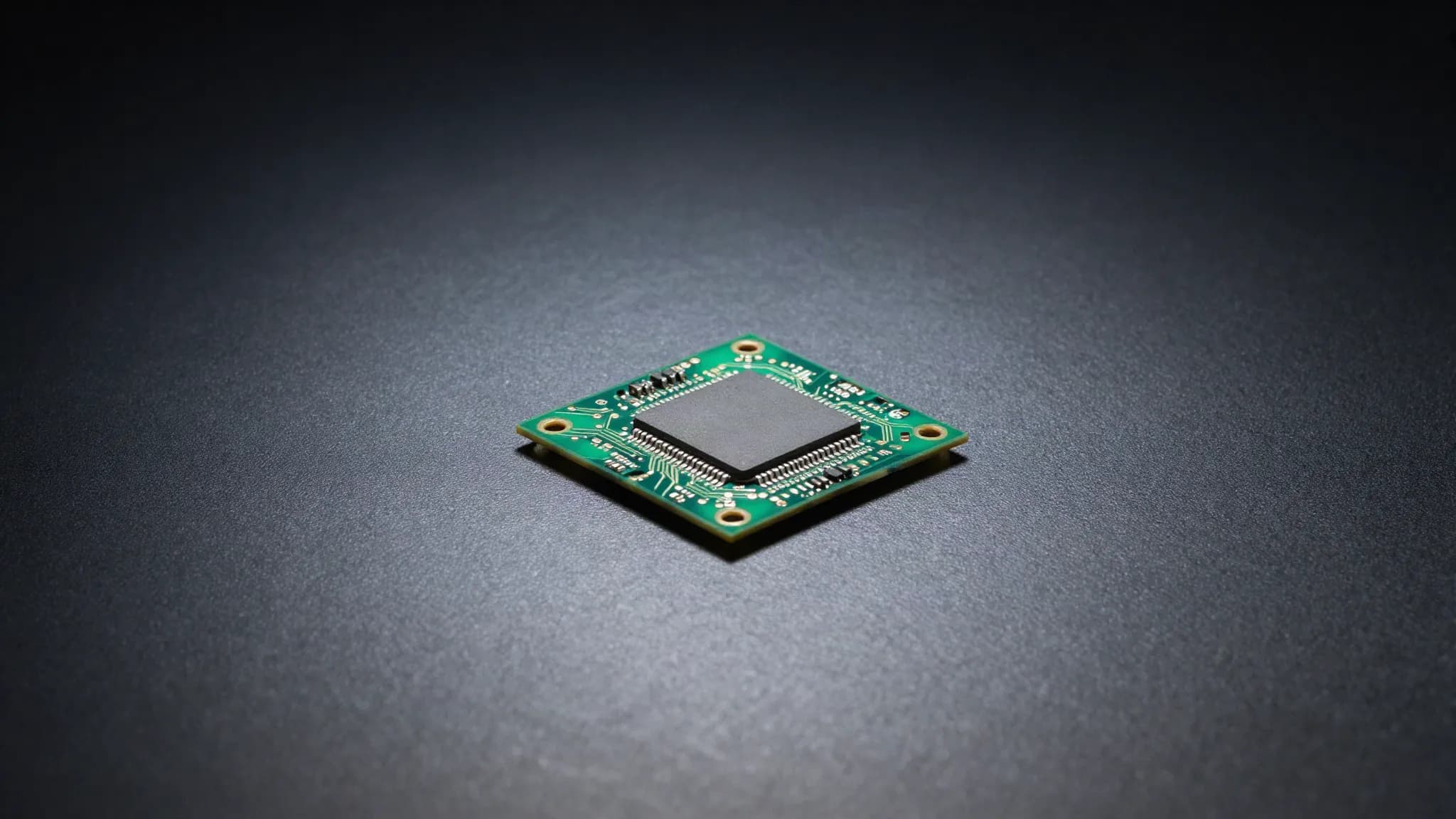
Monday morning, the market decided a Chinese startup most investors had never heard of a week earlier was worth trillions of dollars in reassessed risk. By the time trading closed, Nvidia had lost close to $600 billion in market value, the largest single-day loss for any company in history. The trigger was not a chip shortage or a recall. It was a free app.
The company is DeepSeek, and the model is R1, a reasoning system the Hangzhou-based startup released as open source around January 20. What set off the alarm was not just that R1 performs competitively with OpenAI's o1 on math, coding and science benchmarks. It was the claim, impossible to verify precisely but plausible enough to spook traders, that DeepSeek trained and runs it for a fraction of what Western labs spend.
Why did Nvidia's stock crash after DeepSeek's release
According to market coverage of the selloff, Nvidia shares fell 17% on January 27, the single day that erased the roughly $600 billion figure now attached to this story. Forbes and other outlets tied the drop directly to fear that DeepSeek had shown frontier-level AI does not require the enormous fleets of the most expensive Nvidia chips that the entire AI infrastructure trade had been built around.
The logic is straightforward once you see it: if a lab can train a competitive reasoning model without hundreds of thousands of top-tier GPUs, then every projection of how many chips hyperscalers need to buy over the next five years gets shakier, and Nvidia's valuation had been priced on those projections holding.
What DeepSeek R1 actually does differently
R1 is a reasoning model in the same category as OpenAI's o1, meaning it works through a problem step by step before answering rather than producing a response in one pass. CBS News's explainer on the model notes that DeepSeek released it as open source and free to use, in contrast to OpenAI's subscription-gated equivalent, which meant developers everywhere could download it, inspect it and run it themselves within days of release rather than taking a company's benchmark chart on faith.
DeepSeek has also published technical papers describing training approaches designed to squeeze more performance out of less compute, including working around export restrictions that limit China's access to the most advanced Nvidia chips. Whether every efficiency claim in those papers survives independent scrutiny is still being debated among researchers, but the broad direction, doing more with constrained hardware, lines up with what China's chip-starved AI industry has been forced to prioritize since U.S. export controls tightened.
Was the market reaction to DeepSeek overblown
Not everyone treated the crash as rational. Some analysis framed the dip as an overdue correction to an AI infrastructure trade that had gotten ahead of itself, rather than proof that demand for Nvidia's chips is actually collapsing. Training efficiently is not the same as running inference for hundreds of millions of users cheaply, and the total amount of compute the world wants to throw at AI has kept climbing all year regardless of any single model's training cost.
What the DeepSeek shock revealed about the AI trade
What the episode exposed, more than any specific number about training cost, is how much of the AI infrastructure boom had been priced on a story rather than a spreadsheet: that only a handful of well-funded American labs could plausibly build frontier models, and that they would need essentially unlimited chip budgets to do it. DeepSeek did not have to prove that story wrong forever. It just had to make investors briefly doubt it, and for one Monday in January, that was enough to move markets around the world.
How other tech stocks reacted to the DeepSeek news
Nvidia was not alone in feeling the pressure. Microsoft, one of OpenAI's largest backers and a company that has poured tens of billions of dollars into AI data center capacity, fell roughly 7.5% in the days following the news, while chip supplier Broadcom dropped around 11% over the same stretch. Utility companies with heavy exposure to data center power contracts saw their shares wobble too, a sign of how far the DeepSeek shockwave traveled beyond the AI sector's most obvious names.
ASML, the Dutch company that makes the extreme ultraviolet lithography machines used to manufacture the most advanced chips, also slid, illustrating how tightly the entire semiconductor supply chain has become tied to a single narrative about AI compute demand. When that narrative wobbles, even for a day, the tremor runs through companies that have never sold a single AI model to a single customer.
What happens next for the US-China AI competition
The longer-term question is whether DeepSeek's approach becomes the norm rather than the exception. If training efficient, competitive models with constrained hardware turns out to be reproducible rather than a one-off feat, U.S. export controls on advanced chips start to look like a much blunter tool than policymakers intended, slowing China's access to the newest hardware without necessarily slowing its access to frontier-level AI capability.
For now, DeepSeek has done what it needed to do: force every lab, every investor and every government watching this space to stop assuming that scale alone decides who wins the AI race. That reassessment, more than the stock chart from one January Monday, is likely to be what people remember this moment for a few years from now.
Published in The Outspoken Digest
Editorial desk
Outspoken Digest Business DeskCompanies, markets and the money moving through the region.
Newsletter
The Digest, in your inbox
One edition, sent when it is ready. No noise, and your address is never passed on.
Read Next
More Technology →
SpaceX Agrees to Buy a Nationwide Block of 800 MHz Spectrum, Reportedly for $8 Billion, to Back Starlink Mobile
Oct 9, 2026/3 min read
Webb and MeerKAT Find the Most Distant Fast Radio Burst Yet, From a Small Galaxy About 11 Billion Years Back
Oct 9, 2026/2 min read
Finland Orders Google to Stop Forest Clearing at Two Data Centre Sites Until Environmental Reviews Finish
Oct 9, 2026/3 min read

Manus Raised More Than $500 Million Six Months After China Forced Meta to Unwind Its $2 Billion Takeover
Oct 9, 2026/2 min read