How Diving Accidents Are Actually Analysed: The Four Links in the Chain
Almost every fatality report ends with drowning, which tells you nothing. Investigators use a four-part chain instead: trigger, disabling agent, disabling injury, cause of death. Here is how to read one.
Wednesday, August 12, 2026/4 min read
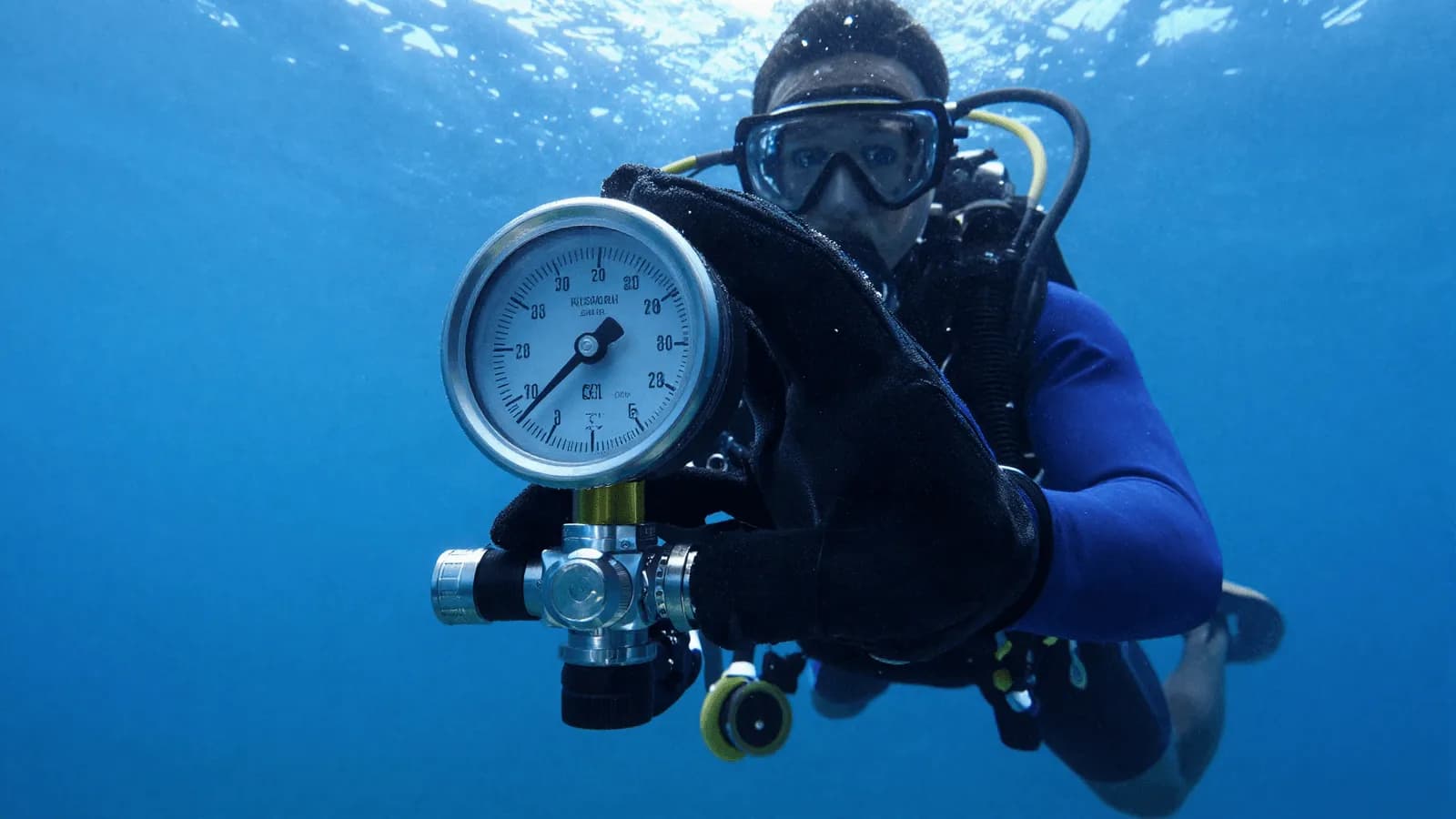
Read enough diving fatality reports and you notice something unhelpful: more than eight in ten give drowning as the cause of death. That is true and almost useless. Drowning is what happens to an unconscious person underwater. It describes the medium, not the accident.
Investigators solved this decades ago by refusing to ask a single question. Instead they reconstruct a chain, and the standard version has four links.
The four links
1. The trigger
The first thing that went wrong. It is usually small and usually survivable: a free-flowing regulator, a lost buddy, a strong current, a mask flooded at the wrong moment, an entanglement, a piece of kit that came adrift.
Triggers are where the dramatic detail lives, which is why journalism stops here. A tuna on a hook is a trigger. So is a jammed torch.
2. The disabling agent
What turned the problem into an emergency. Insufficient breathing gas is the most common by a wide margin. Others include entrapment, buoyancy trouble, and equipment misuse under stress.
This is the link where the accident becomes survivable or not, and it is almost always about time and gas. A diver who is entangled with plenty of gas and a working plan has a problem. The same diver with a dwindling supply has an emergency.
3. The disabling injury
What physically incapacitated the diver. Asphyxia, arterial gas embolism from a rapid ascent, cardiac events, and trauma are the recurring entries.
Arterial gas embolism deserves a mention because it is the signature injury of panic. A diver who bolts for the surface holding their breath can be injured in seconds, from a depth that sounds trivial. We explain the mechanism in our piece on what pressure does to the body.
4. The cause of death
The line on the certificate. Usually drowning, sometimes cardiac. Analytically it is the least informative of the four.
Why the model changes what you conclude
Take a hypothetical that resembles many real cases. A diver at 30 metres snags a fin on a line, struggles, breathes hard, discovers the cylinder is lower than expected, ascends fast, arrives unconscious, drowns.
Report it as drowning and the lesson is nothing. Run it through the chain and you get four separate intervention points: carry a cutting tool where you can reach it, check gas more often at depth, practise a controlled ascent so the panic response has something to fall back on, and dive with someone close enough to matter.
This is why the annual fatality data is worth reading properly rather than skimming for a headline number.
The two things the data keeps saying
Health, not skill
A large share of recreational fatalities involve older divers and pre-existing cardiovascular disease. Recent data puts around two thirds of recorded fatalities at age 50 or above, with an average in the mid fifties.
That is not an argument against diving in your fifties, which is a perfectly ordinary thing to do. It is an argument for taking the medical questionnaire seriously rather than treating it as paperwork, and for accepting that a discipline requiring sustained exertion in cold water while carrying weight is a cardiac stress test conducted in the worst imaginable location.
Gas management, not equipment failure
Modern regulators very rarely fail outright. Running out of gas is not usually an equipment story. It is a monitoring story, and it is the most preventable item on the list.
How to read a report without fooling yourself
Two biases distort every discussion of a diving death, and they push in opposite directions.
The first is hindsight bias. Once you know the outcome, the fatal decision looks obvious. It was not obvious at the time, to a person who had made similar decisions safely many times.
The second is the comfort of distance. Every experienced diver reads a report and finds the detail that lets them conclude it could not happen to them: they were untrained, they were reckless, they went too deep. Sometimes that is fair. Often it is a way of not learning anything.
The productive question is narrower. Which single link in that chain do I have the weakest defence against, and what would I actually do?
Rehearsal beats knowledge
The chain breaks at the disabling agent far more often than at the trigger, and what breaks it is a rehearsed response rather than a known one.
- Practise deploying a cutting tool with either hand, wearing gloves.
- Practise a controlled ascent from depth, on a line, with a stop.
- Practise air sharing until it is boring.
- Agree with your buddy what proximity actually means before you get in.
- Know your gas consumption well enough to predict it rather than discover it.
None of this is glamorous, and all of it is what the chain analysis keeps pointing at. The dramatic part of an accident is rarely the part that kills you.
Published in The Outspoken Digest
Editorial desk
Outspoken Digest Diving DeskCovers freediving, recreational and technical diving, dive medicine and the incidents the sport learns from.
Newsletter
The Digest, in your inbox
One edition, sent when it is ready. No noise, and your address is never passed on.
Read Next
More Diving →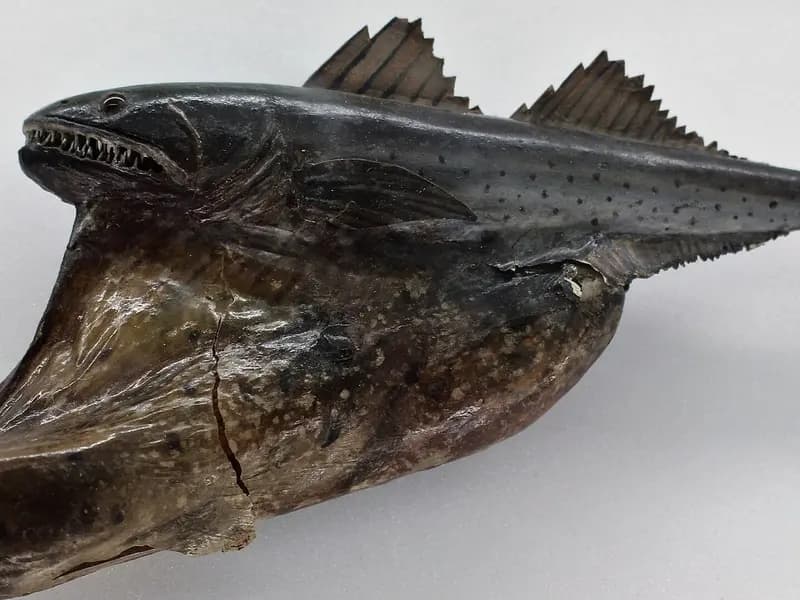
Black Swallower Filmed With a Hugely Swollen Belly 1,259 Metres Down Off Trinidad and Tobago
Oct 13, 2026/2 min read

Playing Recordings of a Healthy Reef Drew More Coral and Fish Larvae to Artificial Structures Off Hawaii
Oct 9, 2026/3 min read
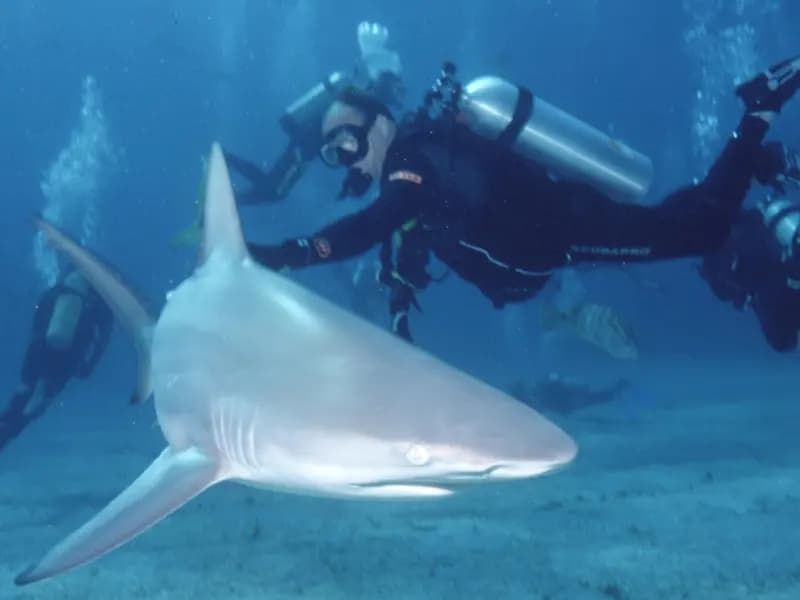
Blacktip Sharks Can Hear a Sound From Nearly 250 Feet Away and Swim Straight Toward or Away From It
Oct 1, 2026/2 min read
A Sea Turtle Species Never Recorded Nesting in the United States Laid Eggs on a Southern California Beach
Oct 1, 2026/2 min read