A Paris Simulation Found Drones Could Deliver a Defibrillator Within Five Minutes in 95 Per Cent of Cardiac Arrests
Modelling 28,349 real cardiac arrests across seven departments outside central Paris found drone-delivered defibrillators reached the scene within five minutes in more than 95 per cent of cases, against 30 to 40 per cent for fetching a fixed device by road.
Sunday, September 27, 2026/2 min read
A computer simulation of 28,349 real out-of-hospital cardiac arrests around Paris has found that delivering automated external defibrillators by drone could put a device at the patient's side within five minutes in more than 95 per cent of cases, compared with 30 to 40 per cent when someone has to fetch an existing wall-mounted device by road. Dr Hillary Minka, an emergency physician at Lariboisiere Hospital, presented the findings on Saturday 26 September at the European Emergency Medicine Congress, with the study also covered by DroneXL.
Why every minute matters here
Survival from out-of-hospital cardiac arrest falls sharply with every minute that passes before a shock is delivered, which is why emergency medicine has spent two decades pushing to get automated external defibrillators, or AEDs, physically closer to where people actually collapse rather than concentrated in hospitals. The Paris team modelled seven departments of the Ile-de-France region, deliberately excluding the dense central core of the city itself, and tested three strategies against the same set of real recorded cardiac arrest locations: relying only on the existing network of fixed AEDs, relying only on drones dispatched from bases, and combining the two.
What the numbers actually showed
The existing fixed AED network, even after modelling an increase from roughly 1,900 units to 3,605, still left large gaps in fast coverage across the study area. A drone network alone, using around 200 bases, achieved delivery within five minutes in more than 95 per cent of the simulated cases, and a combined strategy of 200 drone bases plus 871 fixed AEDs reached 99.4 per cent coverage of the full set of 28,349 cases. The time savings were largest in peripheral and heavily congested areas, the places where a bystander running to the nearest wall-mounted AED and back, or where an ambulance stuck in traffic, costs the most time, with drone delivery cutting access times by more than ten minutes in some of those locations.
What the study cannot tell you yet
This was a simulation built on straight-line distance estimates between drone bases and incident locations, not an actual fleet of drones flying real missions, so it does not account for airspace regulation, weather, battery range in practice, or the logistics of who retrieves the AED and operates it once it lands. Minka was careful to frame the technology as additive rather than transformative on its own, saying drones "will never replace bystanders, resuscitation efforts or emergency medical teams" but could serve as an additional link in the chain of survival, alongside CPR training and existing ambulance response.
Why Paris specifically, and what comes next
Ile-de-France's mix of dense urban cores, congested suburbs and more sparsely covered peripheral zones makes it a useful test bed for a technology whose benefit depends heavily on local geography, since a drone's advantage over road delivery is largest precisely where traffic or distance already slows a human responder down. The next step for a finding built entirely on simulation is a live pilot deployment measuring actual response times against the model's predictions, and Minka's team has not yet announced a start date for that phase, but the scale of the modelled improvement, from roughly a third of cases covered within five minutes to well over ninety, is large enough to justify testing it for real.
Published in The Outspoken Digest
Editorial desk
Outspoken Digest Health DeskMedicine, public health and the research behind the headlines, read carefully.
Newsletter
The Digest, in your inbox
One edition, sent when it is ready. No noise, and your address is never passed on.
Read Next
More Health →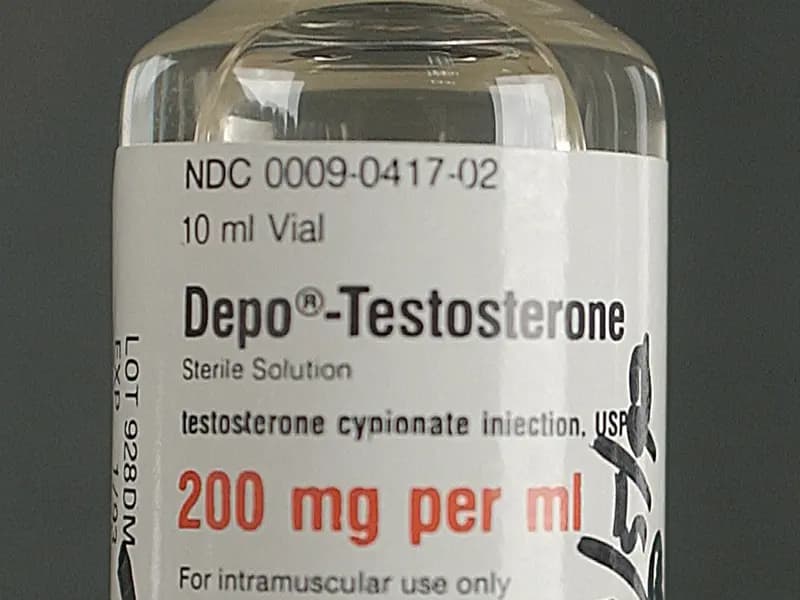
BMJ Analysis Warns Fast-Growing Private Testosterone Prescribing Could Land on the NHS
Oct 14, 2026/2 min read

Cochrane Review Finds Medical Cannabis Has No Clear Benefit for Insomnia, With Weak Evidence Either Way
Oct 13, 2026/2 min read

Lancet Commission Names 17 Threats to Global Health Through 2100, With Obesity the Largest by Burden
Oct 12, 2026/2 min read