Eight Orangutans Rescued From Borneo's Fires Are Released Into the Batu Nyambu Protected Forest
Three mothers with babies and two teenage males were moved to a 23,000-hectare reserve in West Kalimantan as El Nino-driven fires keep burning through habitat that holds half of Borneo's orangutans.
Sunday, October 11, 2026/2 min read
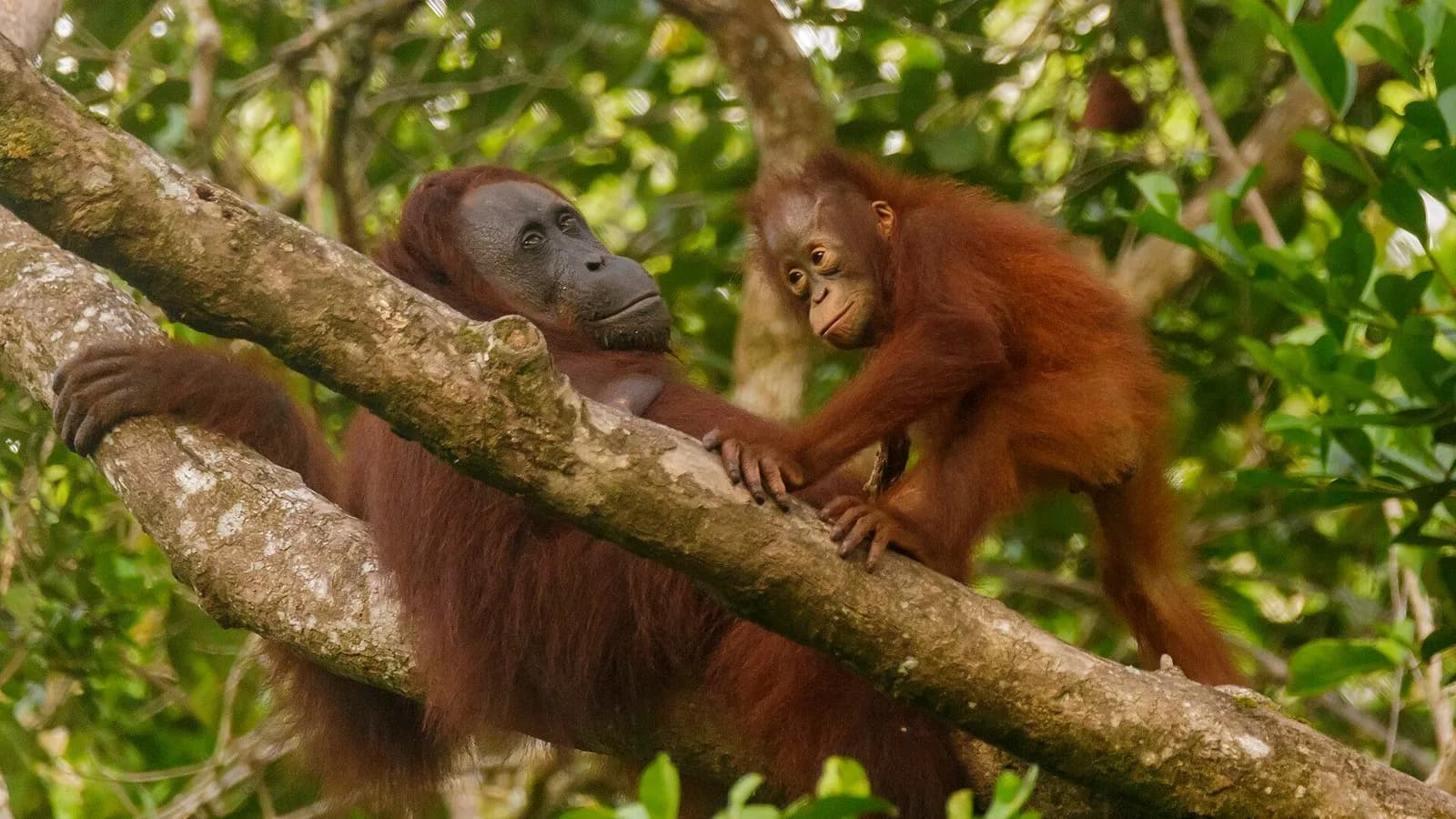
Eight orangutans that Indonesian rescuers pulled out of burning plantations have a new home. Three mother-and-baby pairs and two teenage males were released on Friday into the Batu Nyambu Protected Forest in West Kalimantan, a 23,000-hectare reserve of primary and secondary forest, Gulf News reported on Sunday.
They came from several sites, mostly plantations near their forest homes, that were razed by fires last month. Officials chose Batu Nyambu for its food and water and for its connection to other forests. The Forestry Ministry announced the release with a conservation group that reports name variously as International Animal Rescue Indonesia or YIARI; its chief executive, Karmele Llano Sanchez, called relocation a necessary step when habitat is no longer safe, The Jakarta Post says.
How many orangutans have been rescued from the fires?
West Kalimantan's conservation agency head, Murlan Dameria Pane, said 46 orangutans were rescued from fire threats between August and 9 October. Across Kalimantan, more than 270 wild animals had been rescued, rehabilitated or guided to safer habitats as of 10 October, The Star reports.
Not every rescue ends well. A male of about 20, named Sampurna, was found struggling to breathe on a palm oil plantation in Ketapang in early September and died hours later, the Forestry Ministry said. A female of three to four years, Novita, was found clinging to a nearly leafless tree in Central Kalimantan with burned palms and soles; she was taken to a rehabilitation centre, and staff will assess whether she can climb and survive in the wild once she heals.
Why are Borneo's fires so bad this year?
Forest and land fires have worsened as El Nino intensifies a long dry season; experts describe it as one of the strongest since records began about four decades ago. They also blame slash-and-burn land clearing. Government data show over 202,000 hectares burned from January to July, while the satellite monitor Nusantara Atlas counted nearly 896,000 hectares by the end of August. The haze has caused tens of thousands of respiratory illness cases and pollution spikes in Singapore and Malaysia, and Malaysia declared an emergency in Sarawak last week.
Fighting the fires is itself hard. Water shortages have hampered firefighters, and Japan has provided firefighting assistance to the island, The Star reports. Smoke has drifted as far as the Philippines, more than 800 kilometres away.
Why does this matter for orangutans?
Orangutans are critically endangered. The WWF estimates about 104,000 remain on Borneo and Sumatra, down from more than 230,000 a century ago. In September the IUCN warned that fires were burning habitats holding 52 per cent of Borneo's orangutan population.
A release does not end the story. The question for the dry weeks ahead is whether protected forests like Batu Nyambu can absorb more displaced animals, and whether the fires can be brought under control before the next rescue.
Published in The Outspoken Digest
Editorial desk
Outspoken Digest Science DeskReports for The Outspoken Digest across Technology, Latest Trends, Health.
Newsletter
The Digest, in your inbox
One edition, sent when it is ready. No noise, and your address is never passed on.
Read Next
More Technology →
Anthropic Researchers Warn Small AI Models Could Soon Copy Themselves Onto Smart TVs and Other Home Devices
Oct 13, 2026/3 min read

Microsoft Unveils Maia 300 With 288GB of HBM4 and a 96-Chip Rack, Claiming Up to Seven Times Maia 200 Throughput
Oct 13, 2026/2 min read

Nvidia Opens Its Vera Rubin Rack Designs to the Open Compute Project and Pushes Racks Up to 250 Kilowatts
Oct 13, 2026/2 min read

Bronze Ring Engraved With the Lighthouse of Alexandria Found in the Sunken Royal Palace on Antirhodos
Oct 13, 2026/2 min read