Entanglement Is a Skill Problem, Not a Knife Problem
Most divers carry something sharp and have never once deployed it underwater. The gap between owning a cutting tool and being able to use one in the dark, with one hand, is where people die.
Wednesday, August 12, 2026/4 min read
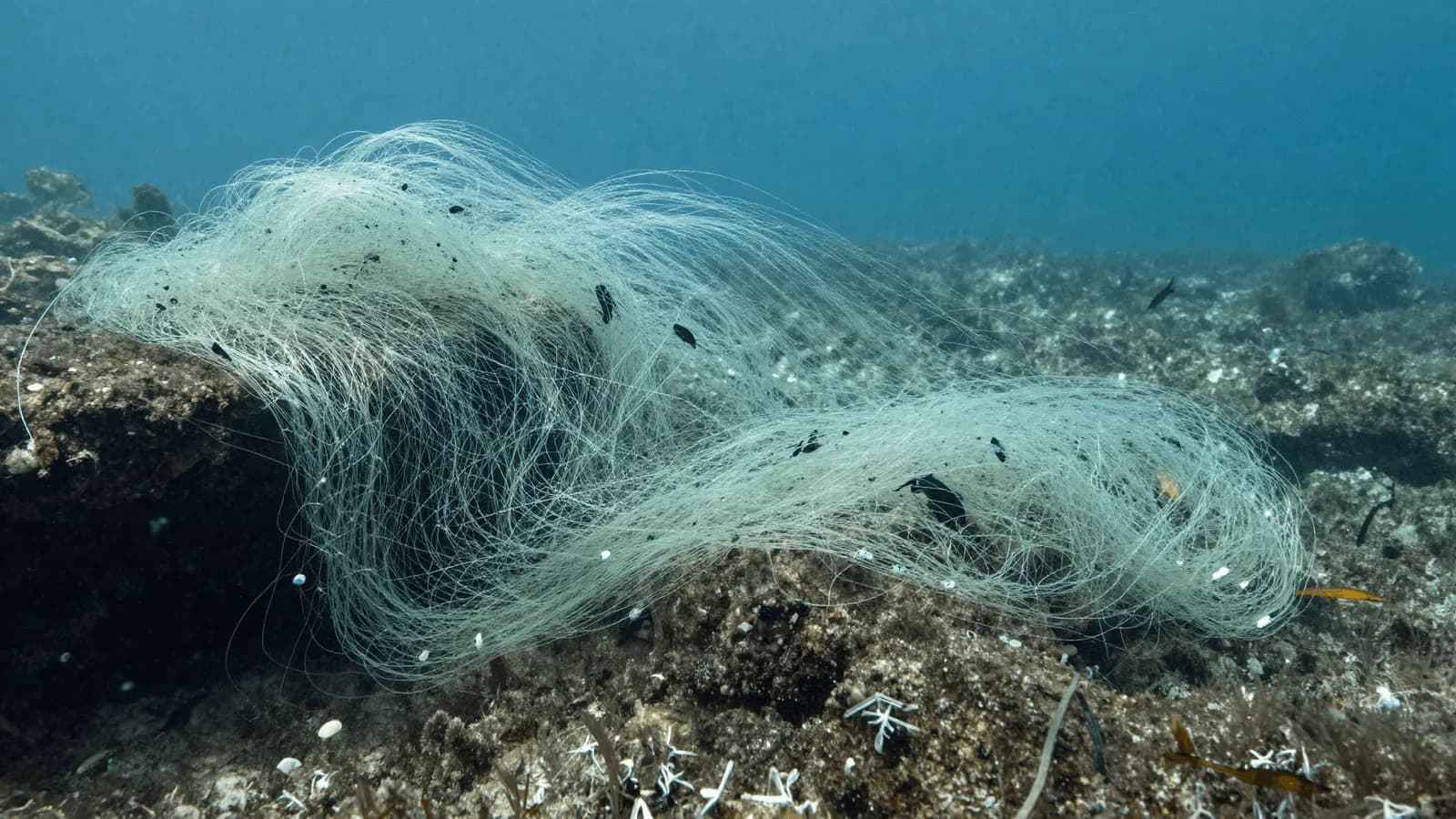
Ask a room of divers who carries a cutting tool and most hands go up. Ask who has deployed one underwater in the last year and the room goes quiet. Ask who has done it with their non-dominant hand, in gloves, without looking, and you will usually be left with the technical divers and nobody else.
That gap is the whole subject. Entanglement is common, rarely dangerous on its own, and occasionally fatal for reasons that have almost nothing to do with the line and everything to do with what happened in the following ninety seconds.
What you get caught on
Fishing line and net are the classic hazards, and they are worse than they look because monofilament is nearly invisible and does not stretch. Beyond that: shot lines and permanent moorings, kelp, discarded rope, wreck cabling, and on working sites the whole apparatus of ropes and mesh that makes aquaculture diving so consistently hazardous.
Where you get caught is predictable, and it is almost always behind you: the first stage and cylinder valve, the fin straps, and anything clipped off and dangling. This is the argument for streamlining that technical divers make and recreational divers ignore. A console swinging on a hose is a hook.
The response, in order
Stop
The single most valuable second is the one you spend not moving. Forward motion turns a snag into a wrap. Divers who thrash convert a nuisance into an entrapment in under ten seconds.
Establish neutral buoyancy and check gas
You need to be stable and you need to know your clock. Reading the pressure gauge at this point converts panic into arithmetic, which is the whole trick.
Look before you cut
Turn and see it if you can. Divers routinely cut the wrong thing, and the item people most often cut in error is a hose or their own harness.
Signal
Get your buddy's attention before you need them, not after. A tank bang or a light signal costs nothing.
Cut with the correct tool
Short, controlled strokes, tool moving away from hoses and away from you.
Reverse out
If it is a simple snag, backing along the path you came in on frees more divers than cutting does.
Choosing the tool
The knife strapped to the calf is a diving cliche and close to useless. It is out of reach of the hand that is usually free, it snags on things, and by the time you have got at it you have moved a great deal.
What experienced divers actually carry:
- A line cutter, a hooked blade in a plastic body. Safest for monofilament, hard to injure yourself with, cheap enough to carry two.
- Trauma shears, which cut net, webbing and rope wet and gloved better than any blade, and are near impossible to misuse.
- A small fixed blade mounted on the harness waist strap, for anything thick.
The mounting matters more than the model. Both hands should be able to reach a tool, because you do not choose which hand ends up trapped. Two cheap tools on opposite sides beats one expensive one.
How to actually practise
Reading this is not practice. The skill has to be motor memory, because entanglement stress reliably removes fine planning.
- In a pool or shallow confined water, with a buddy watching, have someone loop cord loosely around your valve. Deploy, cut, re-stow.
- Repeat with the other hand.
- Repeat with your eyes closed. Silt-out and night dives take your vision away, and the skill has to survive that.
- Repeat in gloves, in whatever thickness you actually dive.
- Re-stow every time. A tool dropped in a real event is gone.
Twenty minutes, twice a year, is enough to keep it alive. That is a smaller commitment than the average diver spends choosing a mask.
The buddy half of the problem
An entangled diver is a poor problem-solver, because they cannot see behind their own head. A calm buddy can usually clear a wrap in seconds that the entangled diver would have fought for minutes.
Which means proximity is a safety device. If your buddy is thirty metres away and facing the other direction, you are diving alone with company. Agree before the dive what distance you are actually going to hold, and hold it.
This is the same principle behind the discipline of team diving that technical divers apply to everything. Proximity, position, and a shared plan are not formality. They are the response capability.
The uncomfortable summary
Entanglement kills when it combines with limited gas, no reachable tool, and nobody in position. Every one of those three is decided before you get in the water.
Whether a line ever wraps around your valve is largely luck. What happens next is not.
Published in The Outspoken Digest
Editorial desk
Outspoken Digest Diving DeskCovers freediving, recreational and technical diving, dive medicine and the incidents the sport learns from.
Newsletter
The Digest, in your inbox
One edition, sent when it is ready. No noise, and your address is never passed on.
Read Next
More Diving →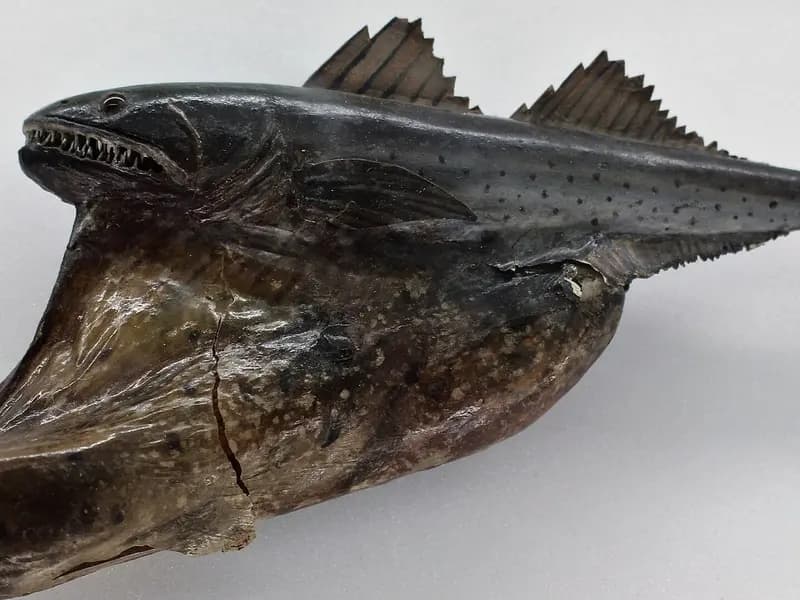
Black Swallower Filmed With a Hugely Swollen Belly 1,259 Metres Down Off Trinidad and Tobago
Oct 13, 2026/2 min read

Playing Recordings of a Healthy Reef Drew More Coral and Fish Larvae to Artificial Structures Off Hawaii
Oct 9, 2026/3 min read
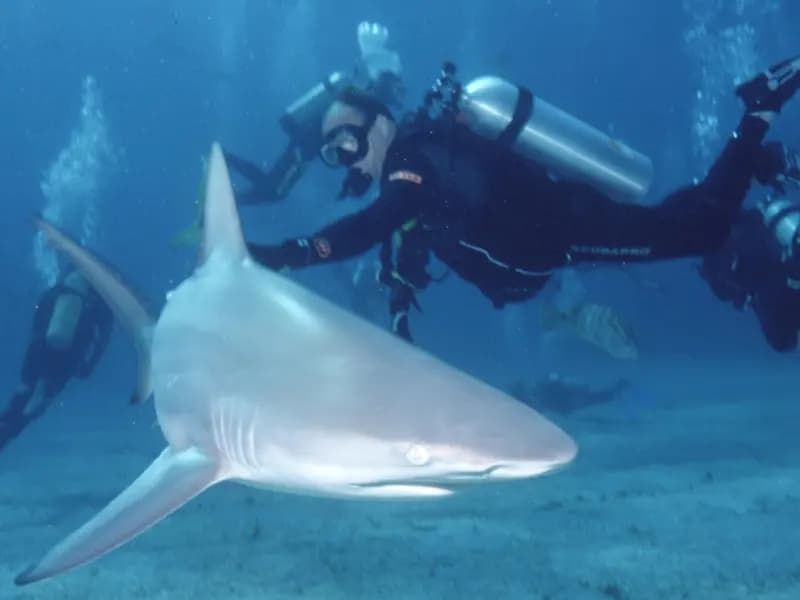
Blacktip Sharks Can Hear a Sound From Nearly 250 Feet Away and Swim Straight Toward or Away From It
Oct 1, 2026/2 min read
A Sea Turtle Species Never Recorded Nesting in the United States Laid Eggs on a Southern California Beach
Oct 1, 2026/2 min read