Women Were Warned for Twenty Years That Hormone Therapy Raised Dementia Risk. A Study of 21,000 Points the Other Way.
Estrogen-only therapy was associated with 39 per cent lower odds of dementia, and with fewer amyloid plaques and tau tangles in donated brains. It is observational, and the group that receives it is unusual.
Saturday, August 22, 2026/4 min read
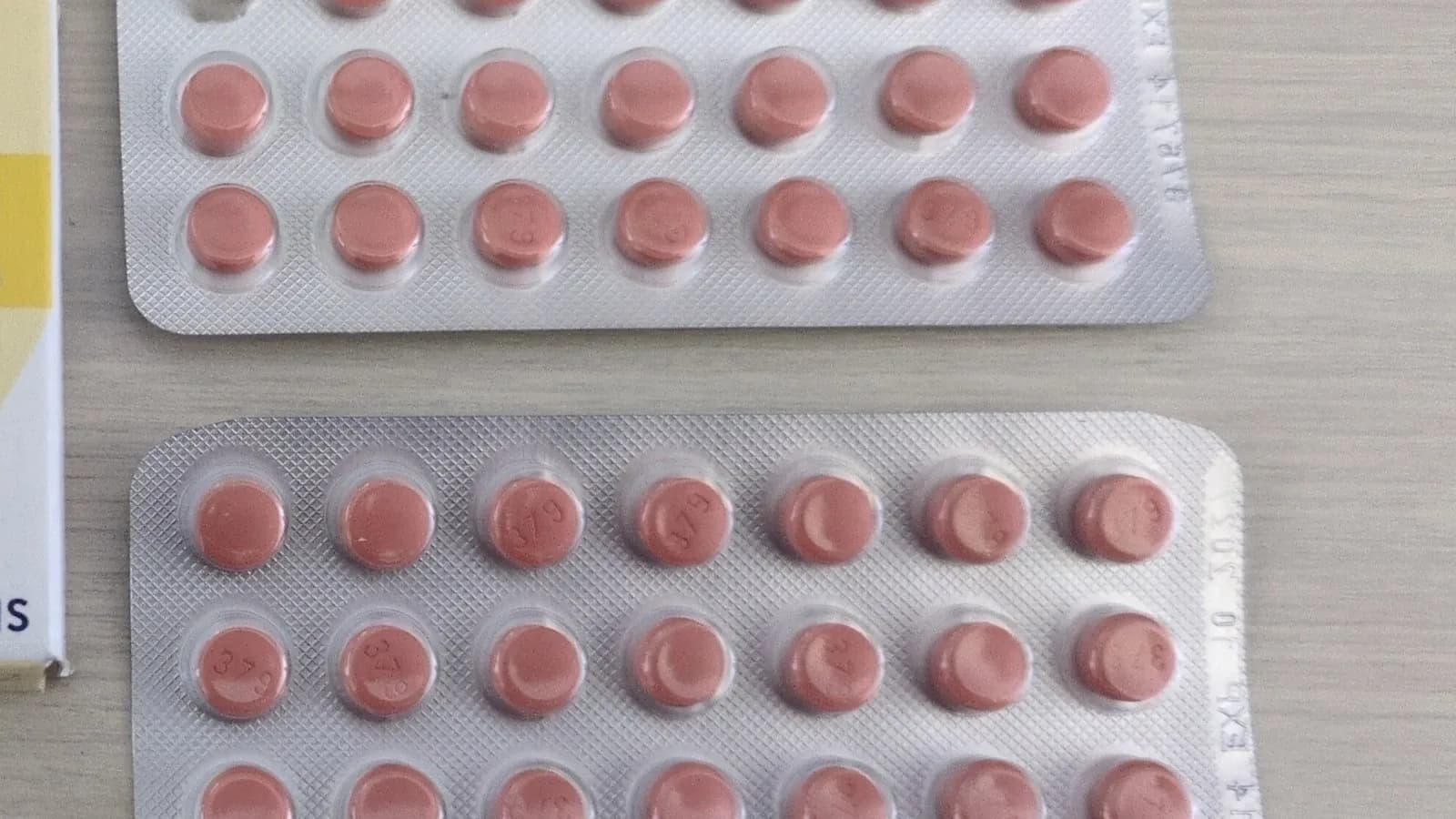
In 2002 the Women's Health Initiative reported findings that changed prescribing across the world almost overnight. Menopausal hormone therapy, which had been widely used, was linked to harms including an increased risk of dementia in an associated substudy, and a generation of women either stopped taking it or were never offered it.
A study published on 12 August in Neurology, the journal of the American Academy of Neurology, points in the opposite direction for one particular form of the treatment, and it did something no previous study had done: it looked inside the brains.
What did the study find?
Two results, and the second is why it matters.
Among 21,462 women, use of estrogen-only hormone therapy was associated with 39 per cent lower odds of a dementia diagnosis and 35 per cent lower odds of Alzheimer's pathology at autopsy.
That second figure is the novel part. Previous work looked at diagnoses, which are clinical judgements made about living people. This study examined the physical hallmarks of the disease, the amyloid plaques and tau tangles, in donated brains. Of the women who had taken hormone therapy, 18 per cent showed no signs of Alzheimer's disease at autopsy, against 10 per cent of those who had not.
Users also showed biomarker profiles consistent with less amyloid accumulation, performed better on memory testing, and retained the ability to live independently for longer.
How was it done?
By combining two datasets, one of living participants and one of donated brains.
Within the overall cohort, 728 participants completed brain scans or biomarker testing while alive. A separate 2,959 underwent autopsy after death, at an average age of 82. The work was led by Jennifer Bruno, Jacob S. Shaw and S.M. Hadi Hosseini at Stanford Medicine.
The autopsy component is what gives the finding its weight and also introduces one of its limits, which is worth being explicit about.
What are the caveats?
Three, and none of them is minor.
This is observational. It reports an association, not a demonstrated effect. Women who take hormone therapy and continue with it differ from women who do not, in ways that are difficult to fully adjust for: they tend to be more engaged with healthcare, are more likely to have the means to pursue treatment, and are often healthier at the point of prescription. That pattern, sometimes called healthy-user bias, produces exactly this shape of result in many settings where a randomised trial later finds nothing.
The estrogen-only group is a specific population. Estrogen-only therapy is generally prescribed to women who have had a hysterectomy, because women with a uterus are given a progestogen alongside estrogen to protect the endometrium. So this is not simply a subgroup taking a simpler drug. It is a group defined by having had a major operation, and that carries its own differences in age, health history and the reasons for surgery.
Brain donors are not a random sample. People who agree to donate their brains to research, and the cohorts that recruit them, differ from the general population in education, engagement and often in health.
Does this mean the 2002 findings were wrong?
Not exactly, and the more useful framing is that they were narrower than how they were received.
The alarming dementia signal came largely from women who began hormone therapy well after menopause, frequently in their late sixties or seventies, and substantially on combined estrogen and progestogen rather than estrogen alone. What was communicated to the public was a much broader message: hormone therapy is dangerous.
The idea that timing matters, that starting near menopause may differ from starting fifteen years later, has been argued for years and remains unsettled. This study is consistent with that argument without proving it.
What should a reader actually do with this?
Nothing unilateral, and that is a genuine recommendation rather than a disclaimer.
Hormone therapy has real benefits and real risks, and the balance depends on personal and family history, the timing relative to menopause, the formulation, and the reason for considering it. A single observational study, however large and however novel its method, does not change an individual prescribing decision. It changes the weight of evidence a clinician is working from.
What it does justify is a conversation. A significant number of women were steered away from a treatment two decades ago on the basis of a message broader than the finding underneath it, and many have never revisited it. If the question is live for you, it is a reasonable one to raise, alongside the cognitive symptoms discussed in our guide to menopause, brain fog and mental health.
The research question this leaves open is the one that always follows an observational result of this size: whether a randomised trial, designed around timing and formulation, would reproduce it. That is precisely the gap the TAME trial was built to close for metformin, and it has taken years to fund. Until one does, the correct description is a strong association in a large sample, measured more directly than before, and not yet a demonstrated cause.
Published in The Outspoken Digest
Editorial desk
Outspoken Digest Health DeskMedicine, public health and the research behind the headlines, read carefully.
Newsletter
The Digest, in your inbox
One edition, sent when it is ready. No noise, and your address is never passed on.
Read Next
More Health →
A Night-Owl Subtype of Depression Appears to Start Earlier, Hit Harder and Respond Worse to Common Antidepressants
Oct 21, 2026/2 min read

CDC and FDA Link Salmonella Illnesses in 12 States to Raw Oysters From Virginia's Little Wicomico River
Oct 20, 2026/2 min read
FDA Approves Dostarlimab for dMMR Rectal Cancer, an Option That May Spare Some Patients Surgery
Oct 19, 2026/2 min read
Kenya's Ebola Count Rises to Seven After Three Health Workers Who Treated the First Patient Test Positive
Oct 17, 2026/2 min read