The People Who Run Towards It: First Responders in the World's Conflict Zones
Paramedics, firefighters and volunteer rescuers are dying in numbers that have no modern precedent. In Lebanon alone, 110 emergency workers were killed in a matter of months. This is what they do, and what it costs.
Thursday, August 13, 2026/4 min read
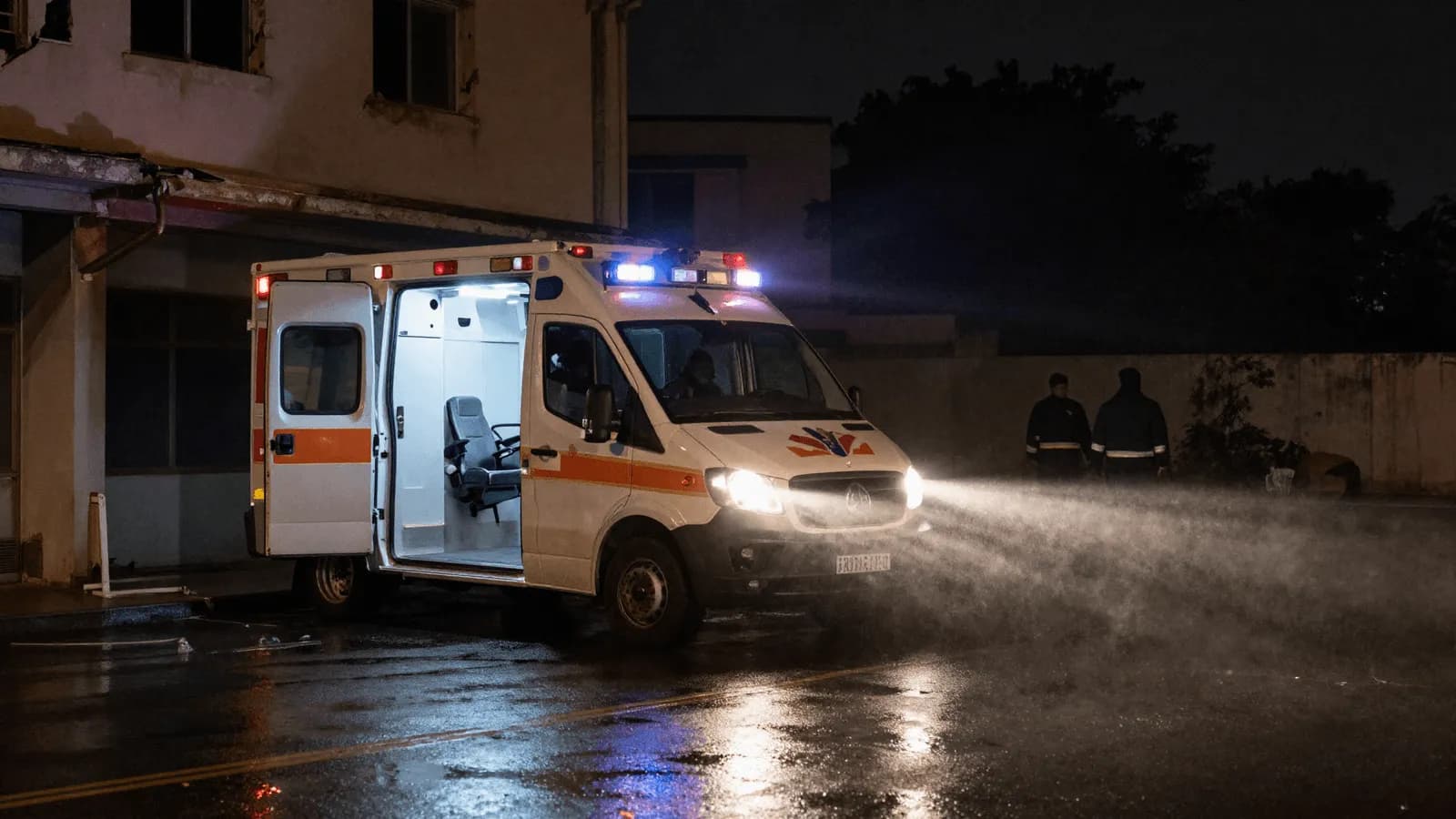
There is a category of person who, when everyone else is moving away from a building that has just been hit, walks towards it. They are paramedics, firefighters, civil defence crews, ambulance drivers and volunteers, and across several conflicts they are now dying at rates without modern precedent.
This is not an article about who is right in any of these wars. It is about the people who show up afterwards.
The scale
In Lebanon, Medecins Sans Frontieres reported that at least 110 paramedics and healthcare workers had been killed since 2 March. The World Health Organization recorded 169 confirmed attacks on health workers and facilities in the country, with 116 deaths.
The material losses run alongside: 108 ambulances and firefighting vehicles completely destroyed, 16 hospitals hit, four forced to close entirely.
The Lebanese Red Cross, which runs on volunteers, lost Youssef Assaf during a rescue operation on 9 March and Hassan Badawi in a drone strike on 12 April. The IFRC and ICRC issued a joint statement saying they were outraged that humanitarian workers continue to be killed across conflicts, naming Sudan, Gaza and Iran alongside Lebanon.
These are not abstract numbers. A volunteer paramedic in a small country is somebody's neighbour, and the community that loses them knew them.
The double-tap problem
MSF has described a pattern that deserves to be understood plainly, because it changes what this work is.
A double-tap strike is a second strike on a site shortly after the first, timed for when rescue crews have arrived. Where this practice exists, it converts the act of responding into the act of entering a targeted area.
Every emergency service in the world trains its people to secure the scene before entering. That principle assumes the danger is a fire, a gas leak or an unstable structure, and that it can be assessed. It cannot be applied to a scene that may be struck again precisely because you came.
Responders in these places go in anyway. It is worth sitting with what that decision involves, repeatedly, shift after shift.
What the job is
The public image of emergency response is the dramatic extraction. The reality is mostly logistics performed under impossible conditions.
- Driving an ambulance on roads that may be cratered, blocked or mined, at night, without lights.
- Triage, which means deciding who is treated first and, when resources run out, who is not.
- Working in a hospital that has lost mains power and is running on a generator with rationed fuel.
- Recovering bodies, which nobody thanks you for and which is the part responders most often say stays with them.
- Telling families. Over and over.
Firefighters in these settings carry an additional load, because they arrive at fires caused by munitions rather than accidents, in buildings whose structure is already compromised, often without water pressure.
Volunteers, mostly
A fact that surprises people: much of this work is done by volunteers.
The Lebanese Red Cross ambulance service is volunteer-run. Civil defence organisations across the region rely heavily on volunteers. Many are students, teachers, drivers and shopkeepers who did a first aid course and stayed.
They are not paid enough to explain the risk, because in most cases they are not paid at all. They do it because somebody has to and they are the ones who put their hand up.
The law, and its limits
Medical personnel, ambulances and hospitals have protected status under international humanitarian law. The Geneva Conventions are explicit, and the protection is one of the oldest principles in the entire body of law, older than most states now bound by it.
The principle has held up poorly in recent years, across multiple conflicts and multiple parties. Stating that is not a partisan position. The organisations recording it are the Red Cross movement and the WHO, and the joint IFRC and ICRC statement is unusually direct for bodies whose entire operating model depends on remaining acceptable to all parties.
What follows from it is a practical problem as well as a moral one. When responders cannot work safely, the injured who could have been saved die of survivable wounds, and the effect compounds across every subsequent incident.
What is owed
Three things, and none of them are gestures.
Accurate record. Named individuals, documented incidents, published figures. Organisations like the WHO and MSF do this work, and it is the precondition for any accountability that ever follows. The same is true of the medical volunteers who go the other way, into these places, as with the surgical teams working in Gaza.
Mental health support that exists in practice. Rates of post-traumatic stress, depression and moral injury among conflict-zone responders are extremely high, and support is usually the first thing cut. The evidence on what actually helps is set out in our guide to mental health during war.
Protection, meaning the thing itself. Not statements. The status these people already hold in law, respected by the parties who are bound by it.
A closing note
The medics in Lebanon interviewed by UN News described putting on flak jackets and saying goodbye to their families properly before shifts, because both were now routine.
They went to work anyway. Some of them did not come back, and the ones who did went out again the next day.
Whatever else is disputed about these conflicts, that is not.
Published in The Outspoken Digest
Editorial desk
Outspoken Digest NewsroomReports for The Outspoken Digest across Latest Trends, Lifestyle.
Newsletter
The Digest, in your inbox
One edition, sent when it is ready. No noise, and your address is never passed on.
Read Next
More Latest Trends →
Federal Agents Search Rep. Ilhan Omar's Washington Home Three Weeks Before the Midterms, and She Calls It Intimidation
Oct 13, 2026/2 min read
Iran Calls the US Reply on Hormuz 'Inadequate' as Two Indian Seafarers Go Missing After a Tanker Is Hit Off Oman
Oct 13, 2026/2 min read
Trump Declares a Russia-Ukraine 'Energy Ceasefire' and Moscow Keeps Hitting Ukraine's Power Plants, Zelenskyy Says
Oct 13, 2026/2 min read
Saudi Arabia Vows a Serious Response After a Houthi Missile Killed 13 at Riyadh Airport as Trump Weighs Joining
Oct 13, 2026/2 min read