Freediving Weights: The Setting That Decides Whether a Dive Is Safe
Overweighting is the most common equipment error in freediving and the one with the worst failure mode. The rule is simple: neutral at ten metres, positive above it, and the surface is where it matters.
Tuesday, August 11, 2026/3 min read
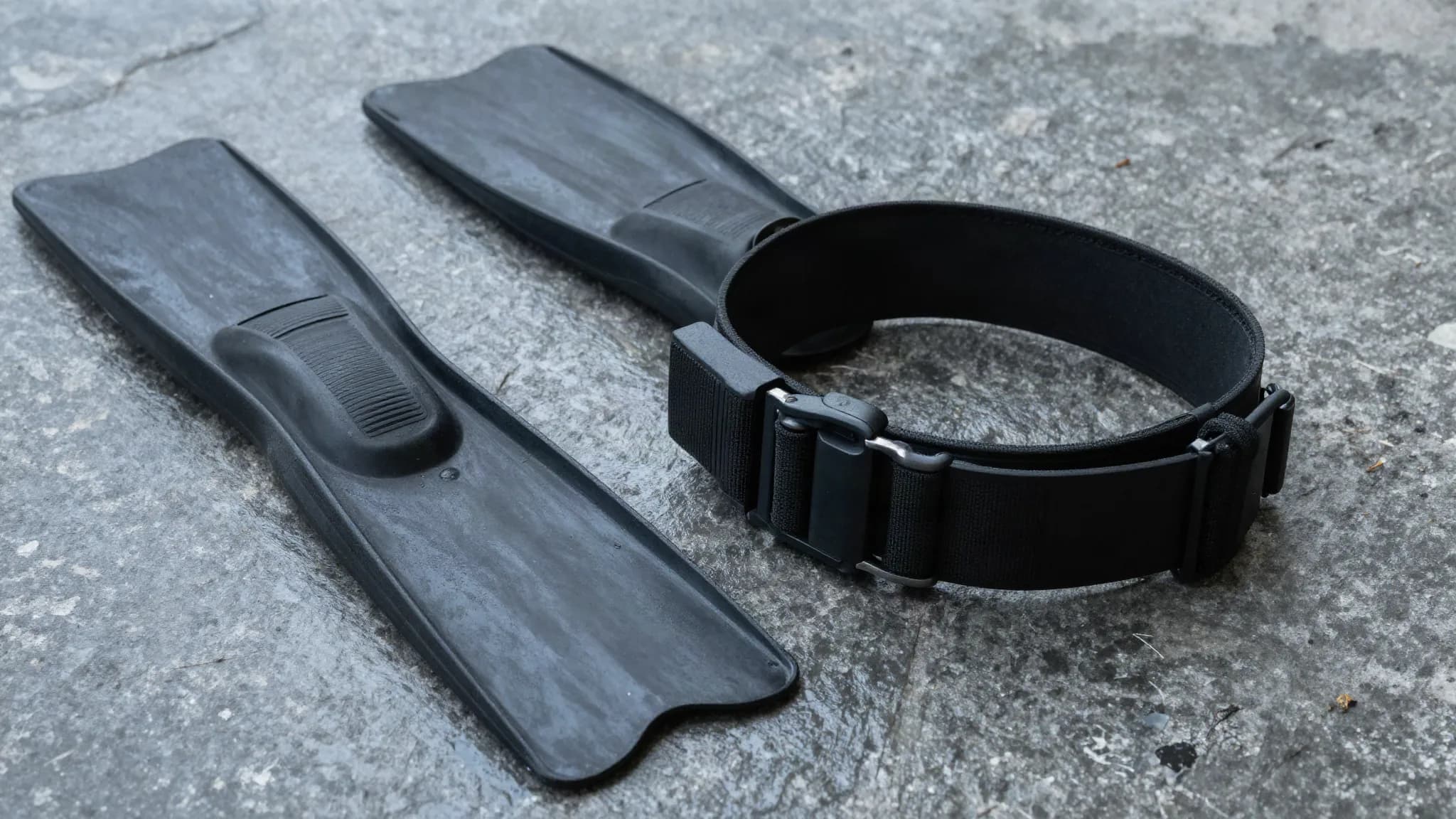
Ask a new freediver how much lead they wear and you will often get a number that has more to do with how easy the descent feels than with anything else. Descending is not the problem. The problem is the last ten metres coming back.
Why buoyancy changes with depth
A freediver's buoyancy is not fixed. Air in the lungs and in a neoprene wetsuit compresses as pressure rises, and compressed air displaces less water.
So a diver who floats comfortably at the surface becomes less buoyant with every metre. Somewhere around 10 to 15 m they reach neutral. Below that they become negative and sink without effort, which is the free fall that makes deep freediving possible and pleasant.
On the way up the process reverses. The diver is negative at depth, working hardest in the middle, and becomes positive again near the surface.
That last part is the safety margin, and overweighting destroys it.
The rule
Neutral at 10 metres. That is the standard target for depth freediving, and it means positively buoyant everywhere above it.
Some divers set neutral at 12 or 15 m for deep training, and that is a deliberate choice made with a lanyard, a counterballast system and safety divers. It is not a default.
For pool disciplines the logic differs: dynamic apnea usually wants neutral at the depth you are swimming, which is shallow, so weighting is minimal or zero.
How to check it, properly
Do this at the start of a trip, in the suit you will actually wear, and repeat it when anything changes.
Take a normal breath, not a full one. Descend to 10 m on the line and stop. Stay still, do not scull, and wait five seconds.
If you slowly sink, you are overweighted. If you slowly rise, you are underweighted. If you hang more or less in place, that is neutral.
Adjust in small increments, half a kilogram at a time. The difference between correct and dangerous is often one kilo.
What changes your weighting
A new wetsuit, because neoprene is most buoyant when new and loses buoyancy as the cells compress permanently over months of diving. An old suit needs less lead than it did when bought.
Suit thickness. A 5 mm suit needs substantially more lead than a 3 mm.
Salinity. Salt water is more buoyant than fresh, and the Red Sea and the Gulf are more saline than average. A diver moving from a pool or a lake to the Gulf will need more weight, and the difference is not trivial.
Body composition changes, and any change of fins, mask or belt.
Why overweighting is the dangerous error
Two reasons, and both matter at the same moment.
First, an overweighted diver has to swim actively all the way to the surface, including through the final metres where oxygen is lowest and blackout risk highest. Work burns oxygen precisely when there is least to spare.
Second, and worse: if a diver blacks out near the surface while overweighted, they sink. A correctly weighted diver floats, and a floating unconscious diver is a rescue. A sinking one may not be recovered in time.
This is why the quick-release belt matters and why it is worn so it can be dropped with one hand, over the wetsuit, positioned on the hips rather than the waist. A rubber belt rather than nylon, because rubber tracks the compression of the suit and does not slide loose at depth.
The lanyard, briefly
For any line diving beyond the shallows, a lanyard connecting the diver to the line is standard. It means the diver cannot drift away from the line and can be recovered directly by counterballast if something goes wrong.
It is part of the same safety system as correct weighting, and both exist because of incidents that produced them: competitive freediving built these rules the hard way.
The summary
Set neutral at 10 m, verify it in the suit you are wearing on the day, re-check when the suit or the water changes, and wear a belt you can drop instantly.
If the descent feels like hard work, the answer is technique and relaxation rather than lead. Adding weight to make the first ten metres easier is buying a comfortable descent with the safety margin on the ascent, and that is a bad trade every time. Depth comes from equalisation and relaxation, not ballast.
This article is general information, not a substitute for certified training with a qualified instructor.
Published in The Outspoken Digest
Editorial desk
Outspoken Digest Diving DeskCovers freediving, recreational and technical diving, dive medicine and the incidents the sport learns from.
Newsletter
The Digest, in your inbox
One edition, sent when it is ready. No noise, and your address is never passed on.
Read Next
More Diving →
Black Swallower Filmed With a Hugely Swollen Belly 1,259 Metres Down Off Trinidad and Tobago
Oct 13, 2026/2 min read

Playing Recordings of a Healthy Reef Drew More Coral and Fish Larvae to Artificial Structures Off Hawaii
Oct 9, 2026/3 min read

Blacktip Sharks Can Hear a Sound From Nearly 250 Feet Away and Swim Straight Toward or Away From It
Oct 1, 2026/2 min read
A Sea Turtle Species Never Recorded Nesting in the United States Laid Eggs on a Southern California Beach
Oct 1, 2026/2 min read