Gazpacho Andaluz: Bread, Oil, Vinegar and Garlic Were the Soup Before the Tomato Arrived, and They Still Are
The cold soup of southern Spain is an emulsion, not a blended salad. The bread and oil give it body, the sherry vinegar gives it its edge, and the tomatoes have to be the best of the year. A recipe for the heat, and the two cousins worth knowing.
Sunday, September 6, 2026/3 min read
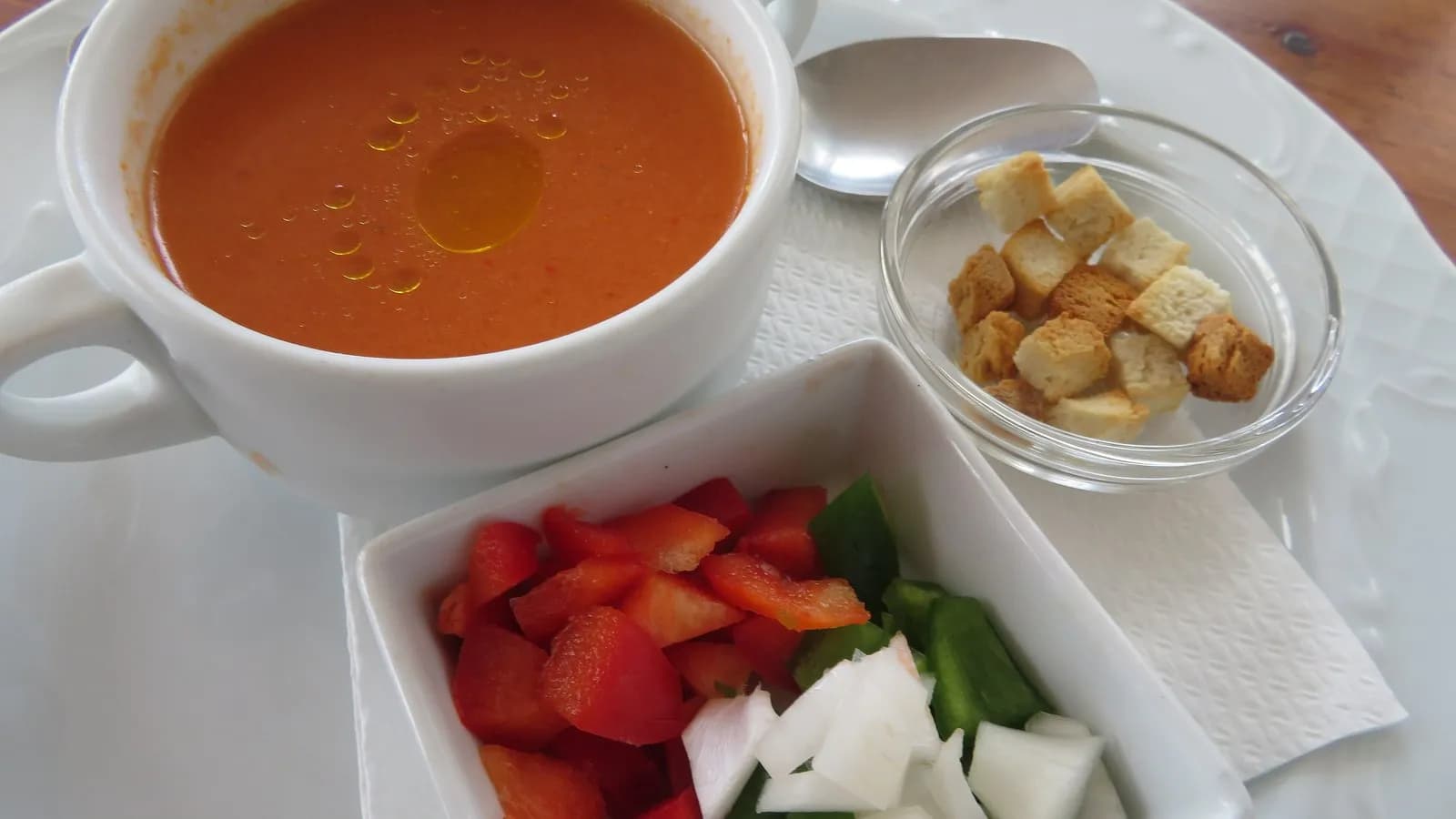
Gazpacho is older than the tomato. Before the plant came back from the Americas and settled into Andalusian fields, the field workers' soup of the south was bread, garlic, olive oil, vinegar, salt and water, pounded together and eaten cold in the heat of the day. The white almond version, ajoblanco, is what that older soup still tastes like. Tomatoes and peppers were added when they became cheap, and the red gazpacho became the one the world knows. But the structure never changed: it is an emulsion of oil into bread and vegetable water, and understanding that is what separates a proper gazpacho from a glass of cold blended salad.
What makes it work
Three things. The tomatoes must be ripe to the point of softness, because there is nothing to hide behind. The oil must be emulsified in slowly, with the machine running, so the soup becomes creamy and pale orange rather than thin and red with oil floating on top. And the vinegar must be sherry vinegar, which has a depth and roundness that wine vinegar lacks and which is the flavour that says Andalusia. Everything else is adjustable.
Ingredients, for six
- 1.2 kg very ripe tomatoes, cored and roughly chopped
- 1 cucumber, peeled and roughly chopped
- 1 green pepper, the long thin Italian or Turkish kind if possible, seeded and chopped
- 1 small clove garlic, or half a large one
- 80 g stale white bread, crusts removed, soaked in water for ten minutes and squeezed
- 100 ml extra virgin olive oil, plus more to serve
- 2 to 3 tablespoons sherry vinegar
- 1 teaspoon salt, plus more to taste
- Cold water as needed
To serve, the picadillo: finely diced cucumber, pepper, tomato and onion, small croutons fried in oil, and sometimes chopped hard-boiled egg or jamón.
Method
- Put the tomatoes, cucumber, pepper, garlic, soaked bread, salt and two tablespoons of vinegar in a blender. Blend until completely smooth, two or three minutes; a good blender does this better than a stick blender.
- With the machine running on low, pour in the oil in a thin, steady stream. Watch the colour change from red to a paler, creamy orange. That change is the emulsion forming, and it is the whole point.
- Taste. Adjust salt and vinegar; it should be distinctly sharp and well salted, because chilling dulls both. If it is too thick, add cold water a splash at a time.
- For a refined texture, pass through a fine sieve, pressing hard. For a rustic one, do not. Both are correct; restaurants sieve, homes mostly do not.
- Chill for at least two hours and up to a day. Stir before serving, taste again, and adjust.
- Serve in bowls or glasses, cold but not iced, with the picadillo in small dishes for each person to add, and a final thread of oil on top.
The cousins
Salmorejo, from Córdoba, is the thick one: tomatoes, more bread, oil, garlic and vinegar, no cucumber or pepper, blended to the consistency of a thin purée and topped with chopped egg and jamón. It is eaten with a spoon and sometimes as a dip. Ajoblanco, from Málaga, is the white one: almonds, bread, garlic, oil, vinegar and water, served with grapes or melon. It is the pre-tomato gazpacho, and it is extraordinary. Both are made by exactly the method above with the ingredients changed.
Notes
Gazpacho is a drink as much as a soup in the south, kept in a jug in the fridge through summer and poured into a glass at any hour. It keeps three days, though the garlic strengthens. Do not add ice cubes to the bowl; they dilute it. Chill the bowls instead.
It is worth making only when the tomatoes are worth eating raw, which in the Gulf is the cooler half of the year rather than the hottest, when it would be most welcome. The Tuscan salad that starts from the same bread, oil and tomato and ends up on a plate rather than in a glass is our panzanella recipe. For a Spanish dish that needs no tomatoes at all and is at its best in any month, see our tortilla española.
Published in The Outspoken Digest
Editorial desk
Outspoken Digest Food DeskCooking, ingredients, restaurants and the economics of what ends up on the table.
Newsletter
The Digest, in your inbox
One edition, sent when it is ready. No noise, and your address is never passed on.
Read Next
More Recipes →
Swangy Tamarind Glazed Chicken Wings for the Flavour Replacing Swicy on Fast Food Menus
Sep 29, 2026/3 min read

Baked Apple Cider Doughnuts for a Cider Season That Peaked Earlier Than the Calendar Says
Sep 29, 2026/3 min read
An Obatzda Bavarian Beer Cheese Dip for the Final Stretch of Oktoberfest 2026
Sep 29, 2026/3 min read