Knafeh Without Semolina or Kataifi: A Gluten-Free Version Worth Making
Both classic knafeh shells are wheat. Rebuilding the dish gluten free means rethinking the top layer entirely, and rice-based kataifi plus a coarse cornmeal crust gets remarkably close.
Tuesday, August 11, 2026/3 min read
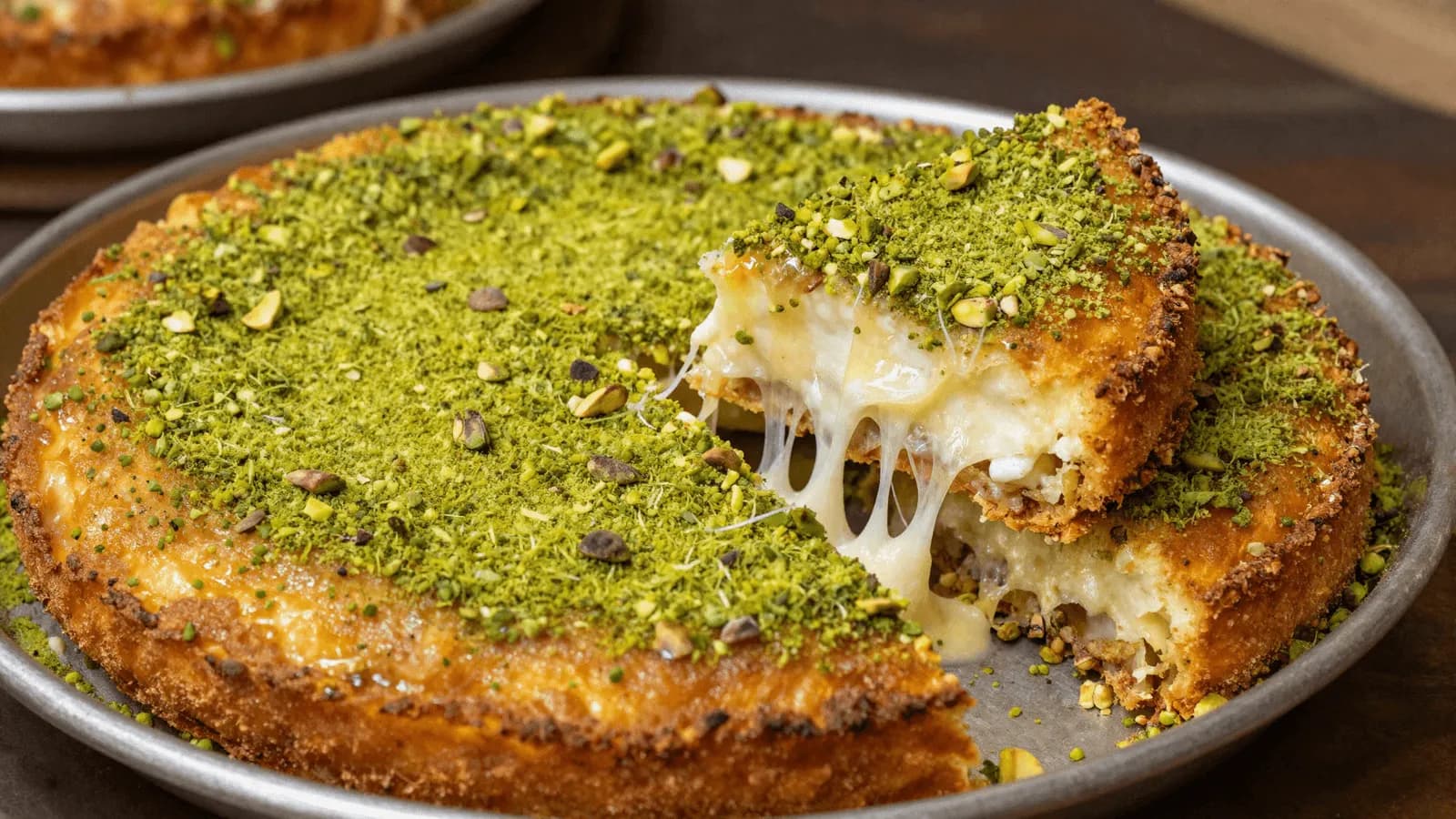
Knafeh is the dessert people with coeliac disease are most likely to be told simply is not available to them, and the reason is structural. Both traditional shells are wheat: knafeh na'ameh uses fine semolina, knafeh khishneh uses kataifi, the shredded pastry made from wheat batter.
There is no direct substitute for either. But the dish is really about a hot, salty, stretchy cheese layer with something crisp and sweet above it, and that is reproducible.
This version uses a coarse cornmeal and rice flour crust in place of semolina. If you can find rice-flour kataifi, which some gluten-free producers now make, use it for the shredded version instead and follow the same assembly.
Ingredients
Serves eight, in a 25 cm round tin.
For the cheese layer:
- 500 g akkawi cheese, or a mix of low-moisture mozzarella and ricotta
- If using akkawi, cold water for soaking
For the crust:
- 150 g coarse cornmeal, the polenta grind rather than fine
- 100 g fine rice flour
- 50 g cornflour
- 150 g melted ghee or unsalted butter
- 2 tablespoons sugar
- Quarter teaspoon salt
- Half a teaspoon orange food colouring, optional and traditional
- 3 to 4 tablespoons water
For the syrup, called ater:
- 300 g sugar
- 200 ml water
- 1 tablespoon lemon juice
- 1 tablespoon orange blossom water
- 1 teaspoon rose water
To finish: crushed pistachios.
Method
1. Make the syrup first, and cool it
Bring the sugar, water and lemon juice to a boil, simmer eight minutes, take off the heat and stir in the blossom waters.
Cool it completely. The single rule of knafeh is that cold syrup goes on hot pastry. Hot on hot gives you a soggy dessert, and there is no recovering from it.
2. Desalt the cheese
Akkawi is packed in brine and must be soaked. Cube it, cover with cold water, and change the water every hour for three to four hours. Taste it. It should be mild, with only a trace of salt.
If using mozzarella and ricotta, skip this. Drain the mozzarella very well and grate it, then fold through the ricotta.
3. Build the crust
Combine the cornmeal, rice flour, cornflour, sugar and salt. Pour over the melted ghee and rub through with your fingers until it resembles damp sand, adding the water a tablespoon at a time until it just clumps when squeezed.
The colouring, if you use it, goes into the ghee first.
The texture you want is crumbly rather than doughy. If it becomes a paste you will get a hard biscuit layer instead of a crisp one.
4. Assemble upside down
Butter the tin generously. Press two thirds of the crust mixture firmly into the base and a little up the sides.
Spread the cheese over it, leaving a small border. Scatter the remaining crust mixture on top and press lightly.
5. Bake
200C for 35 to 45 minutes, until the base is deep gold. Check by lifting an edge with a knife. It should be firmly set and coloured, not pale.
The base is what you will see when it is turned out, so colour matters.
6. Syrup and invert
Take it out and pour the cold syrup evenly over the hot knafeh. It will hiss. Leave it two minutes to absorb.
Run a knife round the edge, put a serving plate on top and invert confidently in one movement. Scatter the pistachios over the top.
Serve immediately, while the cheese still pulls. Knafeh does not wait.
Notes
The cornmeal version has a slightly sandier bite than semolina, which most people find pleasant and no one mistakes for identical. Toasting the cornmeal in a dry pan for three minutes before mixing deepens the flavour and helps.
Reheat leftovers in a hot oven for eight minutes rather than a microwave, which turns the cheese to rubber.
If you are cooking for a mixed table, the classic version is in our guide to knafeh, and the two can share a syrup.
The contamination point
Cornmeal and rice flour are naturally gluten free and both are routinely milled alongside wheat, so buy certified products if you have coeliac disease. Check the cheese too, since some processed cheese products use wheat-derived additives.
Our flour guide covers where the hidden wheat lives, and the coeliac explainer covers how strict you actually need to be about it.
Published in The Outspoken Digest
Editorial desk
Outspoken Digest Food DeskCooking, ingredients, restaurants and the economics of what ends up on the table.
Newsletter
The Digest, in your inbox
One edition, sent when it is ready. No noise, and your address is never passed on.
Read Next
More Recipes →
Swangy Tamarind Glazed Chicken Wings for the Flavour Replacing Swicy on Fast Food Menus
Sep 29, 2026/3 min read

Baked Apple Cider Doughnuts for a Cider Season That Peaked Earlier Than the Calendar Says
Sep 29, 2026/3 min read

An Obatzda Bavarian Beer Cheese Dip for the Final Stretch of Oktoberfest 2026
Sep 29, 2026/3 min read