Children Who Live Near More Trees and Parks Scored Better on Attention Tests, a 12,000-Child Study Finds
Washington University researchers used the ABCD cohort to link neighbourhood tree canopy and park cover to objective attention scores, with air quality explaining part of the effect.
Tuesday, November 3, 2026/2 min read
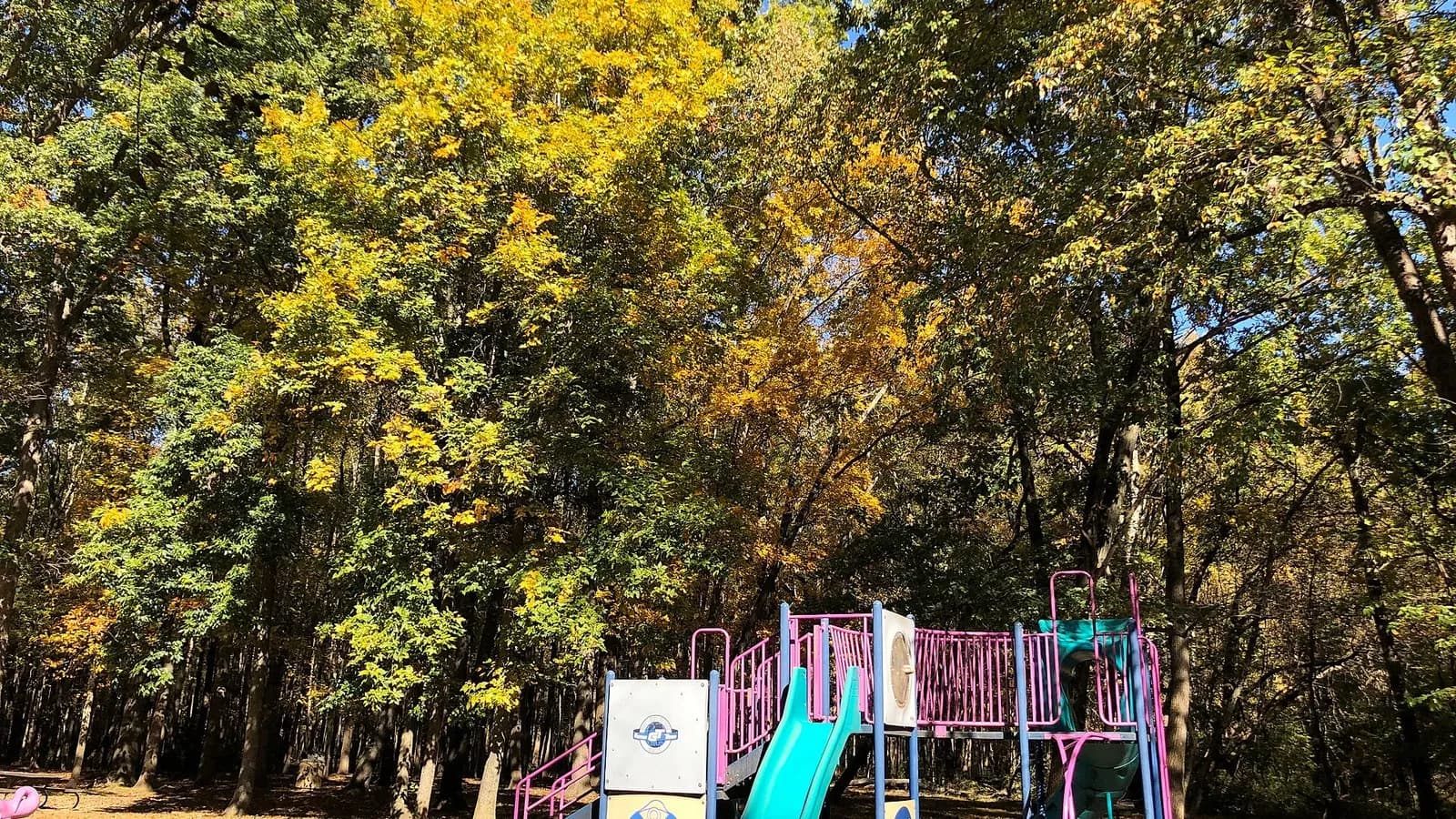
The idea that a walk in the park restores a tired mind is more than a century old. A new analysis of roughly 12,000 American children gives it some hard numbers. Children who lived in census tracts with more tree canopy and park cover did better on objective tests of directed attention, Washington University in St. Louis said on Monday, and the link held after the researchers adjusted for family income, an ADHD diagnosis, how safe the children felt and how much social media they used.
The paper, in the journal Environment International, draws on the Adolescent Brain Cognitive Development (ABCD) study, the largest long-term study of brain development in the United States. Its lead author, Carina Fowler, a postdoctoral researcher in Deanna Barch's laboratory, said that the closer children lived to green space, the better they did on the attention assessments.
How did the study measure green space?
Rather than asking families whether they visited parks, the team built a single metric for each child's census tract: the average of the proportion covered by tree canopy and the proportion covered by parks. That makes the measure about what surrounds a child's home, not what the child chooses to do. The children had a median age of about 10 when tested, Phys.org reported, and the attention measures were performance-based tasks rather than parent or teacher ratings.
The paper's title also reports an association with higher crystallised intelligence, the stock of knowledge and vocabulary that schooling builds, though the university's account concentrates on attention.
Why would trees help a child concentrate?
The researchers tested two plausible routes. Physical activity in nature did not explain the association. Air quality partly did: neighbourhoods with more canopy had cleaner air, and that accounted for some of the attention advantage. Fowler said there is something to the idea that air quality partially explains why green space helps attention, while stressing that the mechanism is not fully understood.
The classic account, attention restoration theory, holds that natural scenes let the effortful, directed kind of attention rest. The authors note that this restorative effect appears to need a sense of safety, and that it is weaker when the person in the park is scrolling a phone. Not just any strip of grass will do.
What the study does not show
This is an observational association, not a trial. Families who live near parks differ from those who do not in ways no model fully captures, and the authors themselves point out that some earlier studies found little effect of green space on attention. The analysis cannot say that planting trees would raise a given child's test scores, only that the two travel together in a very large sample after sensible adjustments.
What it does offer is a reason for city planners to treat canopy and parks as part of children's cognitive environment rather than an amenity. The ABCD cohort is still being followed into adolescence, which will let the same team ask whether the attention gap persists, grows or fades as the children age.
Published in The Outspoken Digest
Editorial desk
Outspoken Digest Science DeskReports for The Outspoken Digest across Technology, Latest Trends, Health.
Newsletter
The Digest, in your inbox
One edition, sent when it is ready. No noise, and your address is never passed on.
Read Next
More Technology →
Marvell Agrees to Buy Lumentum for $115 Billion in Stock, and Both Companies' Shares Slide
Nov 3, 2026/3 min read

The Brain Culls Most of Its Genetically Damaged Neurons Around Birth, a Nature Study Finds
Oct 30, 2026/2 min read

A Sahara Meteorite Is at Least 4.1 Billion Years Old and May Be the Oldest Known Piece of Mars
Oct 30, 2026/2 min read
GM Will Pay $220 Million to 36 States Over Selling Drivers' Location and Driving Data
Oct 30, 2026/3 min read