The Gulf's Next Decade Will Be Decided by Capital, Not Barrels
Roughly six trillion dollars of sovereign wealth now sits behind the region's funds. What that money buys, and where it is deployed, matters more to the next ten years than the oil price does.
Outspoken Digest Gulf Economics Desk
Saturday, August 8, 2026/4 min read
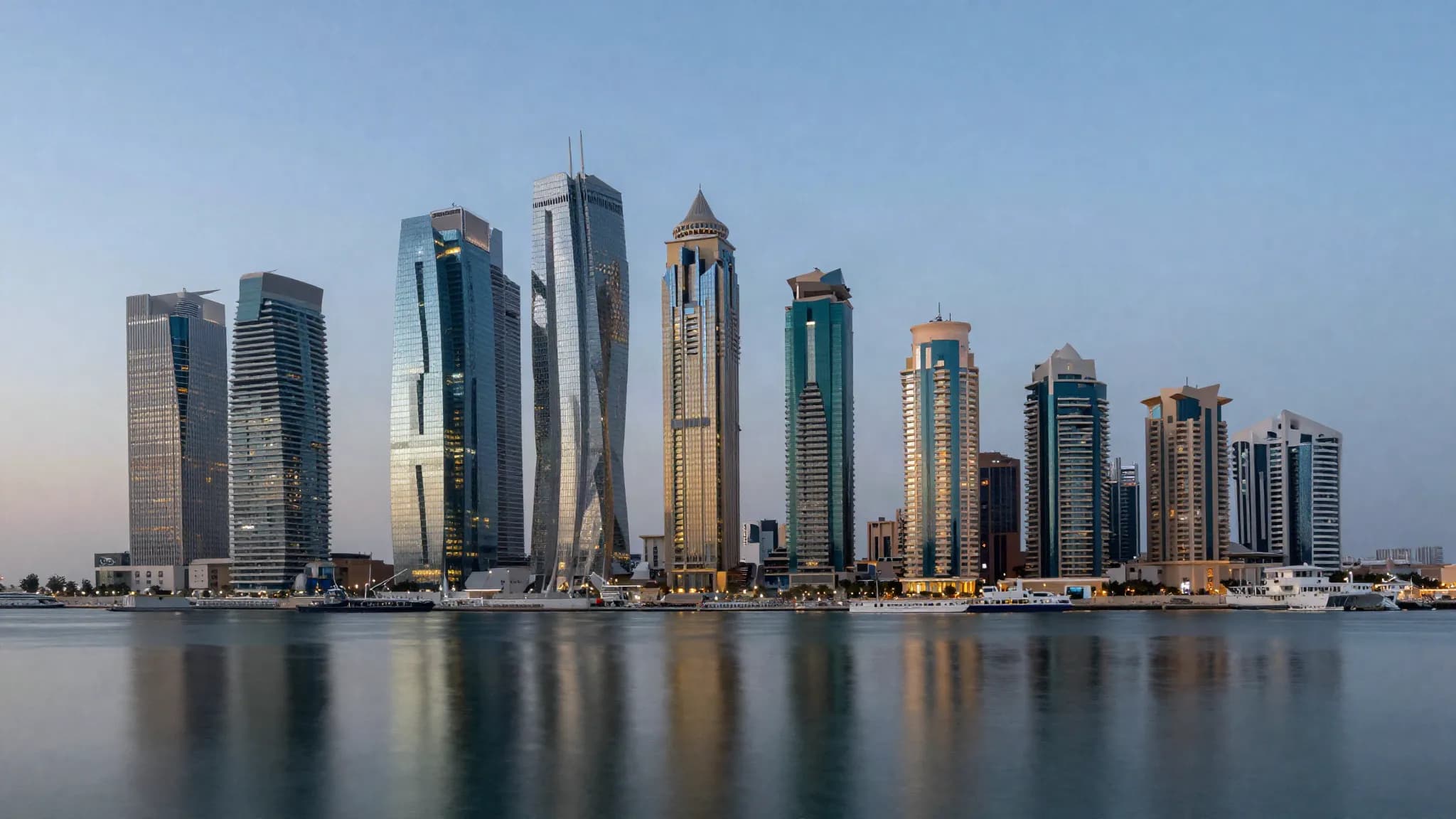
For fifty years the standard way to forecast the Gulf was to forecast the oil price. Get the barrel right and everything else followed: budgets, construction, hiring, the mood in the majlis.
That method is quietly breaking, and not because oil stopped mattering. It is breaking because the region's balance sheet has grown a second engine.
Backed by close to six trillion dollars in sovereign wealth, the Gulf now exports capital as a product in its own right, and as The National argued this week, over the coming decade it may increasingly export technology and expertise alongside it.
Why the oil-price model stopped explaining things
Look at what happened in the first half of this year. Shipping through the Strait of Hormuz faced unprecedented disruption. Insurance and freight costs rose. By the old model that combination should have frozen the project pipeline.
It did not. Saudi Arabia and the UAE are expected to lead a fresh wave of project awards in the second half of 2026, with the UAE recording the highest absolute value of awards in the region during the first six months, according to analysis reported by Arab News.
Governments pressed on because the spending decision was no longer hostage to this quarter's revenue. That is what a sovereign fund is for: it converts a volatile income stream into a steady deployment programme.
The composition of growth has already shifted
The clearest evidence is in the national accounts rather than the announcements.
UAE real GDP grew 3 percent in the first quarter of 2026 to reach AED 485 billion at constant prices. Non-oil GDP grew faster, at 4.8 percent, lifting the non-oil share to 79.4 percent of the economy.
Read that number slowly. Roughly four fifths of measured output in the UAE now comes from somewhere other than hydrocarbons. The oil price still sets the mood and still funds a great deal of the investment, but it is no longer describing most of the activity.
Saudi Aramco, meanwhile, posted adjusted net income of 67.2 billion dollars for the first half while maintaining supply through the disruption. The cash engine is intact. The point is what the cash is now being asked to do.
What capital export actually means
There is a lazy version of this story in which Gulf funds simply buy trophy assets abroad. The more interesting version is structural.
Capital that is patient, concentrated and politically directed can do things that dispersed private capital cannot. It can underwrite a semiconductor facility that will not clear a commercial hurdle rate for a decade. It can anchor a logistics corridor. It can take a position in an artificial intelligence supply chain and accept that the payoff arrives late.
That is the bet being placed. Not that the Gulf becomes a passive shareholder in other people's industries, but that ownership at scale eventually buys participation: joint ventures, technology transfer, local manufacturing, the right to sit inside the decision rather than outside it.
The part that is not guaranteed
It is worth being blunt about the failure mode, because the optimistic version gets repeated far more often.
Capital can buy assets. It cannot buy absorptive capacity. A fund can take a stake in a chip firm without the host economy gaining a single engineer capable of running a fab. The gap between owning a technology and being able to operate, maintain and improve it is the gap that has defeated most state-led industrial programmes in history.
Closing it is a human capability problem, not a financing problem, and it moves on the timescale of education systems rather than deal cycles.
There is also a concentration risk. When the state is the anchor investor, the private sector can end up optimising for proximity to state contracts rather than for productivity. The measure of success is not how much has been committed. It is whether firms with no state shareholding are winning business abroad on the merits.
What to watch instead of the barrel
Three indicators will tell you more about the next decade than the crude price will.
The first is the non-oil share of output, and specifically whether it keeps rising when the oil price is high. Diversification that only advances during downturns is a coping mechanism, not a strategy.
The second is the destination mix of outbound investment: whether it tilts further from real estate and financial stakes towards operating industrial positions with a local counterpart.
The third is employment composition. Sovereign capital creates jobs abroad by definition. The question is how many technically demanding roles it creates at home, and whether nationals are filling them.
Forecasts from professional bodies continue to put Saudi Arabia and the UAE at the front of regional growth, and the ICAEW projections for 2026 follow that pattern. Growth forecasts, though, are the easy part.
The hard part is whether a decade from now the region is still primarily a place that allocates capital, or has become a place that builds things other people want to buy. Those are different economies, and the money alone does not decide which one arrives.
Published in The Outspoken Digest
Newsletter
The Digest, in your inbox
One edition, sent when it is ready. No noise, and your address is never passed on.
Read Next
More Business →
Wall Street Week Ahead: A Fed Decision on Wednesday, Alphabet, Microsoft and Amazon Report, and Oil Near $117
Oct 26, 2026/2 min read
Dow Sheds More Than 600 Points as Brent Passes $116 and Houthi Attacks Rattle Wall Street
Oct 24, 2026/2 min read
Meta Reports $64.6 Billion Revenue and Negative Free Cash Flow, and Plans a New Class of Non-Voting Shares
Oct 23, 2026/2 min read
Nasdaq Falls 2.6% and Chip Stocks Plunge as Brent Oil Jumps to $113 and Treasury Yields Slide
Oct 23, 2026/2 min read