Francis Halzen Wins the Nobel Prize in Physics for Turning Antarctic Ice Into a Neutrino Telescope
The Royal Swedish Academy gave the prize to one man for an idea he first floated in 1988: that a cubic kilometre of South Pole ice could catch messengers from the far reaches of the universe.
Tuesday, October 6, 2026/2 min read
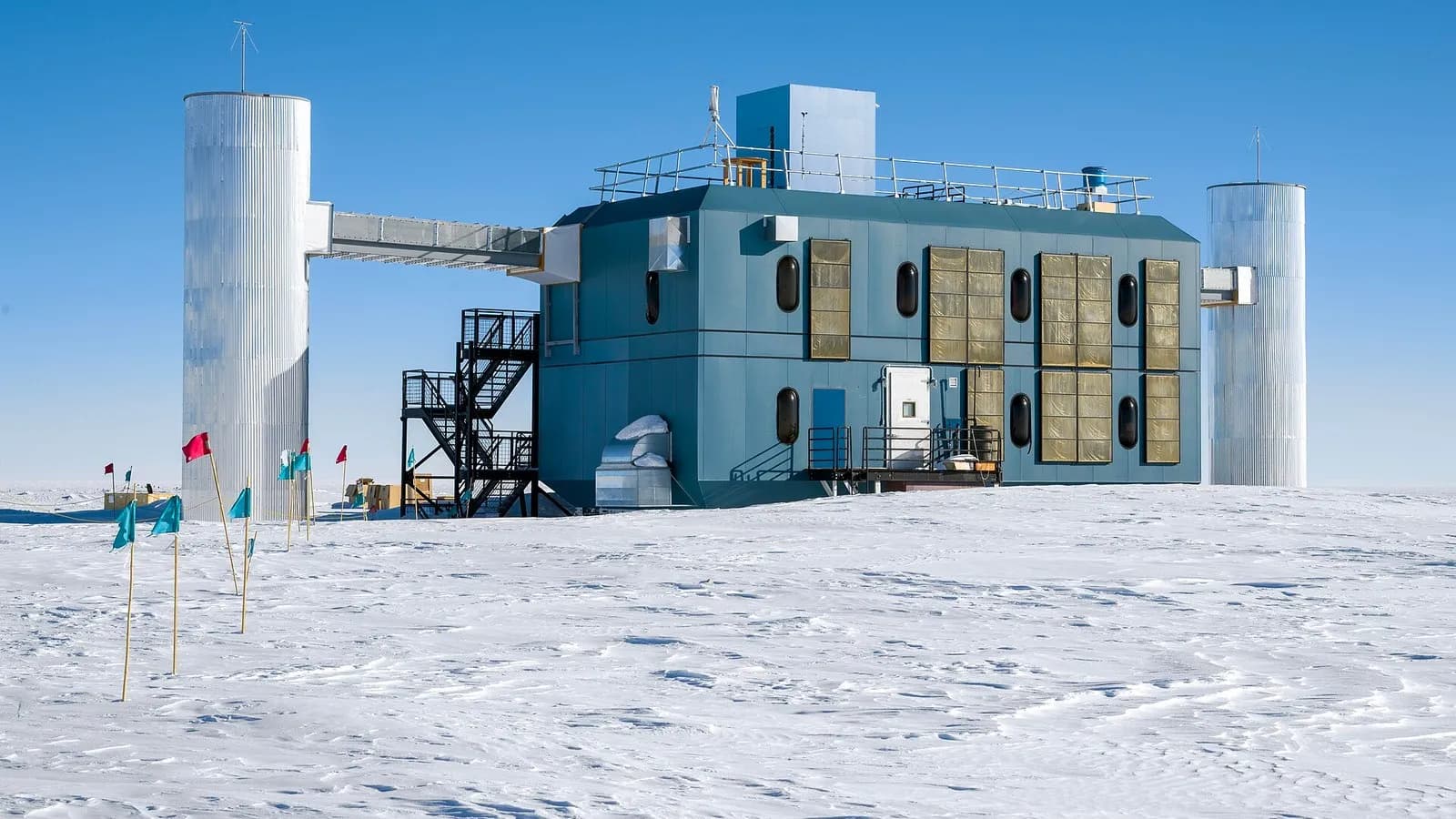
For fifteen years, thousands of light sensors have hung in the dark beneath the South Pole, waiting for a flash so faint and so rare that it counts as a message from the cosmos. On Tuesday the Royal Swedish Academy of Sciences gave the Nobel Prize in Physics to the man who first argued that the ice itself could be the instrument.
Francis Halzen, a Belgian-born physicist at the University of Wisconsin-Madison, wins the prize alone, for his contributions to the IceCube Neutrino Observatory and the discovery of high-energy neutrinos of astrophysical origin, Reuters reported. The award is 12 million Swedish kronor, about $1.2 million. Physics World notes that he is the first sole winner of the physics prize since Georges Charpak in 1992.
Halzen, who is 82, took the call from Italy. "It was a great surprise and I obviously didn't expect it," he said, according to the Associated Press, adding that although others had predicted he would win, the moment still felt "strange". He joked that he hoped the prize might help a proposal he is writing get approved.
What is a neutrino, and why use ice to catch one?
Neutrinos are particles with almost no mass and no electric charge. Trillions pass through your body every second, nearly all of them without leaving a mark. Scientists cannot observe them directly. They watch for the light or charged particles produced on the rare occasion that one collides with matter, which is why scientists treat them as cosmic messengers. Committee member Eva Olsson said Halzen realised that the ice at the South Pole could "visualize these neutrino messengers".
Halzen and a colleague had the idea in 1988, Physics World recounts. A first attempt, AMANDA, was completed in 2000 but was not large enough. IceCube, finished in late 2010, hangs 5,160 digital optical modules on 86 strings, each up to 2.5 kilometres long, through a cubic kilometre of ice at the Amundsen-Scott South Pole Station.
What has IceCube found?
The first big result came in 2013, when the collaboration reported 28 extremely high-energy events from neutrinos of at least 30 teraelectronvolts, the first evidence for high-energy cosmic neutrinos. In 2018, working with two gamma-ray telescopes, it linked high-energy neutrinos to a blazar about four billion light-years away, a milestone for what astronomers call multimessenger astronomy. In 2022 it identified the galaxy NGC 1068 as a source, and in 2023 it showed that our own Milky Way is one too.
Mark Pearce, chair of the Nobel Committee for Physics, said in a news release, quoted by NPR, that Halzen's "tenacity and scientific vision has paved the way for a new kind of astronomy."
Who shares the credit for IceCube?
The prize carries one name, but the work belongs to many. The IceCube collaboration has more than 450 members from 58 institutions in 14 countries, according to Physics World. Richard Fitzgerald, editor-in-chief of Physics Today, said that although hundreds of people built the observatory, it "all started with one person".
The instrument is not finished. An upgrade earlier this year added more than 600 light sensors in five new holes near the middle of the detector, and Halzen says he is still drafting his next proposal. The medals will be presented in Stockholm on 10 December, and the chemistry prize is announced on Wednesday.
Published in The Outspoken Digest
Editorial desk
Outspoken Digest Science DeskReports for The Outspoken Digest across Technology, Latest Trends, Health.
Newsletter
The Digest, in your inbox
One edition, sent when it is ready. No noise, and your address is never passed on.
Read Next
More Technology →
SpaceX Agrees to Buy a Nationwide Block of 800 MHz Spectrum, Reportedly for $8 Billion, to Back Starlink Mobile
Oct 9, 2026/3 min read
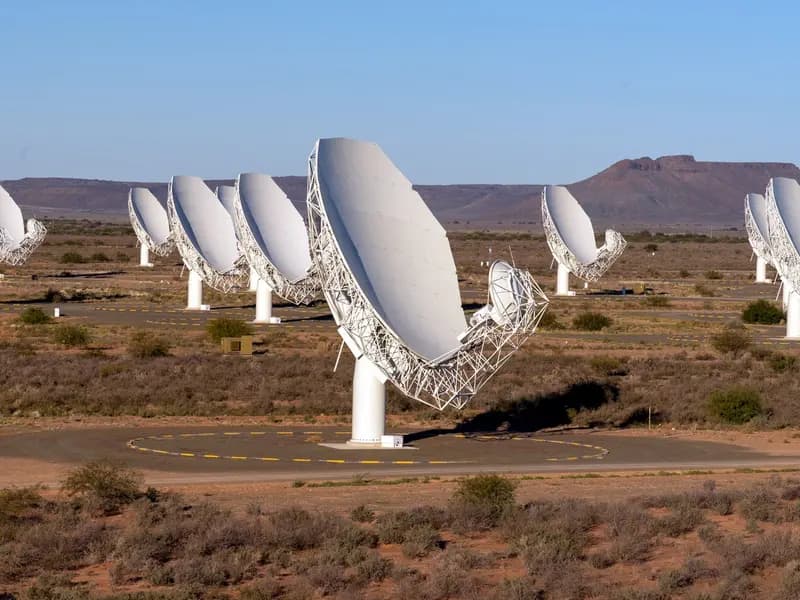
Webb and MeerKAT Find the Most Distant Fast Radio Burst Yet, From a Small Galaxy About 11 Billion Years Back
Oct 9, 2026/2 min read
Finland Orders Google to Stop Forest Clearing at Two Data Centre Sites Until Environmental Reviews Finish
Oct 9, 2026/3 min read

Manus Raised More Than $500 Million Six Months After China Forced Meta to Unwind Its $2 Billion Takeover
Oct 9, 2026/2 min read