The Strait of Hormuz Has Been Shut for Almost Six Months. Oil Is at $93, Not $200, and That Gap Is the Story.
A potential war is the wrong frame. Fighting began on 28 February and the strait closed on 4 March. The economic damage is real and measurable, and it is far smaller than the forecasts issued in the first month, for reasons worth understanding.
Outspoken Digest Global Markets Desk
Saturday, August 22, 2026/5 min read
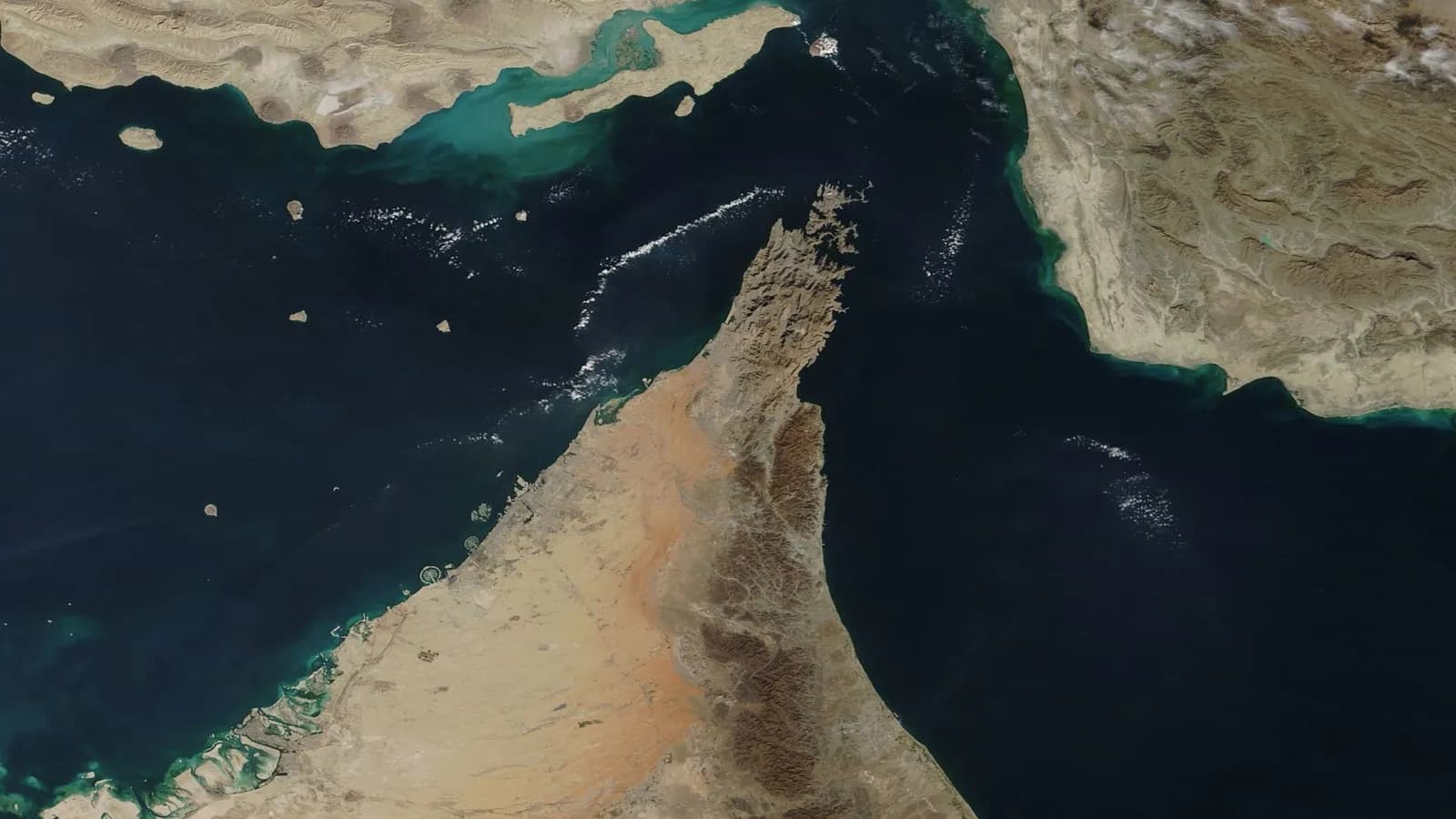
The question most often asked about the Strait of Hormuz is what a war there would do to the global economy. That question is now out of date. The United States and Israel began striking Iran on 28 February, Iran answered by attacking vessels attempting to transit the strait, and the waterway has been effectively closed since 4 March.
Almost six months of evidence exist. It is more useful than any forecast.
What is the current state of it?
Closed in practice, contested in fact, and being negotiated in parallel.
Traffic has fallen to a fraction of normal. On one recent Sunday three vessels crossed, against a five day average of twelve. Attacks have continued through August: a tanker belonging to the Abu Dhabi National Oil Company was struck on a Friday night, the third such attack on an ADNOC vessel inside forty eight hours. On 18 August the United States said no talks with Iran were under way, and the United Arab Emirates reported detecting a missile threat.
At the same time, Iran and Oman have been working towards a joint statement, described by Tehran as being in its final drafting stage. Both things are true at once, which is the normal condition of this conflict rather than a contradiction. The diplomacy running alongside the fighting was the subject of our report on the Gulf ministers' effort in July.
How much oil is actually missing?
Far less than the headline figure suggests, and this is the single most misread number in the story.
Roughly a fifth of the world's seaborne oil and effectively all of Qatar's liquefied natural gas normally transits Hormuz. The International Energy Agency has called the disruption the largest supply interruption in the history of the global oil market, and on the measure of volume affected that is defensible.
But volume that transits is not volume that is lost. The United States Energy Information Administration, in its Short Term Energy Outlook published on 11 August, put the actual Hormuz-related disruption at about 0.6 million barrels a day continuing into next year. Global consumption is above one hundred million barrels a day. The gap between a fifth of the market and 0.6 per cent of it is the difference between a route being blocked and a supply being destroyed.
Why did the $200 forecasts not arrive?
Because oil markets adapt faster than the maps suggest, and several adjustments ran at once.
Brent did spike. It passed 120 dollars after the closure and dated Brent reached 132 dollars by mid-April. In late March one widely quoted analyst told Bloomberg that oil would be at 150 to 200 dollars within weeks. It was trading at 92.36 dollars on 19 August and 93.86 dollars on 21 August, and the EIA's third quarter average estimate is near 85 dollars.
Four things closed that gap. Pipelines that bypass the strait, principally through Saudi Arabia and the Emirates, carried more. Producers outside the Gulf lifted output into an unusually profitable market. High prices did what high prices do to demand, particularly in price-sensitive importing economies. And some cargoes continued to move, intermittently and at enormous insurance cost, because the strait has been dangerous rather than physically sealed.
None of that means the closure was harmless. It means the harm was absorbed through cost and rerouting rather than through shortage, which is a different and slower kind of damage. We set out the demand side of this in our earlier look at why the price stalled below one hundred dollars.
What has it cost, then?
Chiefly the countries closest to it, and chiefly in ways that do not show up in the crude price.
Producers have earned more per barrel and moved fewer of them, with higher freight, insurance and storage costs against the gain. That mixture is visible in Aramco's first half results. Regional aviation has been hit far harder than energy: the International Air Transport Association expects Middle Eastern carriers to turn a 7.2 billion dollar profit in 2025 into a 4.3 billion dollar loss this year. Jet fuel in June was running about 46 per cent above year-earlier levels.
And the inflation channel has been steady rather than dramatic. Higher energy costs feed into transport, food and manufacturing over months, not days, which is why central banks have found this shock so awkward to answer. That problem was covered in our July piece on oil and the central banks.
What would a wider war actually do?
Here the modelling is worth taking seriously, because it is specific.
Work published through the Centre for Economic Policy Research estimates that a closure lasting a single quarter raises United States headline inflation by about 0.6 percentage points and core inflation by 0.2 points across 2026. At 170 dollars a barrel, the effect on both inflation and growth roughly doubles, which is the point at which the shock stops being an inflation problem and becomes a stagflationary one: prices rising while output falls, the combination central banks have no clean tool for.
The escalation that would produce that is not a longer closure of the strait. It is damage to production rather than to transit, meaning strikes on fields, processing facilities or export terminals. The strait is a road. Roads can be rerouted around at a price. A destroyed processing plant cannot.
What should a reader watch?
Not the daily Brent print, which mostly reflects sentiment about the next headline.
Watch the vessel transit count, because it measures the thing itself. Watch whether attacks shift from ships to shore infrastructure, because that is the line between an expensive disruption and a genuine supply crisis. Watch the Oman channel, because it is the only negotiation currently described by either side as advancing. And watch insurance rates for Gulf transits, which price the risk more honestly than any commentary, since the people setting them are paying out on being wrong.
Six months in, the sober conclusion is uncomfortable in both directions. The world absorbed the closure of the most important oil chokepoint on earth better than almost anyone predicted. It also has not solved it, and the adaptation that made the absorption possible has already been used.
Published in The Outspoken Digest
Newsletter
The Digest, in your inbox
One edition, sent when it is ready. No noise, and your address is never passed on.
Read Next
More Business →
Jio Platforms Raises Rs 8,110 Crore From Anchors at the Top of Its Range as India's Biggest IPO Opens
Oct 21, 2026/2 min read

Netflix Beats on Profit, Then Slides After Hours as It Trims Its Ad Forecast and Guides Lower
Oct 21, 2026/2 min read
Wall Street Rebounds as AI Stocks Recover, With the Nasdaq Up 1.1% and the 10-Year Yield Above 5.15%
Oct 20, 2026/2 min read

CoreWeave Shares Fall 25 Percent in a Week as Its Bonds Flash Warning Signs for AI's Borrowers
Oct 18, 2026/2 min read