How a Scuba Regulator Is Actually Tested, and Why Most Reviews Are Not Tests
A breathing machine pressurised to 198 feet of seawater measures the work it takes to pull air through a regulator. Almost nothing you read online involves one, and the difference is the whole review.
Tuesday, August 18, 2026/4 min read
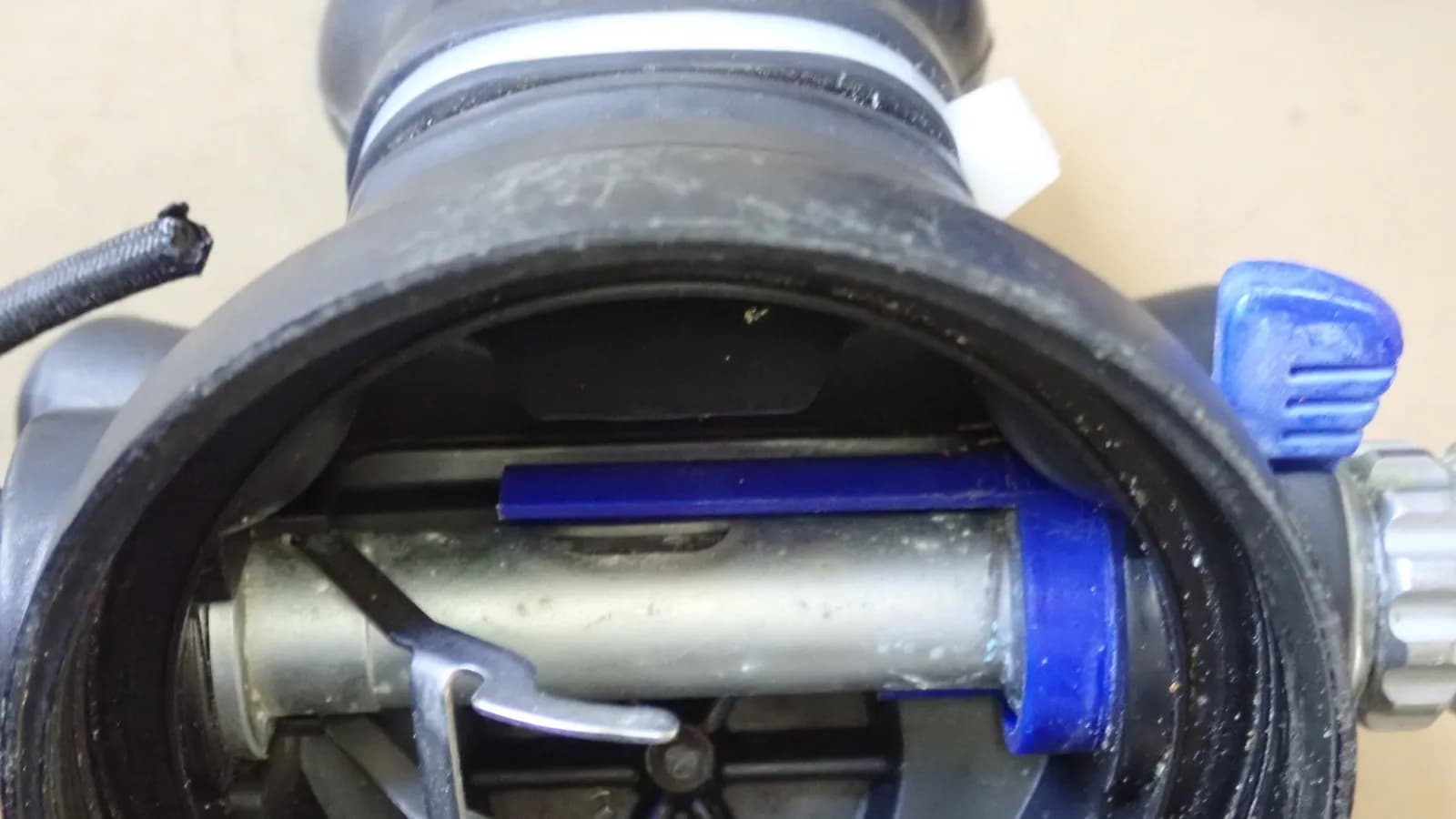
Search for a regulator review and you will find a hundred pages that rank ten regulators, none of which the writer has taken below 18 metres, several of which they have not touched. The word review is doing a lot of unpaid work.
There is a real version of this, and it is worth knowing what it looks like, because it is the only kind of gear journalism that can tell you something your own hands cannot.
The machine that does the actual work
Objective regulator testing runs on an ANSTI wet breathing simulator. It is a machine that breathes: a pump on one end, a pressurised water chamber on the other, and instrumentation measuring exactly how much effort it takes to move air in and out of the second stage.
The chamber is taken to 132 feet of seawater, then 165, then 198, and at each depth the machine breathes at a range of rates, because a regulator that is pleasant at rest and at 20 metres can become hard work at 60 metres with a diver breathing hard. Depth increases gas density, and dense gas is what separates regulators.
The number that comes out is work of breathing, usually expressed in joules per litre. It is the closest thing diving has to an objective measure of how a regulator performs, and it is not something a reviewer can feel accurately, because human perception of breathing effort is contaminated by everything from mouthpiece comfort to how cold you are.
In the United States that testing is done at Dive Lab in Panama City Beach, Florida, which is also where military and commercial diving equipment gets evaluated. The magazine programme most divers will have seen results from, ScubaLab, runs its objective phase there and its in-water phase separately, at Devil's Den in Williston.
Why the in-water phase still matters
The machine cannot tell you that the purge button is where your glove wants it, that the venturi lever is ambiguous in the dark, or that the second stage torques your jaw on a long dive.
So the credible programmes run two phases and keep them separate. Instruments measure performance. Divers evaluate ergonomics, in controlled conditions, ideally without knowing which brand they are breathing. Then the results are reported in categories, because a 1,200 dollar regulator outperforming a 400 dollar one is not news. For 2026, ScubaLab split its review into regulators under and over 700 dollars, and awarded a Testers Choice and a Best Buy within each.
That structure is the tell. When a review has price categories, blind in-water testing and a laboratory phase, someone has spent money to find something out. When it has ten entries, an affiliate link on each and a paragraph of adjectives, nobody has.
What the numbers do and do not tell you
Three honest limits, none of which get mentioned in the marketing.
- Nearly every modern regulator from a reputable manufacturer breathes well within recreational limits. Work of breathing differences that are visible on a chart at 198 feet are often imperceptible at 18 metres. If you dive reefs, this metric should not decide your purchase.
- Cold water is a separate question. Freeze resistance is about environmental sealing and heat exchange, and a regulator can post excellent breathing numbers and still be a poor choice for a British winter or an ice dive. Look for testing done cold, or for standards work such as EN 250 approval at 4 degrees.
- The best regulator is the one your shop can service. Performance differences between top tier models are smaller than the difference between a well maintained regulator and a neglected one, which is the argument our piece on dive brand consolidation and service networks makes at greater length.
How do I read a regulator review properly?
Four questions, in order. They will disqualify most of what you find.
- Was it measured, and on what? If the piece does not name a breathing simulator or a test facility, no measurement happened.
- At what depth and breathing rate? Numbers without conditions are decoration. Performance at 198 feet and a high respiratory rate is the number that discriminates.
- Was the in-water testing blind? Testers who know they are breathing an expensive regulator report that it breathes expensively.
- Who paid? Manufacturer supplied samples are normal and fine. Manufacturer supplied conclusions are not, and affiliate revenue on every model in a ranking is a structural reason to rank widely rather than accurately.
Where to look instead
The dive trade press does this work properly and is not hard to find. ScubaLab's testing at Scuba Diving magazine publishes its methodology alongside its results, and its own explainer on testing regulators on the ANSTI breathing machine is the clearest account of what the numbers mean.
Then there is the part no laboratory can supply: breathe it before you buy it, in water, with your own gloves on, from a shop that will still be there in five years when it needs a service kit.
Published in The Outspoken Digest
Editorial desk
Outspoken Digest Diving DeskCovers freediving, recreational and technical diving, dive medicine and the incidents the sport learns from.
Newsletter
The Digest, in your inbox
One edition, sent when it is ready. No noise, and your address is never passed on.
Read Next
More Diving →
Bleached Corals Recovered After Touching a Healthy Clone, Stanford Lab Study Finds
Oct 15, 2026/2 min read
Black Swallower Filmed With a Hugely Swollen Belly 1,259 Metres Down Off Trinidad and Tobago
Oct 13, 2026/2 min read

Playing Recordings of a Healthy Reef Drew More Coral and Fish Larvae to Artificial Structures Off Hawaii
Oct 9, 2026/3 min read

Blacktip Sharks Can Hear a Sound From Nearly 250 Feet Away and Swim Straight Toward or Away From It
Oct 1, 2026/2 min read