More Companies Ordered People Back to the Office This Year, and the Best Studies Still Do Not Support It
A controlled trial found two days at home produced no measurable productivity loss and cut resignations by a third. A study of large listed firms found return to office mandates did not improve company value. Mandates increased anyway.
Saturday, August 22, 2026/4 min read
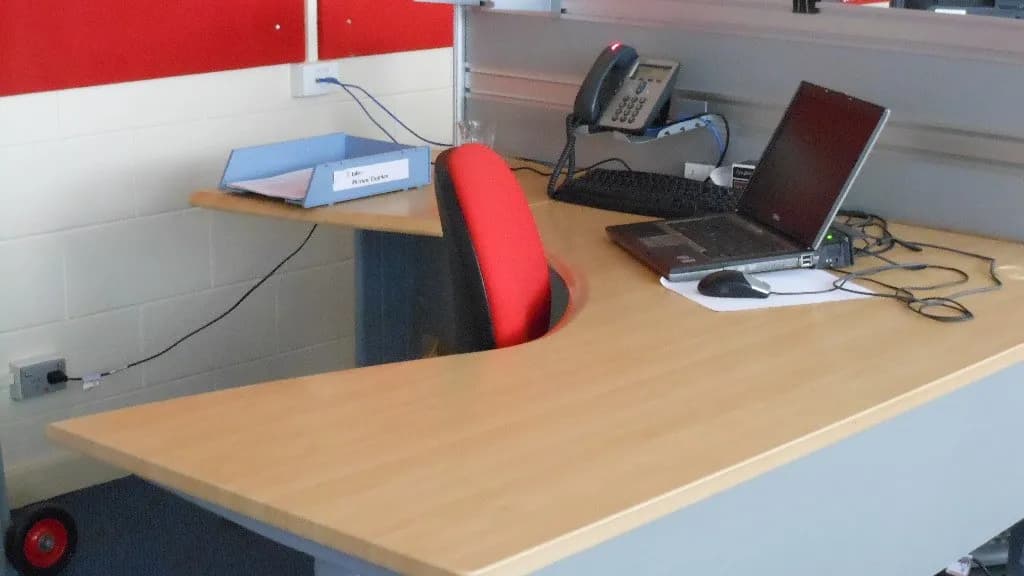
The argument about where knowledge work should happen is now in its sixth year, and it is still mostly conducted through assertion. Executives say collaboration suffers. Employees say they concentrate better at home. Both sides cite their own experience, which is exactly the kind of evidence that settles nothing.
There is better evidence than that, and it points fairly consistently in one direction.
What does the strongest study show?
A randomised trial, which is rare in this field and is why it carries weight.
Researchers at Stanford ran a controlled experiment at a large Chinese travel company, assigning employees to a hybrid schedule of two days a week at home. The result was no measurable decline in productivity and a fall of about 33 per cent in resignations.
That second number is the one that should interest anyone running a business. Replacing an experienced employee is expensive in recruitment, in lost institutional knowledge and in the months before a replacement is useful. A policy that holds output flat while cutting attrition by a third is not a compromise. It is a straightforward gain.
What happened when firms mandated a return?
Researchers looked, and found nothing they were promised.
A University of Pittsburgh study of return to office mandates at S&P 500 companies found no measurable improvement in firm value following the mandates, and a significant fall in job satisfaction.
That is a hard result to explain away. If bringing everyone back produced the collaboration benefits claimed for it, some trace of that should appear in the performance of large listed companies that did it. The trace is not there, and the cost, in how people feel about their work, is.
So why are mandates increasing?
They are. Roughly 30 per cent of companies required five days in the office in 2026, up from 28 per cent the previous year, and close to half now require at least four. Meanwhile about 52 per cent of remote capable employees in the United States work hybrid, which makes it the dominant arrangement for knowledge work.
Several explanations are more plausible than the productivity one.
Property. Long leases were signed on buildings that are now half used. That cost is sunk and visible, and it exerts pressure that has nothing to do with output. The other end of that problem is showing up as office buildings being converted into flats.
Management legibility. Supervising by presence is easier than supervising by result. A manager who can see people is spared the harder work of defining what good output looks like.
Quiet headcount reduction. A mandate that a proportion of staff will refuse produces departures without redundancy payments. Survey work suggests this is not hypothetical: around 29 per cent of remote and hybrid employees say they would consider leaving if required back full time.
Does the evidence favour working from home entirely?
No, and this is where the research is more nuanced than either camp's version of it.
The trial that produced the good results tested a hybrid schedule, not a fully remote one. The benefits attach to the combination: enough shared time for the things that genuinely need a room, enough separate time for the work that needs quiet.
Fully remote arrangements carry real costs that show up unevenly. They fall hardest on junior staff, who learn by proximity, and on anyone whose home is not a workable place to concentrate. That last point is not evenly distributed either, and it is a stronger argument for offices than any of the collaboration rhetoric.
What do people report about their own lives?
Consistently positive, and it should be read as what it is.
Surveys find that around 76 per cent of full time remote and hybrid workers report improved work life balance and about 61 per cent report less burnout. These are self reported measures rather than observed outcomes, which means they capture how the arrangement feels rather than what it produces.
That distinction matters, and it cuts in an unexpected direction. Self reported wellbeing is exactly the evidence executives dismiss when employees offer it, and exactly the evidence they rely on when they claim the office improves culture. If the standard is observed outcomes, the observed outcomes currently favour hybrid.
What would actually settle it?
Better questions than the one being asked.
Where should people work is not answerable in general, because it depends on the task, the seniority, the home, the commute and the climate. In this region the commute variable alone is seasonal, which is why the experiments worth watching locally are about hours as much as location, including the shorter summer working hours trialled in Ajman.
The practical question for an individual is narrower and more answerable: which of your tasks improve in a shared room, and which get worse. For most people the honest answer is that meetings, onboarding and difficult conversations belong in a room, and that concentrated work does not. Arranging a week around that is a scheduling problem, not an ideological one, and it makes the physical setup at home worth getting right, which we covered in the home desk details that actually matter.
Published in The Outspoken Digest
Editorial
Outspoken Digest EditorialThe Digest's own desk: the pieces that do not sit in one section.
Newsletter
The Digest, in your inbox
One edition, sent when it is ready. No noise, and your address is never passed on.
Read Next
More Lifestyle →
Street Fighter Wins the Weekend With $31 Million, but an Elizabeth Holmes Documentary Opens to $15 Million
Oct 19, 2026/2 min read

Street Fighter Opens With $4 Million in Thursday Previews as Critics Split on the Video Game Reboot
Oct 16, 2026/2 min read

Two Stolen Renoirs Found Behind a Cinder-Block Wall as Police Say Suspects Eyed the Fondation Maeght
Oct 15, 2026/2 min read

Hulu Orders Ryan Coogler's X-Files Reboot to Series With Danielle Deadwyler and Himesh Patel
Oct 14, 2026/2 min read